

What Is the Difference Between Fard, Registry, and Intiqal?
Ask a property seller in Punjab for their documents and you will hear three words in the same breath: fard, registry, and intiqal. Each answers a different question — and missing any one of them leaves a gap a fraudster can walk through. This guide explains what each document proves and how to check that a seller’s papers tell one consistent story before you pay anything.
The Short Answer
If you only remember one thing, remember this: a registry records the transaction, an intiqal updates the government’s record of who owns the property, and a fard is a snapshot of what that record currently shows. A complete, safe deal has all three pointing at the same person — the seller standing in front of you.
What Is a Registry (Sale Deed)?
A registry — formally the sale deed or bayanaama — is the legal document recording the sale transaction between buyer and seller. In Punjab it is executed on stamp paper and registered before the Sub-Registrar, where both parties and witnesses sign and give thumb impressions.
A registered sale deed records the seller and buyer, the property description (district, tehsil, mauza, khasra and khewat numbers), the area and ownership share transferred, the consideration, and the registration number, bahi number, and date. Courts treat it as the document that creates the title.
But it is a record of the past. An old registry proves someone bought the property years ago — not that they still own it, that they did not later sell or gift it, or that the revenue record was ever updated. That is where intiqal comes in.
What Is Intiqal (Mutation)?
Intiqal — called mutation in official English — is the process through which a change of ownership is entered into the land revenue record after a sale, inheritance, gift, or court order. It is ordered and attested by the revenue officer (patwari / ADLR at the Arazi Record Centre), and the entry records the mutation number, the transaction type, who transferred and who received the rights, the property identifiers, and the attestation status.
Here is the critical point most buyers miss: the registry office and the revenue record are two separate systems. Registering a sale deed does not automatically update the record. If the buyer never gets the intiqal done, the government’s record still shows the seller as the owner — even though the buyer holds a valid registry. That gap is exactly how double-sale frauds happen: the seller, still the recorded owner, obtains a fresh fard and sells the same property to a second buyer.
What Is a Fard?
A fard is an official extract from the land record — a certificate issued from the computerised revenue record showing the ownership position of a property at the time it is issued. The Punjab Land Records Authority (PLRA) issues it from the Land Record Management Information System (LRMIS), obtainable from an Arazi Record Centre or through the PLRA online portal at punjab-zameen.gov.pk.
A fard shows the owner name(s), the khewat and khasra numbers, the land area, ownership shares where land is jointly held, and references to the relevant intiqal entries. A fresh fard issued in the seller’s name is your best single confirmation that the revenue record currently recognises the seller as the owner — but it is a snapshot, not a history. An old or photocopied fard may predate a later sale, inheritance, or court order.
Fard vs Registry vs Intiqal: Side-by-Side Comparison
| Document | What it proves | Issued / recorded by | What it does NOT prove on its own |
|---|---|---|---|
| Registry (sale deed) | A specific transaction took place — seller transferred the property to buyer | Sub-Registrar, on stamp paper | That the revenue record was updated; that the seller still owns it today |
| Intiqal (mutation) | The revenue record was updated to reflect the change of ownership | Revenue officer (patwari / ADLR / Arazi Record Centre) | Title by itself — mutation follows the title document, it does not create it |
| Fard | Who the current revenue record shows as the owner, right now | PLRA / Arazi Record Centre (or online) | The history behind the record; any court cases, possession, or society-file ownership |
Why You Need All Three
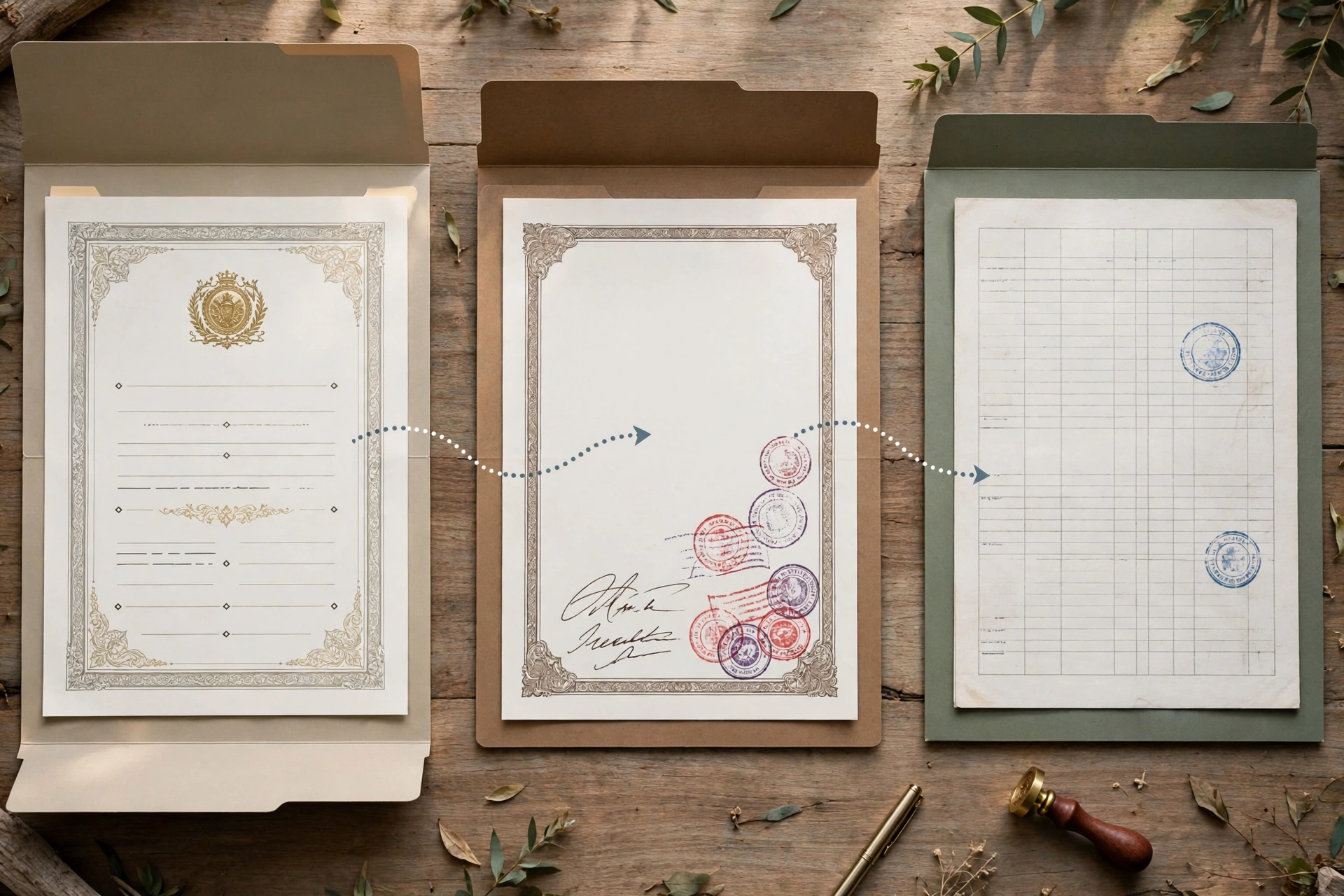
Think of the three documents as a chain: the registry creates the link (the sale happened), the intiqal fastens it into the record (the government now knows), and the fard confirms the chain holds (the record names your seller today). Break any link and the story falls apart.
The most dangerous break is the skipped intiqal. A buyer pays, registers the sale deed, and never mutates the record. Years later, the original seller — still the recorded owner — obtains a fresh fard and sells the same property to someone else. Both buyers hold genuine registries for one property, and the dispute goes to court. As explained in our guide on how to check property ownership online in Punjab, a current fard and a clean intiqal history are precisely what protect you from this.
The practical question is therefore never “do you have the registry?” It is: do the registry, the intiqal history, and the current fard all point to the same person — the seller in front of you?
How to Check That the Documents Line Up
Before paying token money, run this cross-check on the seller’s papers:
- Get a fresh fard. Request one from the PLRA portal or the Arazi Record Centre in the seller’s name, issued recently — not a years-old photocopy.
- Match the names. The seller’s CNIC must match the owner name on the fard. Check the original CNIC, not a photocopy.
- Match the numbers. Khasra and khewat numbers, district, tehsil, and mauza must be identical across the fard, the registry, and the intiqal.
- Trace the chain. Read the intiqal history: the last mutation should show the property moving to the current seller, and the registry should match that transaction’s parties.
- Check ownership shares. If the seller owns a fractional share of a larger khewat, the documents must show exactly that share — not the whole parcel.
- Verify possession and disputes separately. The fard will not show court cases, stay orders, or who is physically in possession. Ask about those in writing and have a lawyer check court records for high-value deals.
A Note for Commercial and Industrial Buyers in Sheikhupura
If you are buying a commercial property, a warehouse, an industrial unit, or a commercial plot in Sheikhupura, this chain matters even more than for a house. Commercial properties are frequently held by partnerships, firms, or family members jointly — so the fard may show multiple co-owners while only one person negotiates with you. Every co-owner’s authority to sell must be confirmed, and the registry, intiqal, and fard must agree on all of them.
The fard will also not show a property’s declared commercial status, sitting tenants, business-loan mortgages, or unapproved construction. The document chain proves ownership; your due diligence must also prove the property is usable for your business purpose.
Frequently Asked Questions
Can I skip the intiqal if I have a registry?
No. A registry proves the transaction happened, but the government’s record still shows the seller as the owner until the intiqal is attested. Skipping it leaves you exposed to double-sale fraud and blocks future resale, since the record will not name you.
Is a mutation (intiqal) proof of ownership?
Not by itself. Intiqal is an administrative entry updating the revenue record — it follows from a title document like a registered sale deed, inheritance order, or gift deed. Courts look at the whole chain, and the registered deed carries the most weight.
How fresh should the fard be when I verify a seller?
Get one issued as close to the deal date as possible — ideally within weeks of paying token money. A year-old fard does not reflect sales or inheritances recorded since.
Do these documents apply to housing society files and plots?
Only partly. Fard, registry, and intiqal are the vocabulary of Punjab’s revenue-land system. A housing society plot file is verified through the society’s own transfer office and allotment record — a different process with its own papers. Always identify which record system governs the property first.
A Final Word
Fard, registry, and intiqal are not three names for the same paper. The registry records the deal, the intiqal updates the record, and the fard shows what the record says today. When all three agree — same seller, same property, same numbers — you have a title chain you can stand on. When they disagree, stop and investigate before paying.
Disclaimer: This article explains property documents under Punjab’s land revenue system for general information only. It is not legal advice. Property matters involve individual facts and changing procedures — consult a qualified lawyer for advice on your specific situation.
18 Comments
Pingback: Fard Badar: How to Get Your Land Record Corrected in Punjab | Saeed Property Advisors
Pingback: What Is a Khasra Number and How Do I Find It? | Saeed Property Advisors
Pingback: How to Check Court Cases on a Property in Punjab (5 Checks)
Pingback: Mutation (Intiqal) in Punjab: Why It Matters After Buying
Pingback: Registry vs Intiqal in Punjab: Why You Need Both
Pingback: How to Buy a Commercial Plot in Sheikhupura | Buyer's Checklist
Pingback: How to Get a Fard from PLRA: Online and at the ARC | Saeed Property Advisors
Pingback: Fard-e-Bai vs Fard-e-Malkiat: What's the Difference? | Saeed Property Advisors
Pingback: Buying a Residential Plot in Sheikhupura: What to Verify Before You Pay | Saeed Property Advisors
Pingback: Can You Skip Intiqal If You Have the Registry? (No — Here's Why) | Saeed Property Advisors
Pingback: Intiqal for Inherited Property (Virasat): Step by Step in Punjab | Saeed Property Advisors
Pingback: What Is Jamabandi and Why Buyers Should Check It | Saeed Property Advisors
Pingback: How to Verify Commercial Property Documents in Punjab (Fard, Registry) | Saeed Property Advisors
Pingback: How to Buy Office Space in Sheikhupura: A Practical Checklist | Saeed Property Advisors
Pingback: Plot vs Plot File: Complete Difference Explained in Pakistan | Saeed Property Advisors
Pingback: How to Buy a Warehouse (Godown) in Sheikhupura: A Practical Checklist | Saeed Property Advisors
Pingback: How to Buy a Factory in Sheikhupura: A Legal Checklist | Saeed Property Advisors
Pingback: What Should a Bayana Agreement Include Before I Sign? | Saeed Property Advisors