

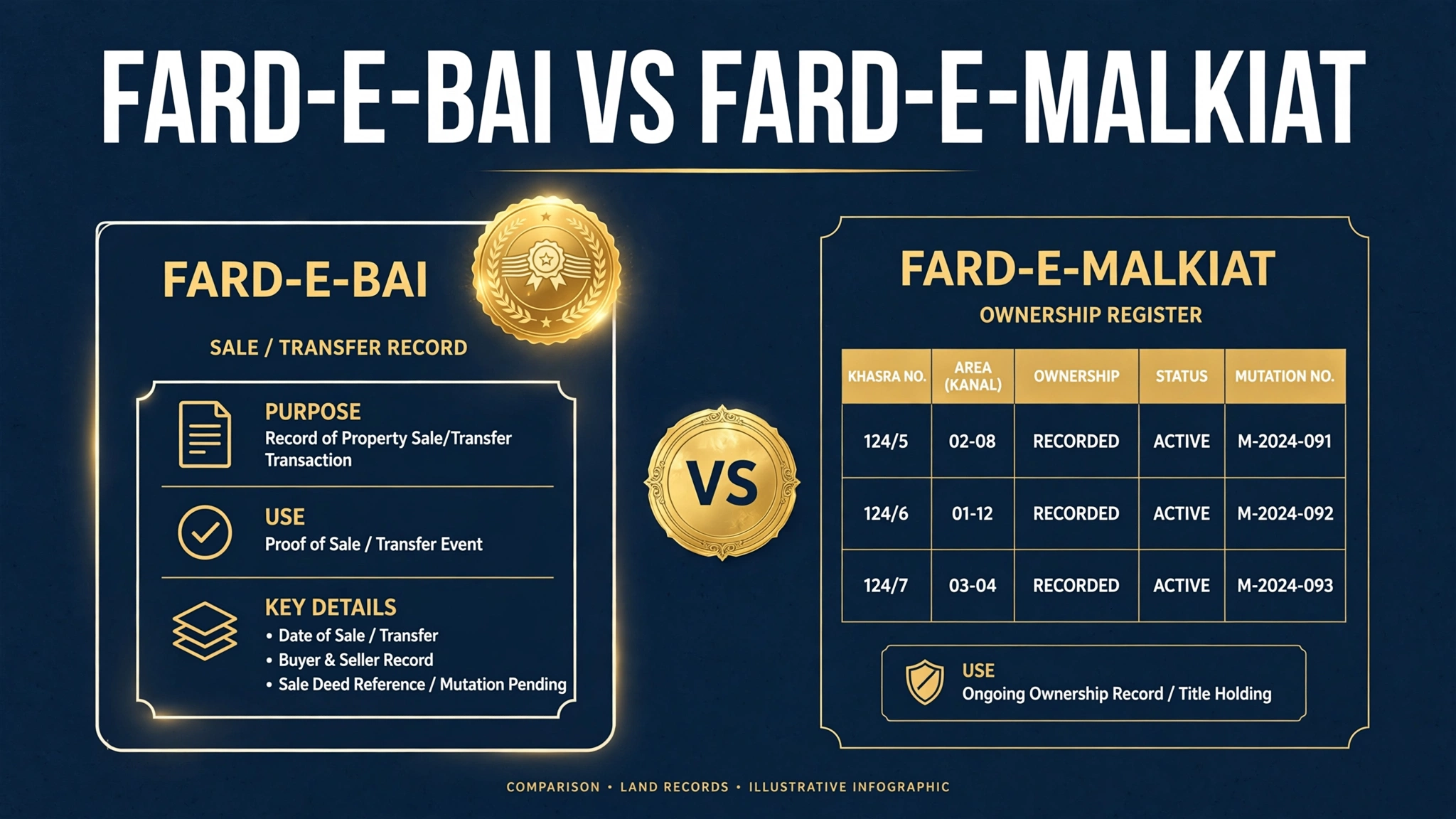
Fard-e-Bai vs Fard-e-Malkiat: What’s the Difference?
If you are verifying a property’s documents in Punjab, two terms keep coming up: Fard-e-Bai vs Fard-e-Malkiat. Buyers often treat them as the same paper, or assume one can replace the other. They cannot. One proves who owns a property today; the other is issued so a sale can happen. Knowing which one you need — and at which stage of a deal — saves you from document confusion and delays at the revenue office.
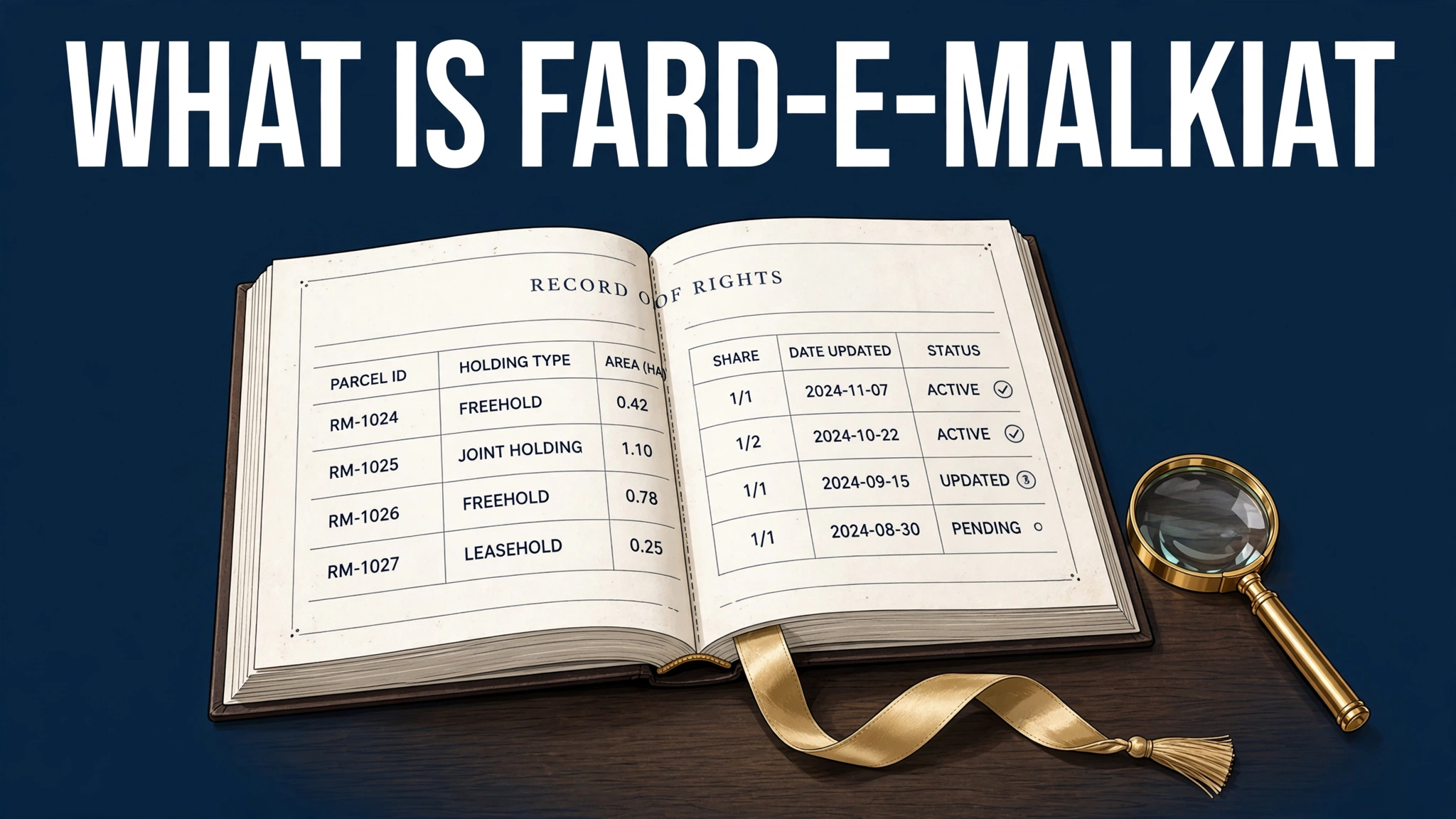
What Is Fard-e-Malkiat?
Fard-e-Malkiat is the ownership certificate — the Record of Rights for a property. It is also known as Jamabandi or the Register Haqdaran-e-Zameen, and it is maintained by the land revenue office. It shows who legally holds rights over a piece of land: the owner’s name, khewat and khasra numbers, the area (raqba), and the share each owner holds.
Think of it as a standing snapshot of ownership. This is the document you check when you want to confirm the seller genuinely owns what they are offering. It is the starting point of any serious document check — you can check property ownership online in Punjab before you ever sit down to negotiate.
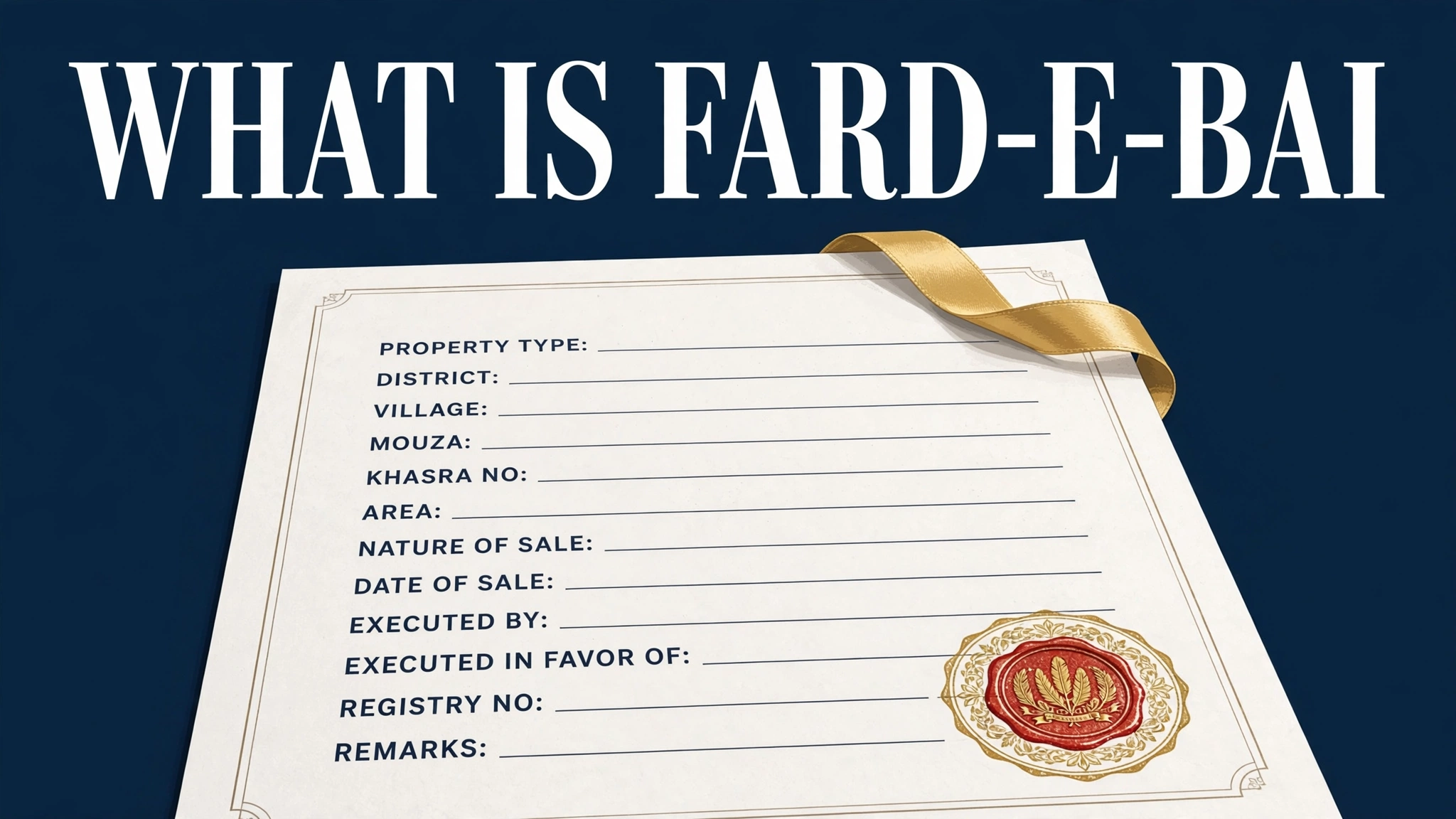
What Is Fard-e-Bai?
Fard-e-Bai is different. The word bai means sale — and this fard is issued for the purpose of a sale transaction. When a seller is about to execute a registry at the sub-registrar’s office, the revenue record issues a fresh, transaction-specific fard tied to that sale. It is not a permanent ownership certificate; it is a purpose-bound document that the sale paperwork needs at that moment.
Punjab’s land record system issues fards by purpose. Alongside Fard-e-Bai, the same family includes Fard-e-Hiba (for a gift transfer), Fard-e-Rehan (for a mortgage), and Fard-e-Zamanat (for a surety). Each one serves one transaction — none of them replaces the ownership record itself.
The Key Differences at a Glance
| Fard-e-Malkiat | Fard-e-Bai | |
|---|---|---|
| Purpose | Proves who owns the property right now | Issued so a sale can be registered |
| When it is issued | Anytime, as a record of the current state | Fresh, at the time of the sale, for that transaction |
| Who asks for it | Owner or buyer, for verification | Seller (or their representative), for the registry |
| What it reflects | The standing record of rights | One specific sale transaction |
| Relationship | Must show the seller as the owner | Only meaningful if the malkiat supports the sale |
Why a Buyer Needs Both in a Property Deal
The two fards appear at different stages of the same deal. Here is the correct sequence:
- Before the deal: ask the seller for the latest Fard-e-Malkiat. Confirm the seller’s name, khewat and khasra numbers match the property being offered, and that the share shown covers what is being sold. If the record does not match the seller’s claim, stop and resolve it first — a Fard from PLRA is where you start.
- At the registry stage: the Fard-e-Bai is issued fresh for the sale itself. Because it is transaction-specific, a buyer should never accept a Fard-e-Bai from an earlier deal as proof of ownership — each sale gets its own.
- After the sale: the registry (sale deed) and the intiqal (mutation) complete the ownership transfer. This is the point many buyers miss: neither the Fard-e-Malkiat nor the Fard-e-Bai transfers ownership on its own. If you want to understand how the three pieces fit together, read our guide on Fard, Registry, and Intiqal.
Common Mistakes Buyers Make
- Treating any fard as “the ownership paper” without checking which kind it is. A Fard-e-Bai in the seller’s hand is not proof they own the property — it only proves a sale transaction was prepared.
- Accepting an old fard. Land records change — inheritances, sales, and corrections update the record. Always ask for the latest issuance and verify it yourself.
- Skipping independent verification. Do not rely on a photocopy the seller hands you. Confirm the record on the PLRA portal or at your nearest Arazi Record Centre.
- Thinking the fard alone completes the deal. The fard supports the transaction; the registered sale deed and the mutation are what move ownership into your name.
How to Get Each One
Both documents are available through Punjab’s computerized land record system — via the PLRA portal (punjab-zameen.gov.pk) or at your nearest Arazi Record Centre. The Fard-e-Malkiat is issued as the record of rights for the property, while the Fard-e-Bai is issued when a sale transaction is being processed. For the full walkthrough of the online and ARC routes, see our guide on how to get a Fard from PLRA.
The Bottom Line
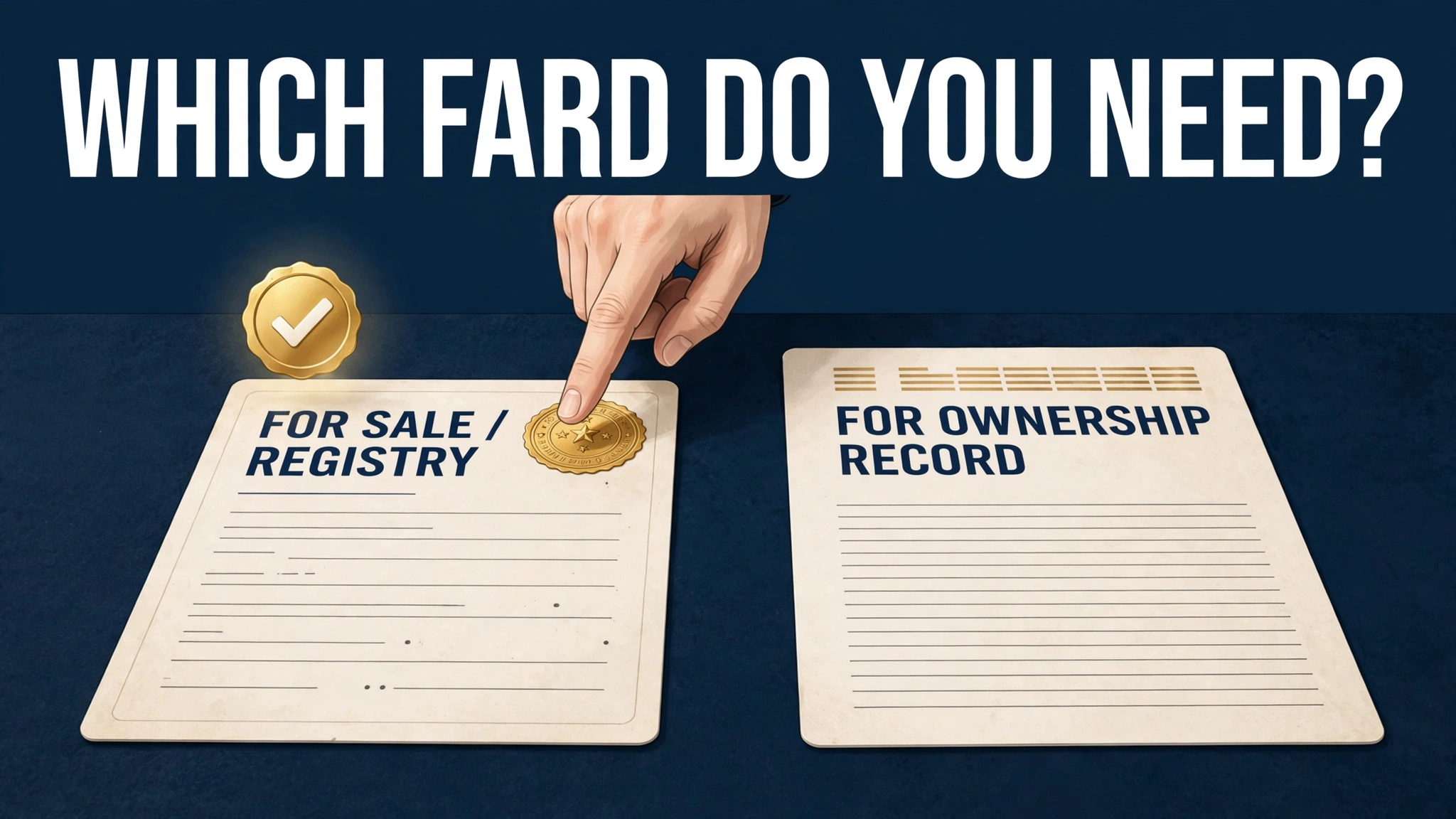
Fard-e-Malkiat tells you who owns the property today. Fard-e-Bai is the transaction document that lets a sale move forward at the registry. A safe deal uses both in the right order: verify the malkiat before you agree, make sure the bai is issued fresh for your sale, and complete the registry and intiqal so the record reflects your name. If the paperwork in front of you does not line up with this sequence, slow down and get the record corrected before you sign anything.
Disclaimer: This article is for general information only and is not legal advice. Land record procedures can change; consult a qualified lawyer or the Punjab Land Records Authority for guidance on your specific situation.