

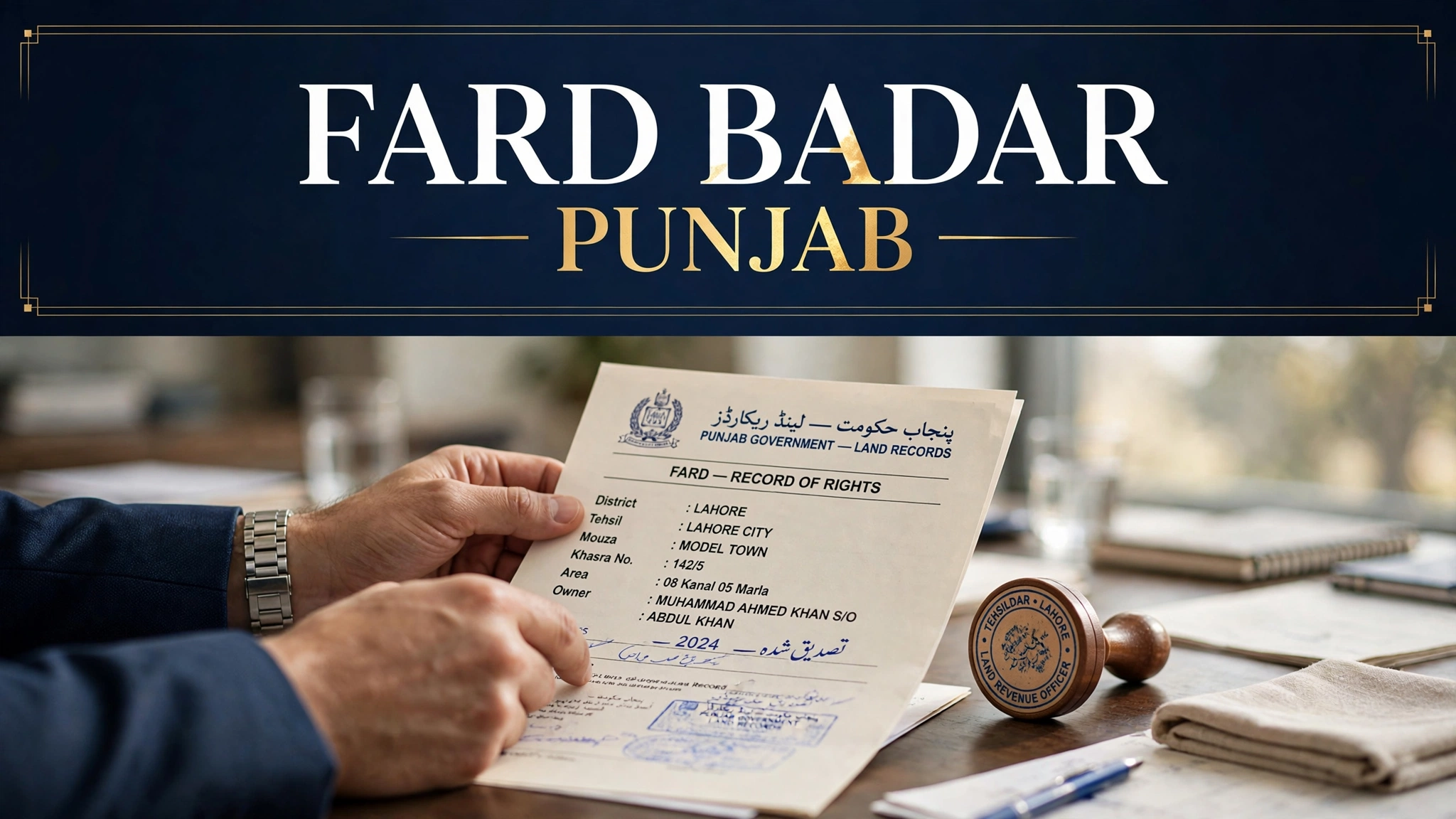
What Is Fard Badar and How Do I Get My Land Record Corrected?
You pull a fresh fard before buying a shop — and the owner’s name is misspelled. Or the khasra number shows the wrong area. Do you lose the deal, or can the record be fixed? The answer is fard badar: Punjab’s official process for correcting errors in the land record. Here is what it covers, how the Punjab Land Records Authority (PLRA) handles it, and when a correction request is not enough.
The Short Answer
Fard badar is the legal procedure for fixing mistakes in the land revenue record — wrong owner names, wrong khasra or khewat numbers, wrong areas, and similar clerical errors. You apply at the PLRA Arazi Record Centre, an official compares your claim against the original record, and the Assistant Director Land Records (ADLR) verifies and approves the correction. It is not a transfer of ownership — for that you need intiqal (mutation) — and it cannot settle who the real owner is when ownership itself is disputed.
What Fard Badar Actually Is (and Isn’t)
The word is simple: fard means the record extract, and badar relates to correction or amendment. Put together, fard badar means the correction of the record — a formal request that the revenue department amend an existing entry that does not reflect the true position.
It matters because the computerised land record is the document buyers, banks, and courts look at first. If the record says the wrong name, your sale cannot proceed: the buyer’s lawyer will flag the mismatch between your CNIC and the record, and no registry can be registered against a record that does not recognise you. Our guide on how to check property ownership online in Punjab shows the first step — always pull a current fard yourself before any deal, rather than trusting a seller’s photocopy.
What fard badar is not: a way to change ownership, a shortcut around intiqal, or a forum for deciding disputes. If two people both claim the same plot, the revenue officer cannot pick the winner through a correction — that question belongs to a court.
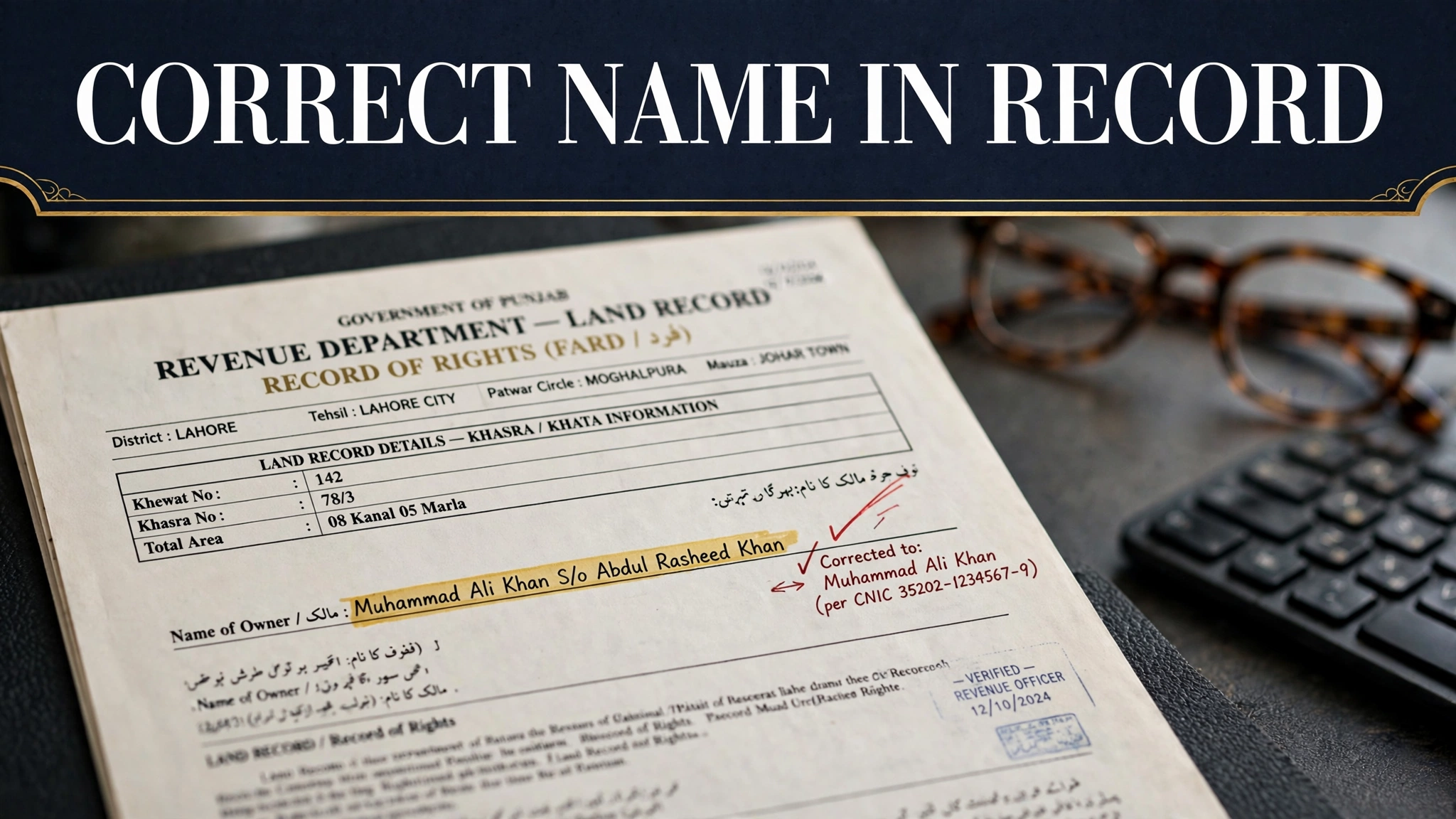
Common Errors That Need Fard Badar
- Misspelled or wrong owner names. The most common case — a name recorded differently from the owner’s CNIC, or a father’s name entered wrong.
- Wrong khasra, khewat, or khatuni numbers. Typing errors that point the record at the wrong parcel.
- Wrong area or ownership share. The record shows a different area or share than the title document entitles the owner to.
- Errors carried over during digitisation. Mistakes made when the old paper record was computerised into the LRMIS system.
- Mutation entry mistakes. An intiqal that was attested with a clerical error baked in.
How to Get Your Land Record Corrected: Step by Step
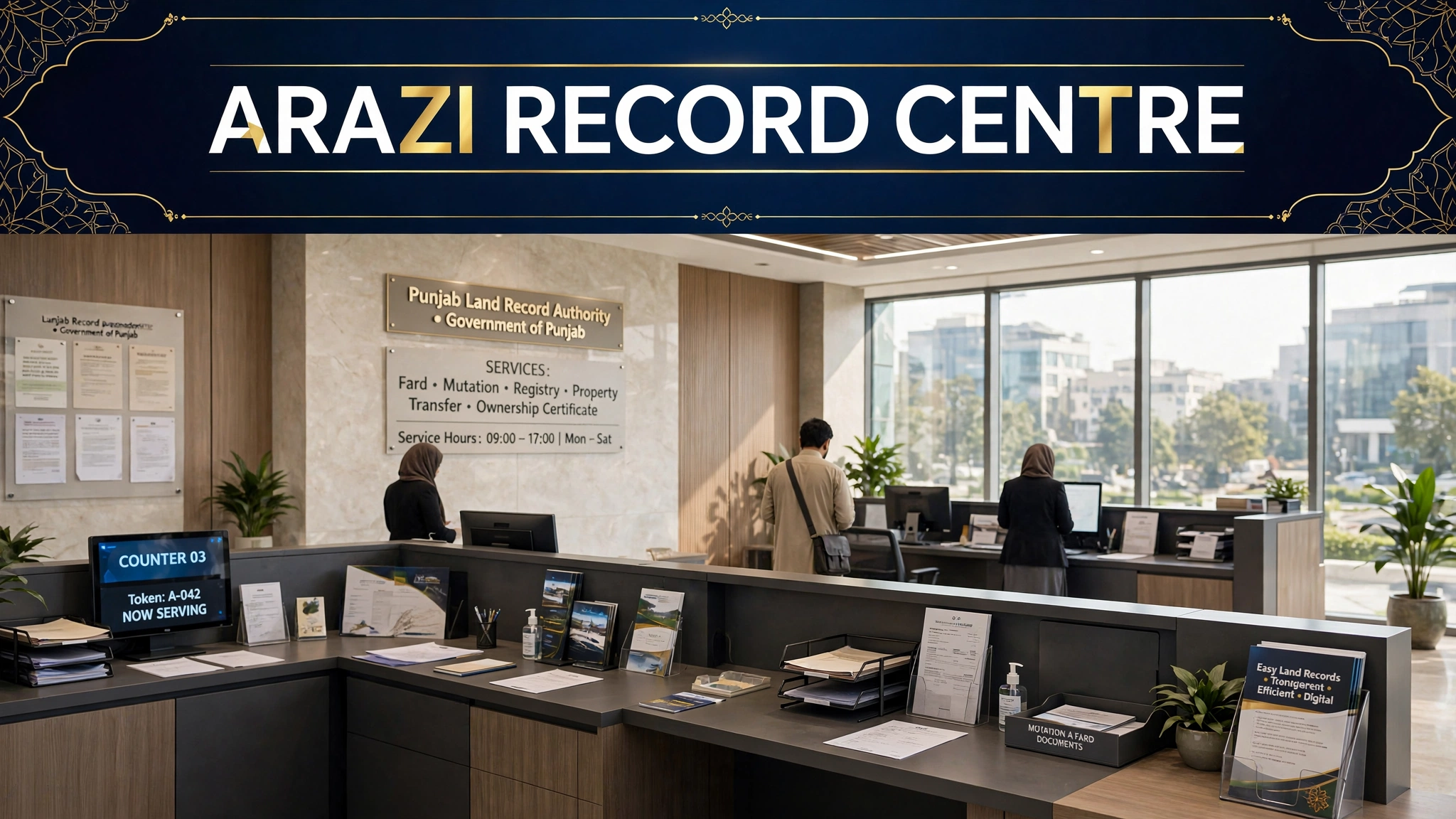
According to the PLRA’s published procedure, the correction process runs through your tehsil’s Arazi Record Centre:
- Visit the Arazi Record Centre with your original CNIC. Go to the service centre of the tehsil where the property is situated — you cannot file at a centre covering a different district.
- Register at the reception and get a token. Your CNIC details are registered, with photograph and biometric verification, and you receive a service token.
- The official examines your record. A service centre official pulls up your land record to determine whether the error is a data-entry mistake or one relating to the field record.
- The fard badar complaint is registered. The official prepares the correction note (the fard badar) and forwards it to the service centre in-charge.
- The record is compared and sent for verification. The in-charge compares the revised document against the existing record and forwards it to the ADLR.
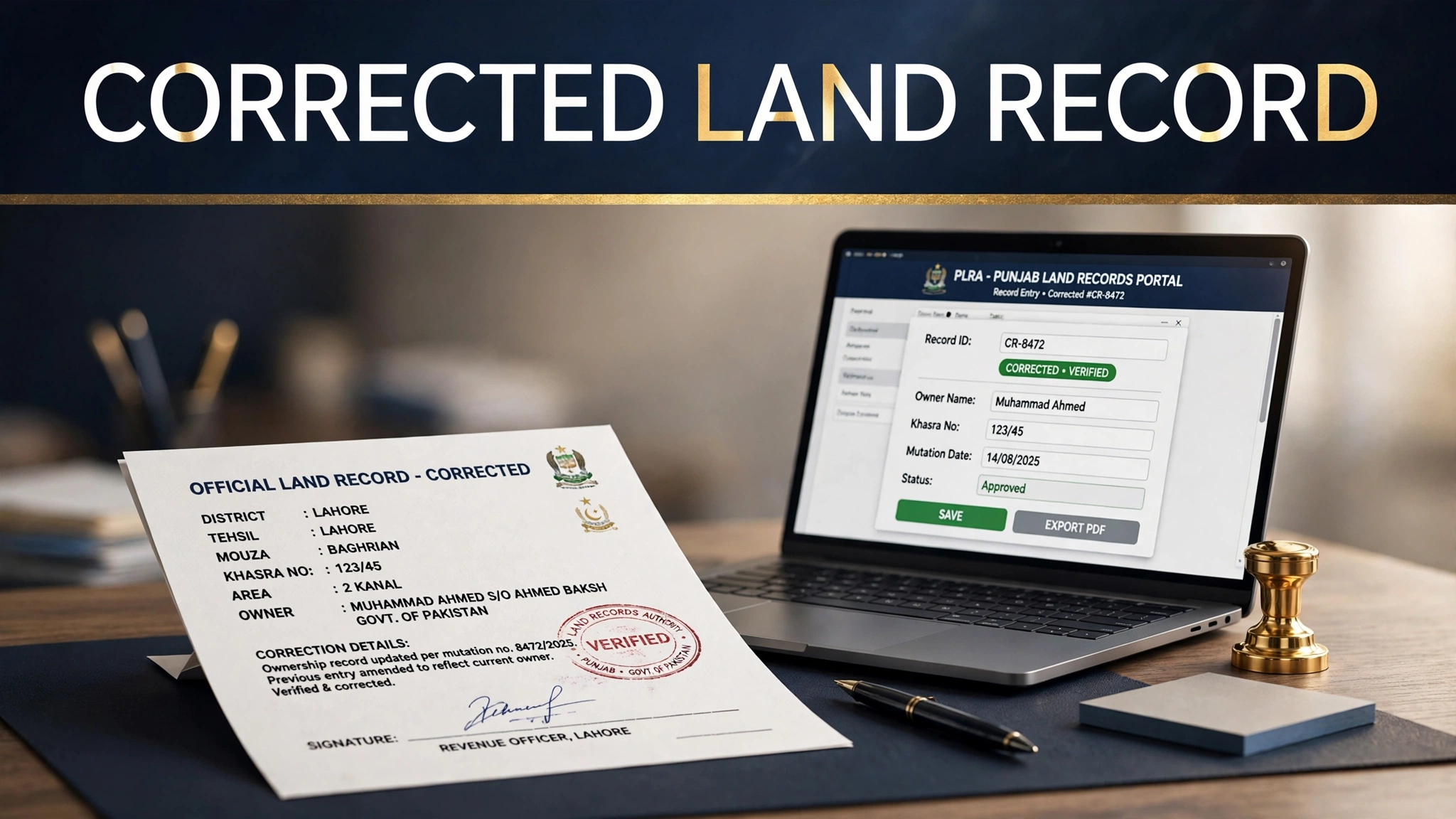
- The ADLR approves the correction. The Assistant Director Land Records conducts an inquiry and, when satisfied, formally verifies the fard badar — the record is then updated.
Keep every receipt and the token issued at each step; if the correction involves more than one department’s file, you will be asked to show them.
Fard Badar vs Intiqal vs Fard-e-Bai
| Term | What it does | When you use it |
|---|---|---|
| Fard badar | Corrects an error in an existing record entry | The name, number, or area on the record is wrong |
| Intiqal (mutation) | Records a genuine change of ownership after sale, inheritance, or gift | You bought the property and need the record updated to your name |
| Fard-e-bai | A fard issued specifically for the purpose of a sale | You are the seller and need a record extract to execute the transaction |
Mixing these up is a common source of delay: applying for a fard badar when what you actually need is an intiqal (or vice versa) means your file bounces between counters. Identify which one fits your situation before you queue up.
When Fard Badar Is Not Enough
A correction process can only fix what is demonstrably an error. It cannot create ownership, and it cannot decide a fight. You need a different forum when:
- Ownership itself is disputed. Two parties claim the same property — this goes to the civil court, not the record centre.
- A court order or decree is involved. The record is corrected on the strength of the court order, through the process the order directs.
- The “error” hides a transaction. If the record is technically accurate but the underlying transfer was fraudulent, that is a fraud case, not a clerical correction.
- Inheritance shares are contested. Where heirs disagree on who owns what share, the revenue officer cannot adjudicate.
A Note for Buyers in Sheikhupura
If you are buying commercial property in Sheikhupura — a shop, an office, a commercial plot, or a warehouse — run the fard check before paying token money, not after. Commercial parcels change hands more often and pass through more partnerships and firms, which means more chances for a name or share to have been entered wrong somewhere along the chain. A seller whose name does not exactly match the record cannot register a sale to you until the record is corrected — and that correction is the seller’s job to complete before the deal moves forward.
Frequently Asked Questions
How long does a fard badar take?
There is no fixed statutory timeline; the PLRA process requires the record comparison and ADLR inquiry to complete before approval. Ask for a reference or token number at the centre and follow up on it rather than assuming it will be fast.
Can I apply for fard badar online?
The application itself is processed at the Arazi Record Centre with in-person CNIC and biometric verification. You can verify your current record first on the official PLRA portal at punjab-zameen.gov.pk to confirm the error before visiting.
Does fard badar cost anything?
PLRA services carry prescribed fees and charges; the exact amount varies by service and is payable as the centre directs. Never pay an agent or middleman to “speed up” the correction — keep the official receipt for everything you pay.
Can I get fard badar if the property is a housing society plot file?
No — fard badar belongs to Punjab’s revenue-land record system. A society plot file is verified and corrected through the society’s own transfer office, which keeps a separate record.
A Final Word
A wrong name on the record is not a small detail — it blocks sales, bank financing, and inheritances until it is fixed. The good news is that genuine clerical errors have a defined fix: fard badar at the Arazi Record Centre. Pull a fresh fard, match it against the CNIC and title documents, and file the correction before the error becomes someone else’s reason to walk away from your deal.
Disclaimer: This article explains the land record correction process under Punjab’s revenue system for general information only. It is not legal advice. Procedures and requirements can change, and individual cases differ — consult a qualified lawyer for advice on your specific situation.