

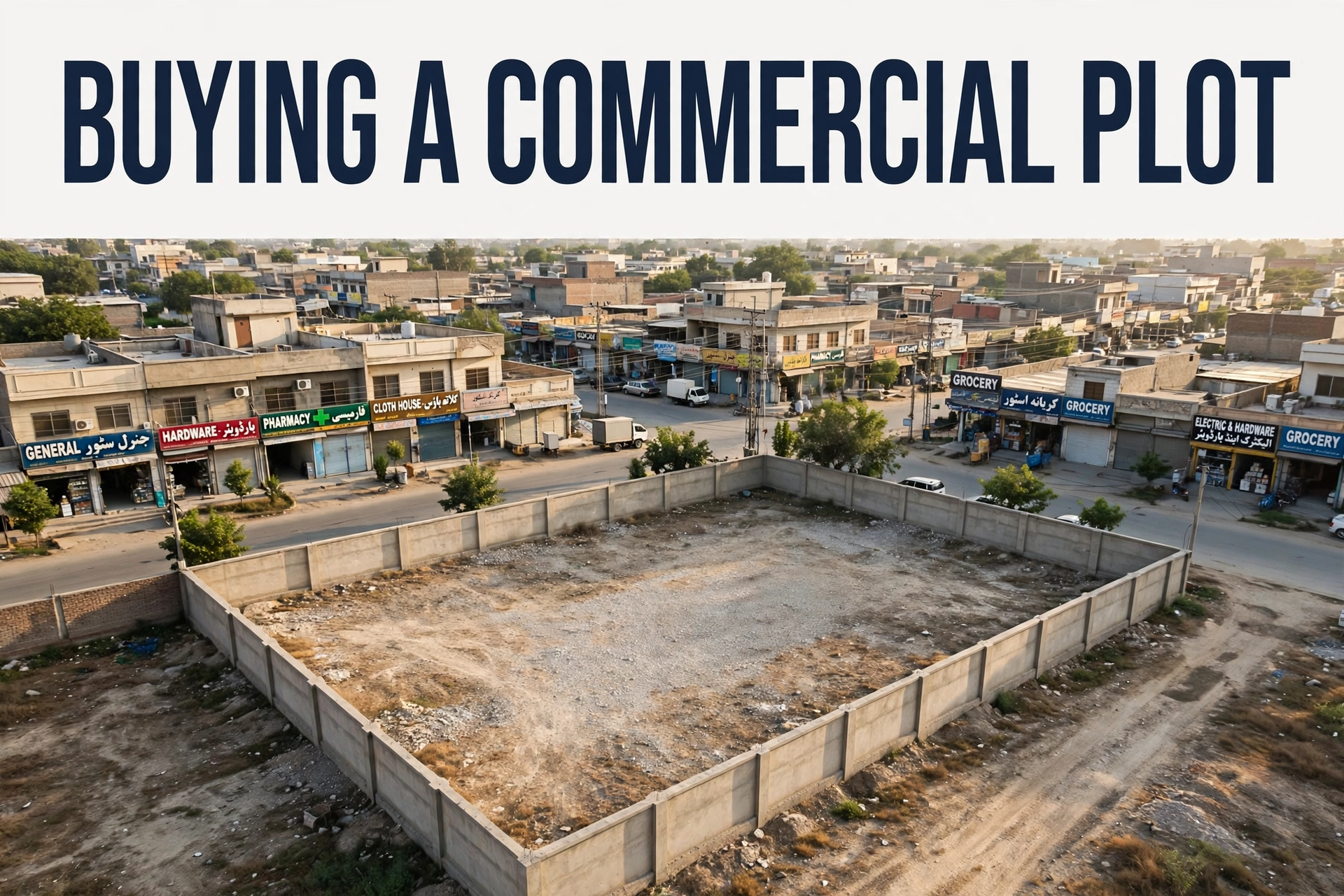
How to Buy a Commercial Plot in Sheikhupura: A Practical Checklist
A commercial plot is one of the most flexible purchases in the property market — it can become a shop, a showroom, a small plaza, a warehouse, or a long-term investment you build on later. But buying a commercial plot carries checks a residential purchase never will: is the land legally commercial, do the documents actually line up, and will the location pull customers or tenants for years? This checklist walks through every step a careful buyer takes in Sheikhupura’s market.
1. Be Clear About Your Goal First
Before you look at a single plot, answer one question: what will this plot do for you? A plot you plan to build on next year is judged very differently from one you intend to hold, and a plot meant for your own business is judged differently from one bought to rent out or resell.
- Build now: Prioritise ready infrastructure — developed surroundings, utility connections nearby, and a plot that is already demarcated and accessible.
- Hold as an investment: Prioritise direction of growth — which side of town is developing, where new commercial activity is appearing.
- Your own business: Prioritise footfall and visibility — the exact road and the exact spot on that road matter more than anything.
- Industrial or storage use: Prioritise access for heavy vehicles and distance from congested markets — a warehouse needs very different things from a retail shop.
Writing your goal down first protects you from buying a plot that is “a good deal” but wrong for your purpose.
2. Judge the Location the Way a Business Would
For commercial property, location is not a luxury — it is the business plan. A plot on a main road with steady traffic and easy parking behaves completely differently from one tucked two streets inside. In Sheikhupura, buyers weigh the big connectors — Lahore Road, Faisalabad Road, Sargodha Road, Gujranwala Road, and the GT Road corridor — against inner-city bazaar pockets near the old markets.
Ask these location questions for every plot:
- Who will pass by it every day? Footfall matters for retail; access for trucks matters for warehouses and industrial use.
- Can customers stop? A main-road plot with no parking or no service lane loses half its value to a buyer who thinks like a shopkeeper.
- Is the area still growing? New commercial construction, shifting businesses, and active rental demand are healthy signs. A street where shutters are going down instead of up is a warning.
- What surrounds it? Compatible businesses help each other — a hardware market, a bank branch, a franchise outlet nearby all signal demand. Conflicting uses (a noisy industrial unit next to your planned showroom) hurt.

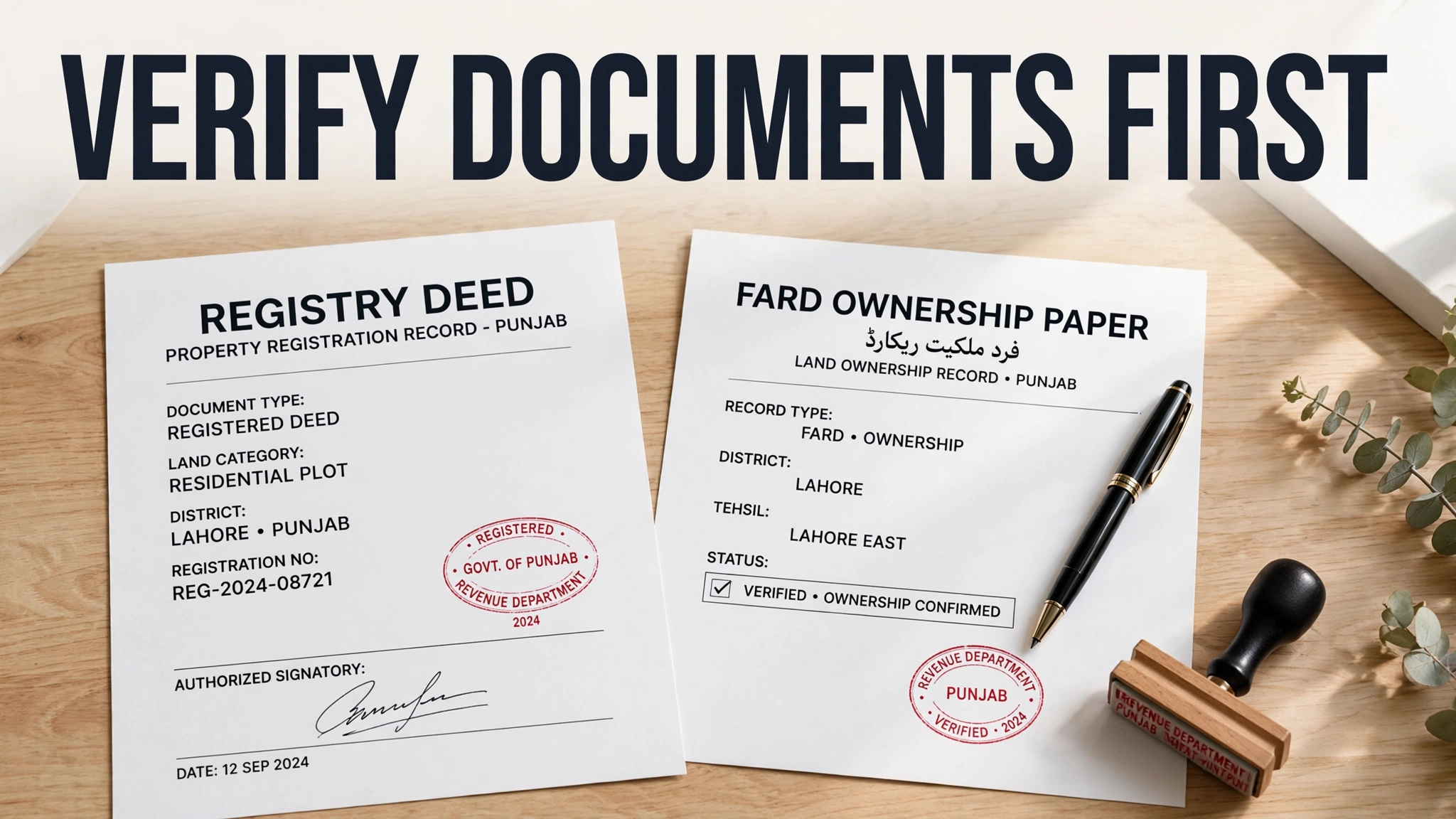
3. Verify the Documents Before Anything Else
This is the step where most bad purchases are made or avoided. Never rely on the seller’s word alone — cross-check the paper trail yourself.
- Fard-e-Malkiat: Get a fresh fard from the PLRA office or the Punjab land record portal. Confirm the seller’s name, the khasra number, the plot size, and that no stay order or dispute is recorded against it.
- Registry (deed): Check that the seller actually owns what they are selling — the name on the fard must match the name on the registry. If the ownership chain runs through heirs, make sure the difference between fard, registry, and intiqal is clear to you before you pay anything.
- Court cases: Run a litigation check. Our guide to checking whether a property has court cases against it walks through the district-court and revenue-court steps.
- Society or municipal NOC: If the plot sits inside a housing society, confirm the society’s allotment letter, transfer procedure, and that development dues are clear. For city land, confirm approval from the relevant municipal body.
4. Confirm It Is Legally Commercial
A plot being bought “for commercial use” is not the same as a plot being legally commercial. This is the single most misunderstood point in commercial plot buying.
- Declared commercial: The plot is officially designated commercial in the master plan or society layout. This is the cleanest status.
- Converted (commercialized): A plot converted from residential or agricultural to commercial through the official commercialization process, with the conversion fee paid and a commercialization NOC on record.
- Undeclared: Agricultural or residential land being sold “as commercial.” This is where buyers get burned — you may build nothing, get no construction approval, and face penalties.
Ask to see the commercialization document itself, not the dealer’s assurance. If the plot is inside a society, the society’s approval letter should state the commercial status explicitly.
5. Check Size, Shape, and Frontage
Commercial plots are sold in marlas and kanals, but the raw size is only half the story. Two plots of the same area can have very different business value.
- Frontage vs depth: A plot with wide road frontage and moderate depth suits retail far better than a deep, narrow plot of the same area.
- Shape: Regular rectangular plots are easiest to build on. Odd-shaped or tapering plots waste space and complicate construction approval.
- Corner plots: Corner plots command higher demand and rents — but verify the claimed dimensions on the ground, not just on the brochure.
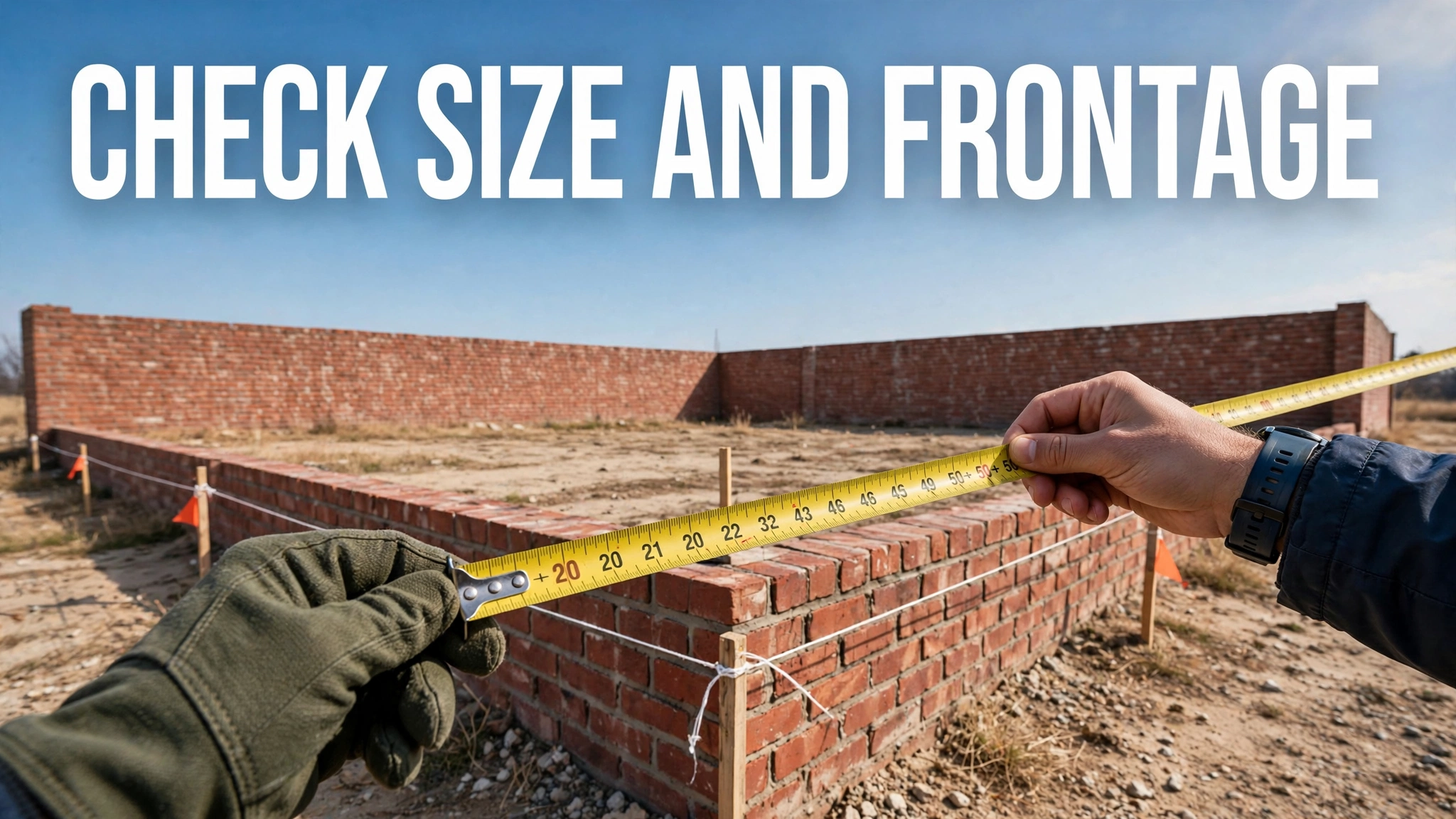
- Measure it yourself: Have the plot physically measured against the fard and registry. Encroachments and boundary disputes are common and cheap to discover early, expensive to discover late.
6. Visit the Site and Verify Ground Reality
Paper checks are not enough. Visit every shortlisted plot yourself, ideally at two different times of day.
- Demarcation: The plot on the ground must match the plot in the documents — same khasra, same boundaries, same access.
- Utilities: Confirm electricity, water, and sewerage availability nearby. A plot with no realistic utility path costs far more to develop than its price suggests.
- Access: Can a car, a delivery vehicle, or a rickshaw reach it comfortably? Narrow, disputed, or shared access lanes kill commercial value.
- Drainage: After monsoon rains, low-lying plots collect water. Visit after rain if you can, or ask neighbouring shopkeepers what happens in July.
7. Do the Payment and Paperwork in the Right Order
When the plot passes every check, run the transaction like a professional:
- Bayana (token/advance) agreement: Put the agreed price, payment schedule, possession date, and a clear clause on who pays any outstanding dues in writing. Have a lawyer review it.
- Final verification: Re-check the fard just before final payment — a fresh fard catches any dispute recorded between bayana and registry.
- Registry: Register the transfer deed at the sub-registrar’s office with both parties present. Keep copies of everything.
- Intiqal (mutation): After registry, get the mutation entered in the land records so the state’s record reflects your ownership — a mutation without registry, or registry without mutation, leaves your ownership incomplete.
- Receipts for every rupee: Never pay in cash without a signed receipt. Every payment should be traceable to a bank transaction.
Red Flags That Should Make You Walk Away
No deal is worth ignoring these:
- The seller hesitates to show original documents, or the documents are “with someone else.”
- The price is far below nearby plots for no clear reason.
- The plot’s commercial status exists only in the dealer’s description.
- Boundary measurements on the ground do not match the fard.
- There is an active stay order or unresolved court case.
- Pressure tactics — “pay token today or it is gone tomorrow” is a tactic, not information.
Bottom Line
Buying a commercial plot in Sheikhupura is straightforward when you work through the checklist: define your goal, judge the location like a business owner, verify every document, confirm legal commercial status, check size and frontage, visit the site, and run the payment in the right order. Buyers who skip steps are not saving time — they are buying someone else’s problems.
If you would rather have a local team run these checks with you — document verification, site visits, and negotiation with commercial plot dealers in Sheikhupura who know the roads and the records — Saeed Property Advisors handles exactly that. Reach out before you sign anything.
Disclaimer: This guide is general information for buyers, not legal advice. Property laws and procedures change over time — consult a qualified lawyer for your specific transaction.
3 Comments
Pingback: How to Buy an Industrial Plot in Sheikhupura: Documents, NOCs & Checklist
Pingback: Plot on Main Road vs Inside a Housing Society: Pros and Cons in Sheikhupura | Saeed Property Advisors
Pingback: How to Buy a Petrol Pump Site in Sheikhupura: A Practical Checklist | Saeed Property Advisors