

What Is Jamabandi and Why Buyers Should Check It
When buying land or property in Punjab, most buyers ask for the Registry and the Fard — but the document that holds the complete official picture is the Jamabandi. If you’re trying to understand what is Jamabandi in Punjab and why it matters for your purchase, this guide walks you through it in plain language.
What Is Jamabandi? (The Record of Rights)
Jamabandi is the Record of Rights (RoR) for a revenue estate — the official register maintained by Punjab’s revenue department that records who owns which land, how much area they hold, and what rights exist over it. Think of it as the master ownership ledger of a village or mauza: every Fard, every intiqal, and every khewat entry traces back to it.
The revenue department prepares and revises the Jamabandi periodically (traditionally every few years), with the patwari recording entries that a revenue officer then attests. Because it is the consolidated official record, courts and revenue authorities treat it as the authoritative statement of who holds what — which is exactly why buyers should read it before money changes hands.
What’s Inside a Jamabandi
A Jamabandi is not a single page — it’s a structured register. The entries you’ll see include:
- Khewat number — the owner’s holding number in the village record.
- Khatuni number — the cultivator’s holding number (where a tenant cultivates the land).
- Khasra number — the field/plot survey number; our guide on the khasra number explains how to find and read these.
- Owner details — name, parentage, and share of each owner (for example, one-half, one-fourth of a khewat).
- Cultivator details — who is actually in possession or cultivation, and under what terms.
- Area and land classification — measured area of each field and the land’s revenue category.
- Rent and revenue — rent payable by tenants and land revenue payable by owners.
- Remarks columns — marks such as mortgages (rehan), stays, or disputes, where recorded.
This is the full picture in one place — which brings us to how Jamabandi relates to the other documents buyers deal with.
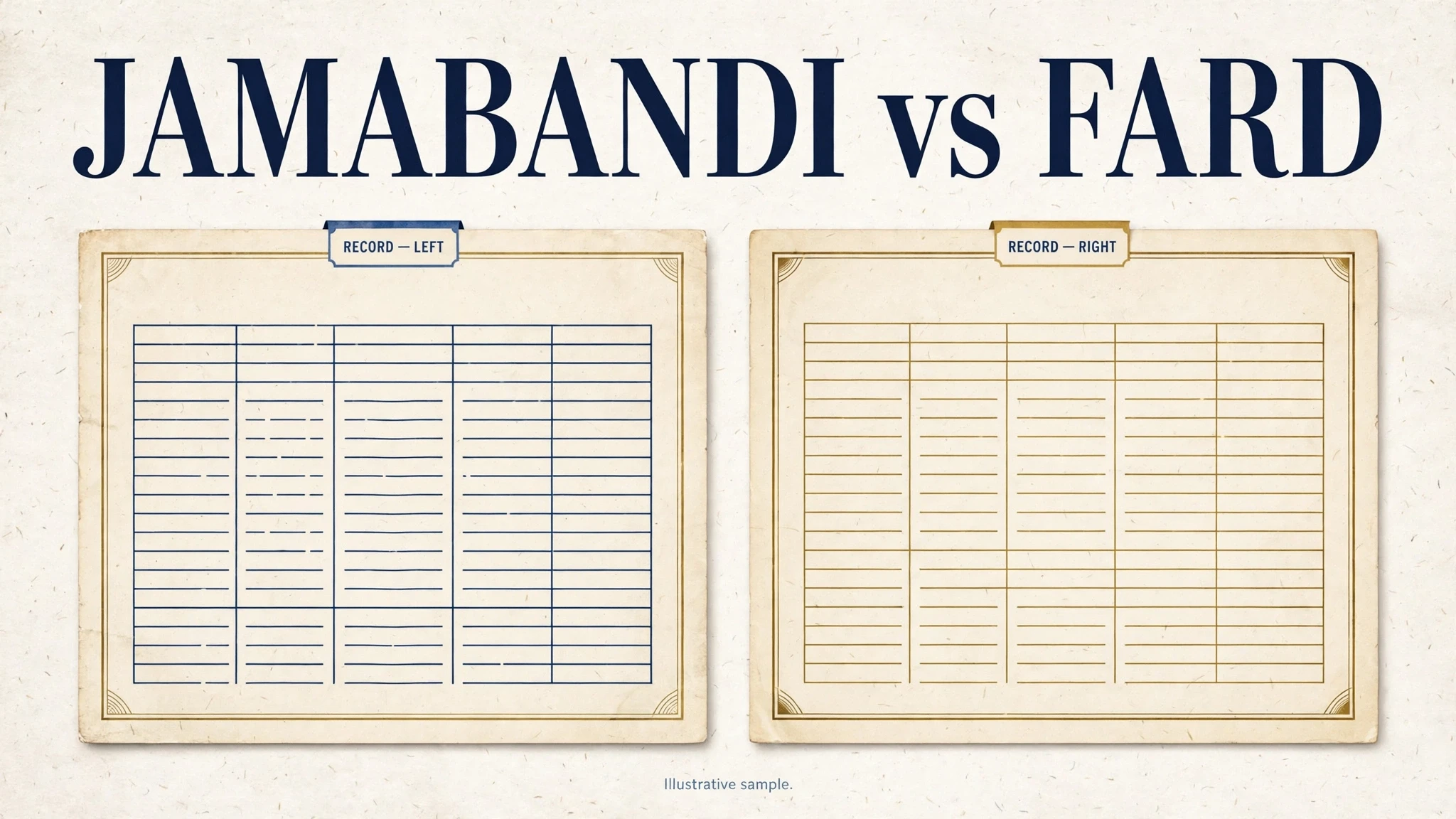
Jamabandi vs Fard vs Registry vs Intiqal
These four get confused constantly. Here’s the short version:
- Jamabandi is the master register of rights for the whole revenue estate.
- Fard is an extract from the Jamabandi — your individual copy showing your holding, used in transactions. See our explainer on the difference between Fard, Registry, and Intiqal for the full comparison.
- Registry is the registered sale deed — the contract of sale recorded with the sub-registrar.
- Intiqal (mutation) is the process of updating the revenue record after a transfer — the step that moves the ownership entry from seller to buyer inside the Jamabandi system.
The relationship matters: the Registry proves a sale happened, the Intiqal updates the record, and the Jamabandi is the record that must ultimately reflect you as owner. That’s why checking it is a buyer-side habit, not just paperwork.
Why Buyers Should Check Jamabandi Before Paying
Here are the five things a Jamabandi check protects you from:
1. The seller’s real share. Land is often jointly owned. The Jamabandi shows each owner’s exact share — a seller may only own one-fourth of a khewat while claiming to sell the whole. If the share doesn’t match the offer, stop and get legal advice.
2. Possession vs ownership gaps. Someone may be cultivating or occupying land they don’t own. The khatuni column shows who is in possession — if that’s not your seller, you’ll want to understand the arrangement before proceeding.
3. Recorded disputes and encumbrances. Mortgages, stays, and objections recorded in the remarks columns surface here first. These are the red flags that turn a good deal into a court case.
4. Inherited splits that were never settled. When owners pass away without mutation, heirs appear in the record with fractional shares. Buying from one heir who can’t bind the others is a classic dispute factory — learn how to check property ownership online in Punjab and cross-verify the Fard against the Jamabandi entries.
5. Wrong khasra, wrong land. Verifying that the khasra numbers in the Fard match the physical plot — on the ground — catches boundary and identity mistakes before payment, not after.
How to Check Jamabandi in Punjab
Three practical routes, from fastest to most thorough:
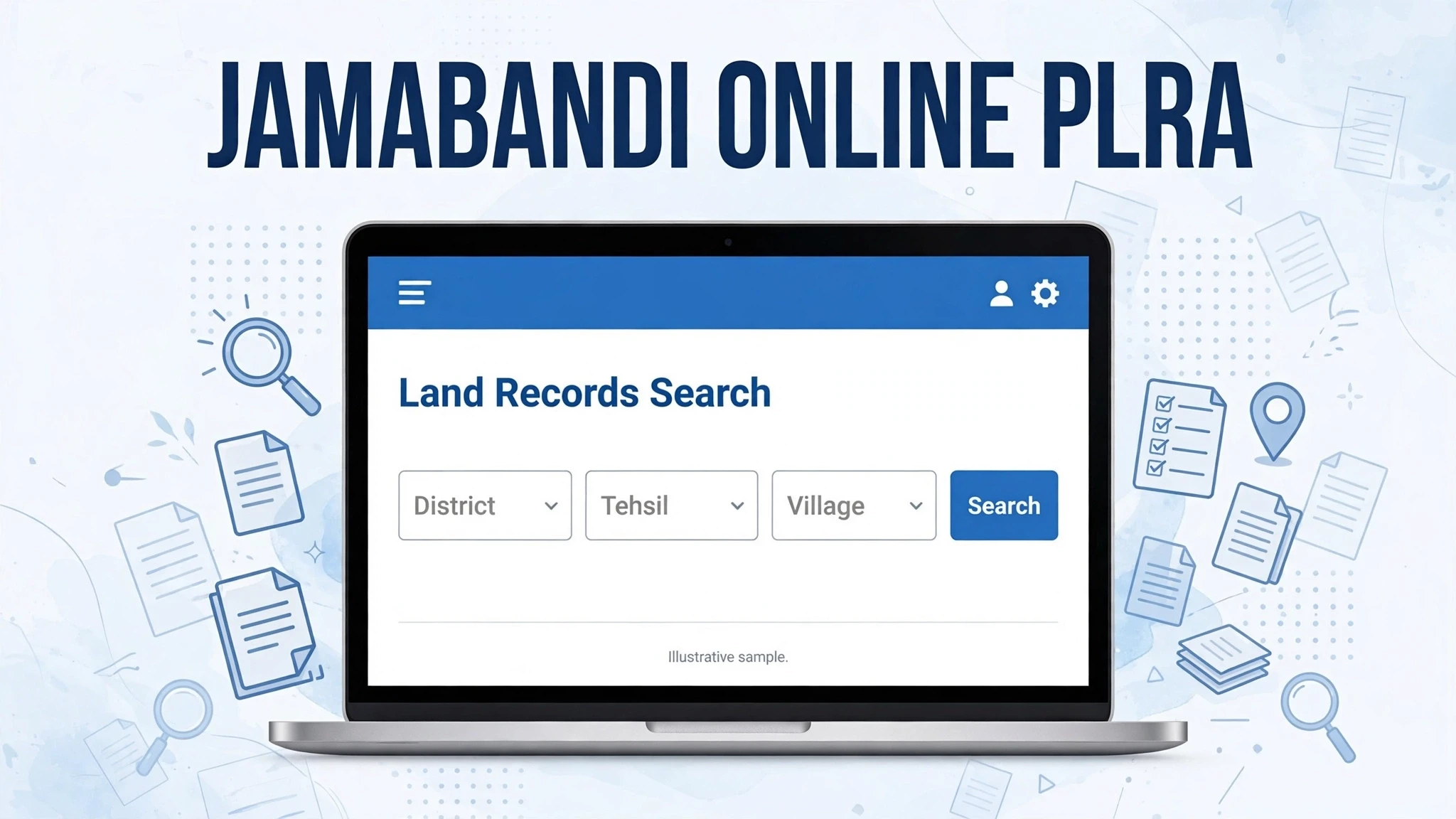
1. PLRA online portal. The Punjab Land Records Authority’s online services at punjab-zameen.gov.pk let you look up land records digitally. This is the quickest first check.
2. ARC / Land Record Centre. Visit your district’s Arazi Record Centre with the khasra or khewat details and get a printed, certified extract. For a purchase decision, a certified copy from the ARC carries more weight than a screen printout.
3. Patwari and village record. For agricultural land, the patwari’s current register confirms what the system hasn’t updated yet — always cross-check the online record against the field book where the deal is significant.
Limitations: What Jamabandi Won’t Tell You
Honest limitations, because a good verification stack uses Jamabandi with other checks:
- Urban societies may sit outside revenue records. Developed housing societies run on their own society records; revenue documents matter most for mauza/agricultural land and older settlements.
- It can lag reality. Transfers, mutations, and court orders take time to reflect. A Jamabandi check is one layer — pair it with a fresh Fard, physical verification, and a check for court cases against the property where the stakes warrant it.
- It won’t measure the plot. Area figures come from settlement records; for boundary certainty on a real purchase, a measured survey (pemaish) is the gold standard.
Buyer Mistakes to Avoid
- Reading only the Fard. The Fard is an extract — the Jamabandi shows the full holding, co-owners, and remarks. Always read the source.
- Skipping the cross-check. Seller’s story, Fard, Jamabandi, and ground position must all agree. Any mismatch is a pause signal.
- Ignoring shares. In jointly held land, every co-owner’s consent (or a proper partition) matters. One seller’s signature doesn’t sell another person’s share.
- Treating old records as current. Get the latest extract close to the deal date — a year-old Jamabandi copy can miss a recent mortgage or transfer.
Bottom Line
Jamabandi is the Record of Rights — the master register behind every Fard, every intiqal, and every ownership claim in Punjab’s revenue system. Checking it before you pay lets you confirm the seller’s real share, spot possession gaps and disputes, and make sure the land on paper matches the land on the ground. It takes a little effort up front; it saves a lot of regret later.
This article is general information about Punjab’s land record system — not legal or tax advice. For your specific transaction, consult a qualified legal professional or the revenue authorities.
If you’re evaluating a property deal and want the documents verified properly before you commit, talk to the Saeed Property Advisors team — document verification is part of what we do every day.