

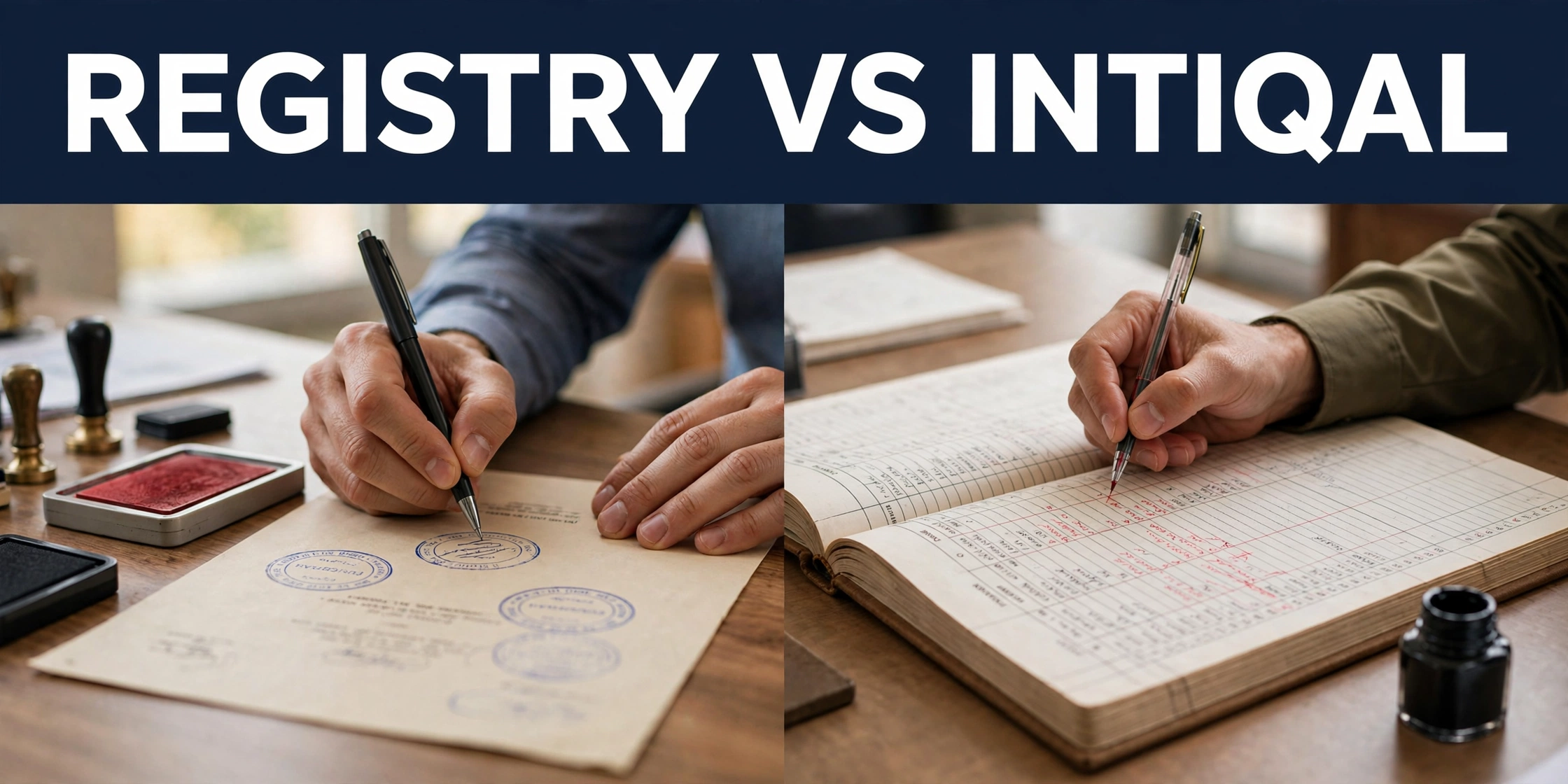
Registry vs Intiqal in Punjab: Why You Need Both
Almost every property deal in Punjab involves two documents buyers hear about constantly: the registry and the intiqal. Most buyers treat them as two names for the same thing — or assume one of them is optional paperwork. That misunderstanding of registry vs intiqal is behind some of the most painful ownership disputes in the province. This guide explains what each document actually does, what is missing when you only have one, and how to make sure your transfer is complete.
What the Registry Actually Gives You
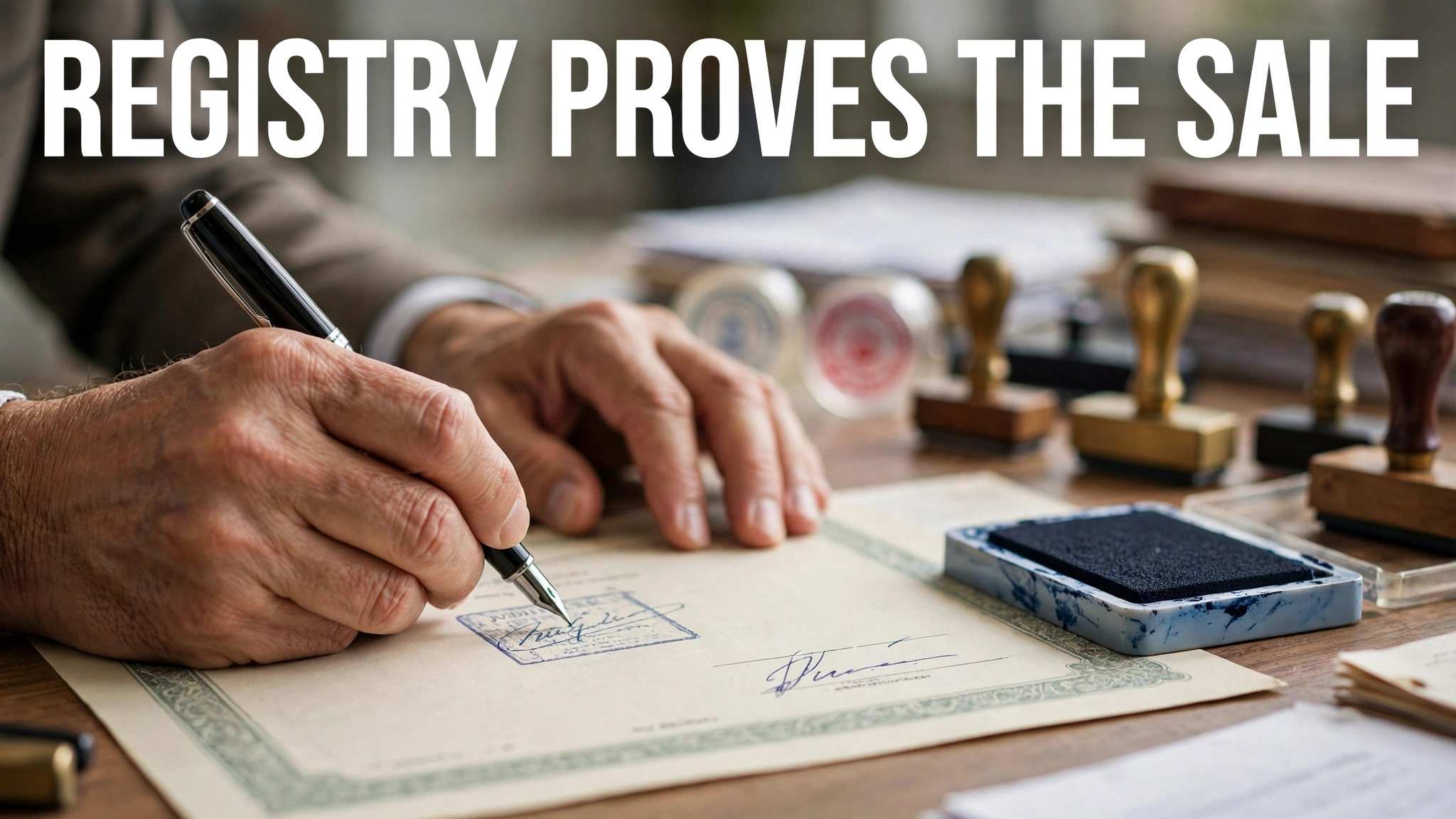
The registry is the registered sale deed — the written contract in which the seller transfers the property to you. It is executed on stamp paper, signed and thumb-printed by buyer and seller before a sub-registrar, and entered in the sub-registrar’s register with a bahi (book) number and jild (volume) number. Under the Registration Act, 1908, this registration is what makes the sale a legally enforceable transaction rather than a private agreement.
What the registry proves: that a sale took place, who the parties were, what property was transferred, what consideration was paid, and when. It is strong evidence of your purchase in court, and it is the document any serious buyer will want to see when you eventually resell.
What the registry does not do: update the government’s land revenue record. The sub-registrar’s office records the deed — it does not forward your name to the revenue department. After you walk out with your registered deed, the patwari’s register and the PLRA record can still show the seller as the owner. That gap is exactly what the intiqal exists to close. (For the three-way comparison with the fard, see our guide to the difference between fard, registry, and intiqal.)
What the Intiqal Actually Gives You
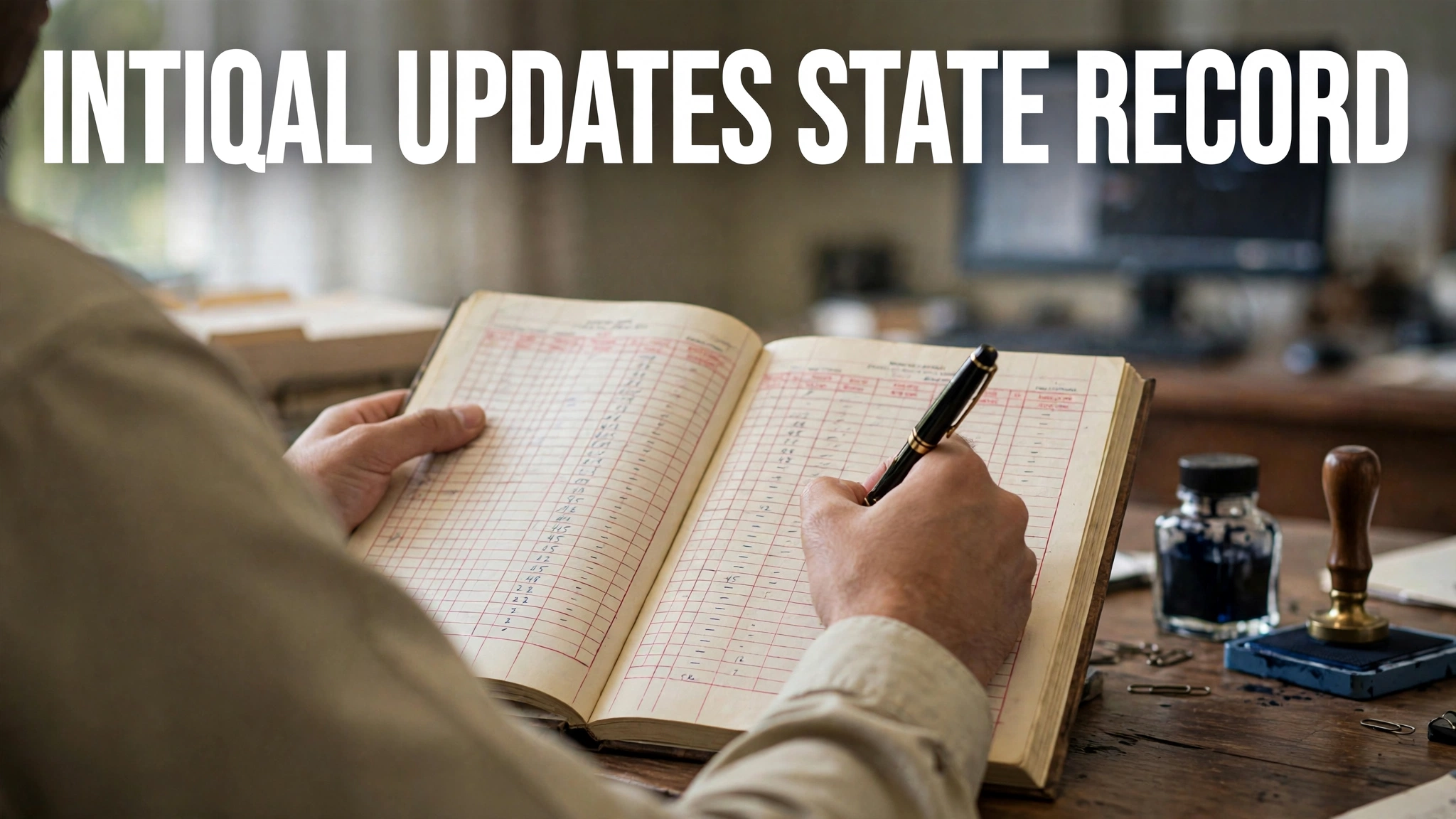
The intiqal — also called mutation — is the official entry in the revenue record that moves the property from the seller’s name to yours. It is recorded in the register of intiqalat under the Punjab Land Revenue Act, 1967, and processed at the Arazi Record Centre of the relevant tehsil. Our walkthrough of the mutation (intiqal) process covers the full sequence, but the core idea is simple: the registry is the transaction between you and the seller; the intiqal is the state updating its own books.
What the intiqal gives you: your name in the jamabandi (revenue record), the ability to obtain a fard in your own name, and a record every future buyer, bank, or authority will check. It is the entry that makes your ownership visible to the system — and, just as importantly, blocks the seller from appearing as the owner on any fresh document.
Why You Need Both: What Each One Leaves Open
The two documents answer different questions, and missing either one leaves a specific door open.
Registry without intiqal: the record still belongs to the seller
You hold a genuine registered deed, but the official record still names the seller. Anyone checking the land record — a future buyer, a bank, the revenue office — sees the seller as the owner. A dishonest seller can exploit that gap and attempt to sell the same property again, and that second buyer, who checked the record and saw the seller’s name, can look like the legitimate party. You would eventually win on the strength of your registered deed, but only after a long and expensive court fight you could have prevented.
Intiqal without registry: an entry with a weak foundation
Sometimes — particularly in older rural transactions — a buyer gets an intiqal entered without a registered sale deed, to save on stamp duty. This is dangerous. The mutation is an administrative entry recording that a change happened; it does not by itself create title. Courts have repeatedly held that a sale of property above a nominal value is not valid without a registered instrument. If the seller later denies the sale, that intiqal can be challenged and cancelled — and you lose the property. This is the classic “zubani intiqal” (oral mutation) trap: a name in the record with no registered deed behind it.
| Registry (sale deed) | Intiqal (mutation) | |
|---|---|---|
| What it is | Registered contract between buyer and seller | Entry in the revenue record updating ownership |
| Issued by | Sub-registrar | Revenue officer / Arazi Record Centre |
| Proves | The sale happened | The state’s record shows you as owner |
| Missing it means | No enforceable sale; intiqal can be cancelled | Record still shows the seller; double-sale risk |
The Correct Sequence — and the One Exception
For a normal purchase, the order is always the same: registry first, then intiqal. Execute the registered sale deed at the sub-registrar’s office, then take that deed to the Arazi Record Centre and apply for the mutation immediately — don’t wait weeks or months. Every day the record still shows the seller is a day of unnecessary risk.
The one exception is inheritance. When an owner dies, there is no sale and no registry — the heirs apply directly for an inheritance mutation (intiqal virasat) with the death certificate and family registration certificate. The same applies to court-ordered transfers: the decree itself is entered, with no registry involved. In every other case, the pair moves together.
The Two-Minute “Do I Have Both?” Check
Before you call any transfer complete, verify the pair:
- Registry in hand. You hold the registered deed with bahi and jild numbers, and the khasra/khewat numbers and area on it match the property you bought.
- Name on the record. Pull a fresh fard after the mutation is attested and confirm your name appears as the recorded owner — not the seller’s.
- Mutation number matches. The mutation number on your attested copy matches the reference on the fresh fard.
- No pending litigation. Check for court cases pending against the property that could freeze or challenge the transfer.
- Online confirmation. Verify the ownership record through the Punjab Land Records Authority portal — punjab-zameen.gov.pk — and compare it against the documents you hold.

FAQs
Is mutation the same as registry?
No. The registry (sale deed) is the registered contract that transfers the property between buyer and seller. The mutation (intiqal) is the entry in the revenue record that updates the government’s books to show the new owner. You need both.
Does a mutation alone prove I own the property?
Courts in Pakistan have treated the mutation as an administrative entry recording a change — not as a standalone title deed by itself. It is what the official record shows, but the registered deed remains the foundation of the transfer, which is exactly why the two must agree.
What if the seller refuses to come to the ARC?
This is a red flag. A genuine seller has no reason to avoid the mutation. If the seller is unavailable, a registered power of attorney holder can represent them — but a seller who disappears after taking payment is a classic fraud signal. Never pay the full amount before the mutation process is underway.
Do I need a mutation for inherited property?
Yes — inheritance mutation (intiqal virasat) is how the deceased owner’s name is replaced by the heirs’ names with their shares. Without it, none of the heirs can sell, mortgage, or divide the property in their own names.
Bottom Line
Think of it as a pair, not a choice: the registry proves the sale happened, and the intiqal puts your name on the state’s record. One without the other is an unfinished transfer — and an unfinished transfer is exactly where ownership disputes begin.
If you’re buying property in Sheikhupura and want the transfer done right — verified documents, registered deed, completed intiqal, and your name on the record — Saeed Property Advisors guides buyers through the whole process. Call or WhatsApp us on 0321-5491754 before you close the deal, not after something goes wrong.
Disclaimer: This article is general information about property transfers in Punjab, not legal or tax advice. Procedures can change, and every property has its own document history. For any specific transaction, consult a qualified property lawyer before making a decision.