

How Do I Check If a Property Has Court Cases Against It?
Buying a property that has hidden court cases against it is one of the most expensive mistakes a buyer can make in Pakistan. You can pay full price, get the registry done, and still end up fighting someone else’s battle in court for years — because a pending suit about the property doesn’t vanish just because you bought it.
This guide explains, step by step, how to check for court cases against a property in Punjab before you pay token money or sign a bayana.
Why a Court Case on a Property Is a Deal-Breaker
Under the legal principle of lis pendens (litigation pending), a buyer who purchases property that is already under dispute is generally bound by the final court decision. If the other party wins the case, the property can go to them — even though you paid for it in good faith.
That’s why checking for litigation is just as important as checking who owns the property. You can check property ownership online and see the seller’s name on the record, and the property can still have a court case sitting against it that the land record doesn’t show.
5 Ways to Check for Court Cases Against a Property in Punjab
1. Check the PLRA Fard for Stay Notations
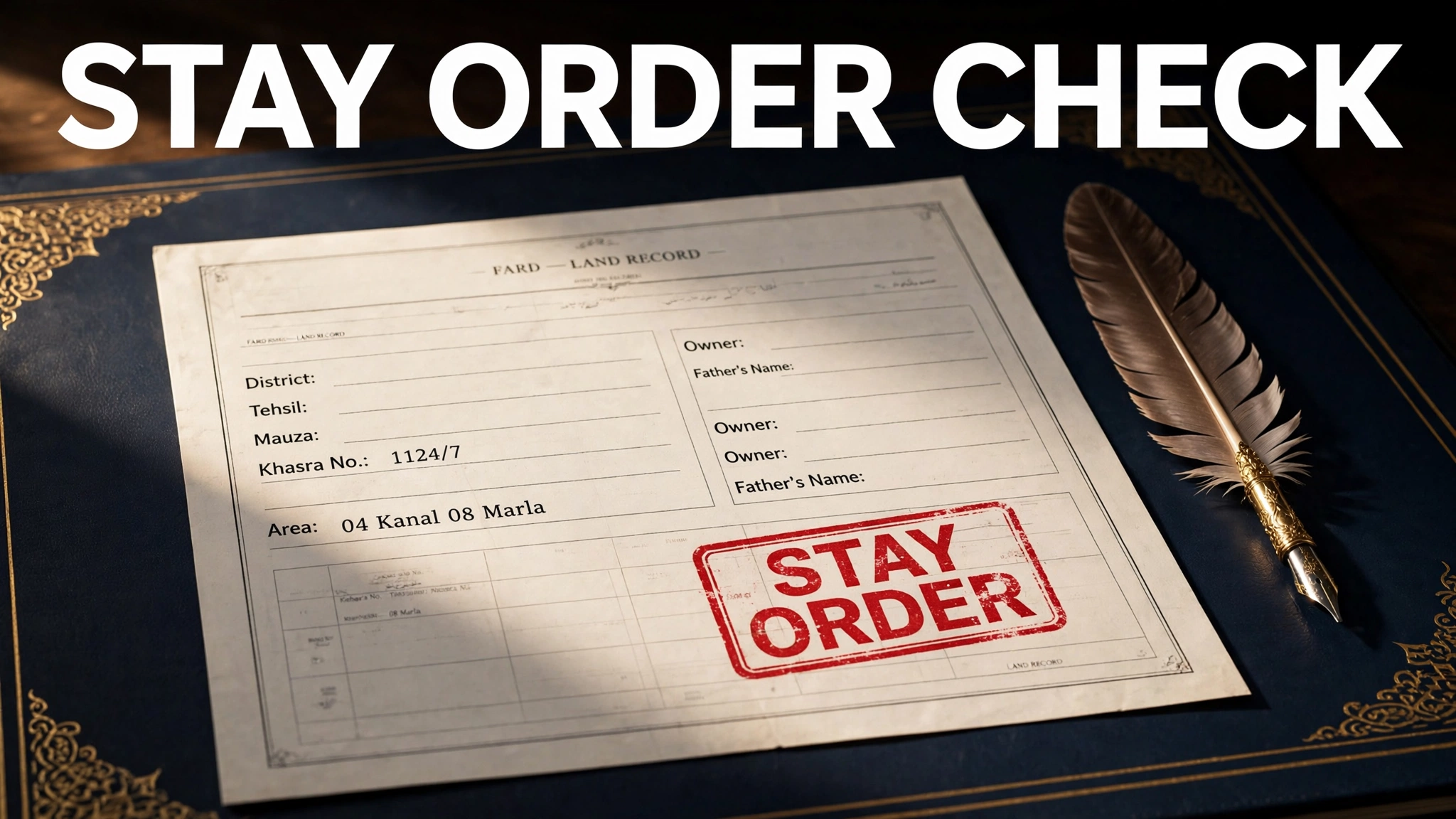
Your first stop is the Punjab Land Records Authority. Get a fresh fard (Record of Rights) for the property — online through punjab-zameen.gov.pk or from the nearest Land Record Authority centre — and look carefully for any stay order or dispute notations in the record.
A clean fard is a good sign, but it is not a guarantee. Stay orders and court decrees are not always entered into the revenue record immediately, and many disputes — inheritance fights, ownership declarations, fraud claims — are decided in civil courts, not revenue courts. If the fard shows any remark about a stay, pending case, or disputed entry, stop and investigate before going further.
2. Search the Revenue Court Case Management System (RCMS)
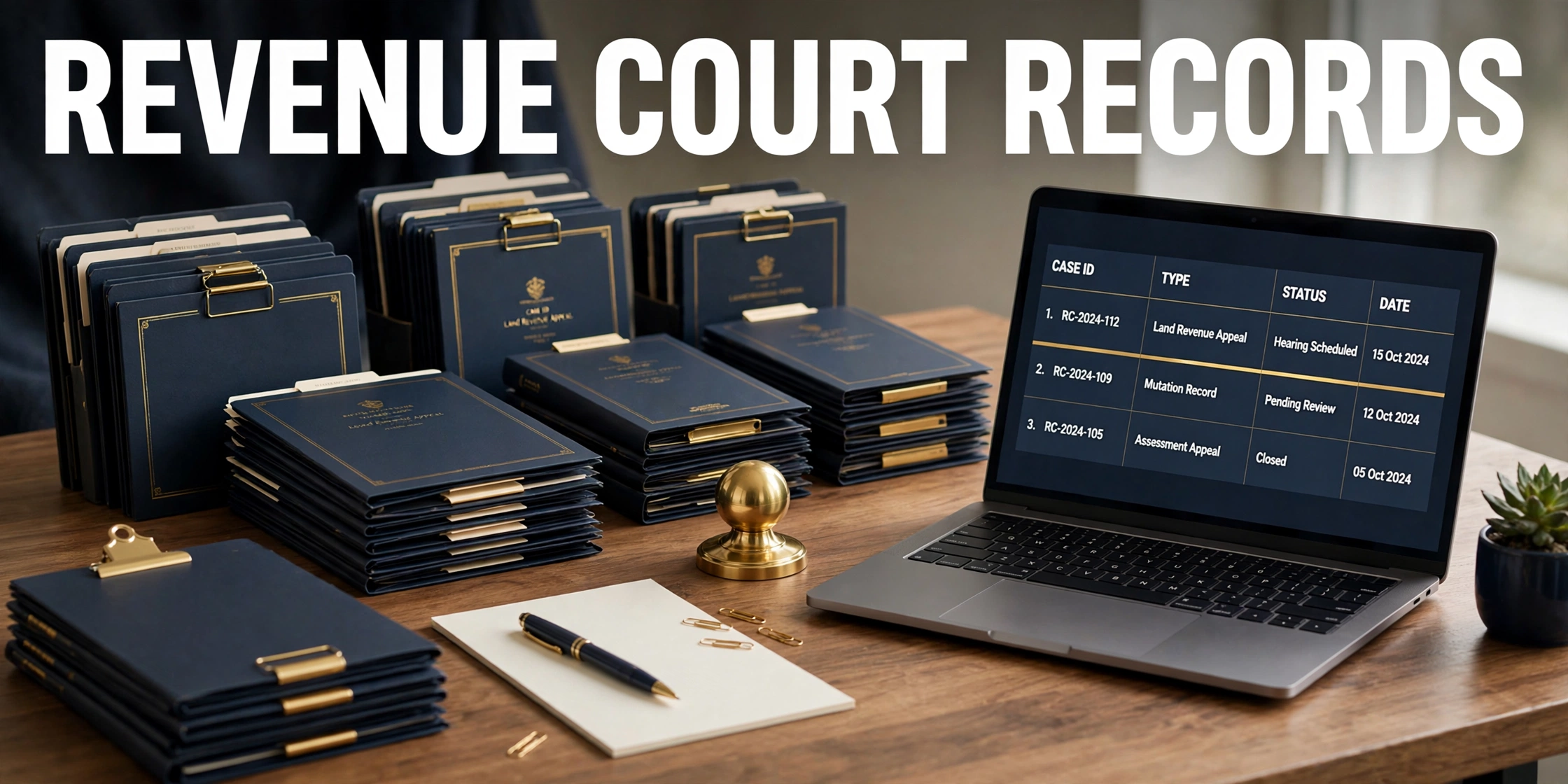
Punjab’s revenue courts — which handle mutation disputes, tenancy cases, and land revenue matters — have their own online case system, the Revenue Court Case Management System. The portal publishes daily cause lists and case statuses, so you can search for cases involving the property’s location, the khasra number, or the parties involved.
This check matters because revenue-court cases (for example, a mutation challenged by a family member) directly affect whether the record will ever show your name cleanly after purchase. Knowing the difference between fard, registry, and intiqal helps you understand why a mutation dispute can block your ownership even after a registered sale.
3. Search the District Courts and the Lahore High Court
Title and ownership disputes — declaration suits, inheritance cases, cancellation of sale deeds — are heard by civil courts, which run on a different system from the revenue courts. Check the district courts website for the relevant district (Sheikhupura falls under its own district courts) and the Lahore High Court website, searching by the names of the seller and the property’s location.
Online court searches need correct spellings and full names to work well. Searching with only a plot number rarely returns results, because civil court records are organized by parties and case numbers, not by property details. Gather the seller’s full name, CNIC name spelling, and any previous owner names from the document chain before you search.
4. Get a Sub-Registrar Record Search
The Sub-Registrar’s office holds the record of every registered transaction on a property. A record search there can reveal registered documents you didn’t know about — including lis pendens notes, registered stays, mortgages, and sale deeds executed by someone other than your seller.
This step catches things online portals miss, because it goes document by document through the property’s registered history. It is especially important for commercial property in Sheikhupura, where high-value plots and shops attract more claims and complicated ownership chains.
5. Hire a Lawyer for a Title and Litigation Search
None of the checks above replaces a lawyer’s title search. A property lawyer knows which forums to search, how court records are filed, and which red flags matter. They will examine the chain of title, run litigation searches across the relevant courts, and give you a written opinion before you commit.
This is the single highest-value step in property due diligence, and it costs far less than a single court hearing. Whether you’re buying commercial plots for investment or a shop for your business, a lawyer’s search is the step serious buyers never skip.
Red Flags That Suggest Hidden Litigation
- The seller pushes for a quick deal and resists giving you time for verification.
- The price is well below the market rate with no clear explanation.
- The seller won’t show original documents, or names on documents don’t match the seller’s identity.
- The property has changed hands several times in a short period.
- Someone else is in physical possession of the property, or neighbours mention a dispute.
- The deal is offered only through a power of attorney, not a registered sale deed.
Any one of these is a reason to slow down and investigate. Two or more together are a reason to walk away unless a lawyer clears the matter in writing.
What to Do If You Find a Case
If any of the five checks turns up a case against the property, get the case details — court name, case number, parties, and current status — before deciding anything. A dismissed case from years ago is very different from an active stay order. Don’t pay token money, don’t sign a bayana, and don’t assume the seller’s explanation is the full story until a lawyer has reviewed the actual court record.
Bottom Line
Checking for court cases against a property in Punjab takes five steps: the PLRA fard, the revenue court’s online system, the district and high court records, a Sub-Registrar record search, and a lawyer’s title search. Each one catches what the others miss. The buyers who lose money are almost always the ones who skipped one of these checks to save a few days or a small fee.
FAQs
Can I check for court cases on a property online in Punjab?
Partially. You can check the PLRA land record online for stay notations and search the revenue courts’ online case system for mutation and tenancy disputes. Civil court cases (title, inheritance, fraud) still require searches through court websites or a lawyer.
Does a clean fard mean the property has no court cases?
No. A clean fard means the revenue record shows no recorded dispute, but civil court cases may not appear on it. A clean fard is a necessary starting point, not a final clearance.
Who should I contact to verify a property before buying in Sheikhupura?
A local property lawyer for the legal checks, plus an experienced local dealer who knows the area’s dispute history. If you’re evaluating a deal in Sheikhupura, Saeed Property Advisors can help you navigate the verification steps — contact us before you pay any token money.
Disclaimer: This article is general information about property verification in Punjab, not legal advice. For any specific property or dispute, consult a qualified property lawyer before making a decision.
5 Comments
Pingback: Registry vs Intiqal in Punjab: Why You Need Both
Pingback: How to Buy a Commercial Plot in Sheikhupura | Buyer's Checklist
Pingback: Plot on Main Road vs Inside a Housing Society: Pros and Cons in Sheikhupura | Saeed Property Advisors
Pingback: What Is Jamabandi and Why Buyers Should Check It | Saeed Property Advisors
Pingback: Affidavit File vs Allotment File vs Transfer File: What's the Difference? | Saeed Property Advisors