

What Is a Khasra Number and How Do I Find It?
Every piece of land in Punjab’s revenue records has an identity number. For rural and agricultural land, that number is the Khasra number — the single most important detail on a Fard, and the one buyers mix up most often. If you are dealing in property in or around Sheikhupura, understanding it protects you from buying the wrong field, the wrong share, or nothing at all.
What Is a Khasra Number?
A Khasra number is the unique survey number assigned to one specific field or parcel of land inside a mouza (the revenue village). Think of it as the land parcel’s ID card:
- No two fields in the same mouza share a Khasra number. The number is unique within that village’s record.
- It links the paper to the ground. The Khasra number appears on the village map (the Aks Shajra or Shajra Kishtwar), so you can point to the exact field a document refers to.
- It is stable. Ownership may change hands many times, but the Khasra number of the parcel stays the same.
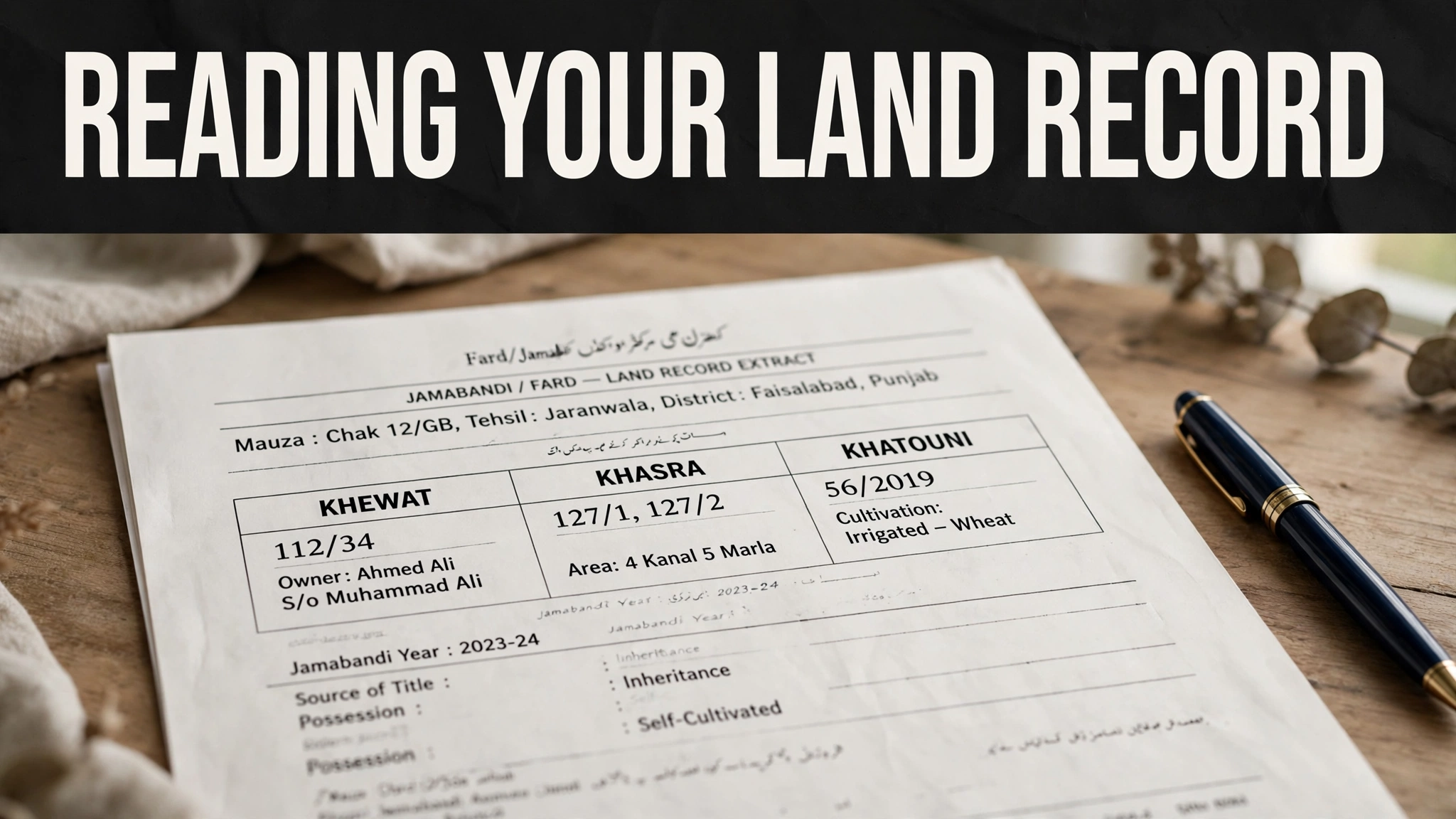
- Subdivisions get sub-numbers. When a field is split — for example, among heirs or after a partial sale — the parts keep the parent number with a suffix, such as 127/1 and 127/2, rather than receiving brand-new numbers.
The system dates back to the British-era revenue settlement and is still the backbone of how Punjab’s patwaris record land today.
Khasra vs Khewat vs Khatuni: Don’t Confuse the Three
A Fard shows several numbers side by side, and this is where most people get lost. The three numbers answer three different questions:
| Number | Answers | Example meaning |
|---|---|---|
| Khasra | Which field? | Parcel 127 in the mouza |
| Khewat | Whose ownership account? | The owner’s account holding parcels 127 and 128 |
| Khatuni | Who cultivates it? | The tenant or sharecropper farming parcel 127 |
In short: the Khasra identifies the land, the Khewat identifies the owner, and the Khatuni identifies the cultivator. One Khewat (one owner) can hold several Khasras (several fields), and one Khasra can have cultivation entries under a Khatuni that differ from the owner — common where land is rented out for farming.
Where Your Khasra Number Appears
Once you know what to look for, the Khasra number is easy to spot. It appears on:
- Fard-e-Malkiat — the ownership extract lists Khasra numbers in their own column under each Khewat.
- Jamabandi — the village’s periodic record of rights shows Khasra, Khewat and Khatuni together.
- The sale deed (registry) — a proper deed always names the Khasra number being sold. If it doesn’t, treat that as a red flag.
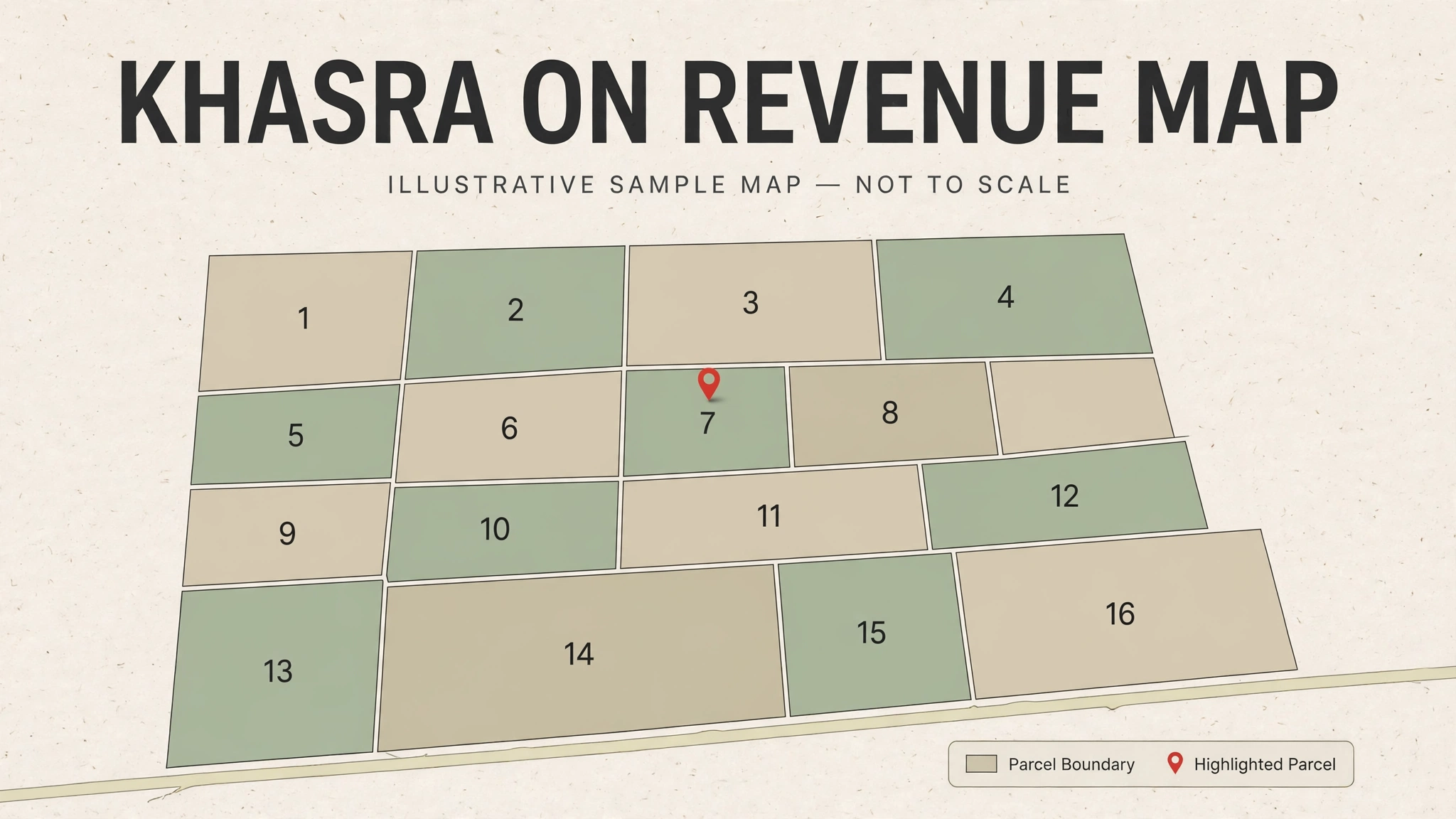
- The Aks Shajra (village map) — each parcel drawn on the map carries its Khasra number.
- The PLRA online record — Punjab’s digitized record shows the same numbers as the paper Fard.
If you need a refresher on reading these documents, see our guides on how to check property ownership online in Punjab and the difference between fard, registry and intiqal.
How to Find Your Khasra Number Online in Punjab
The Punjab Land Records Authority (PLRA) has digitized most village records, so you can look up the Khasra number without visiting a patwari:
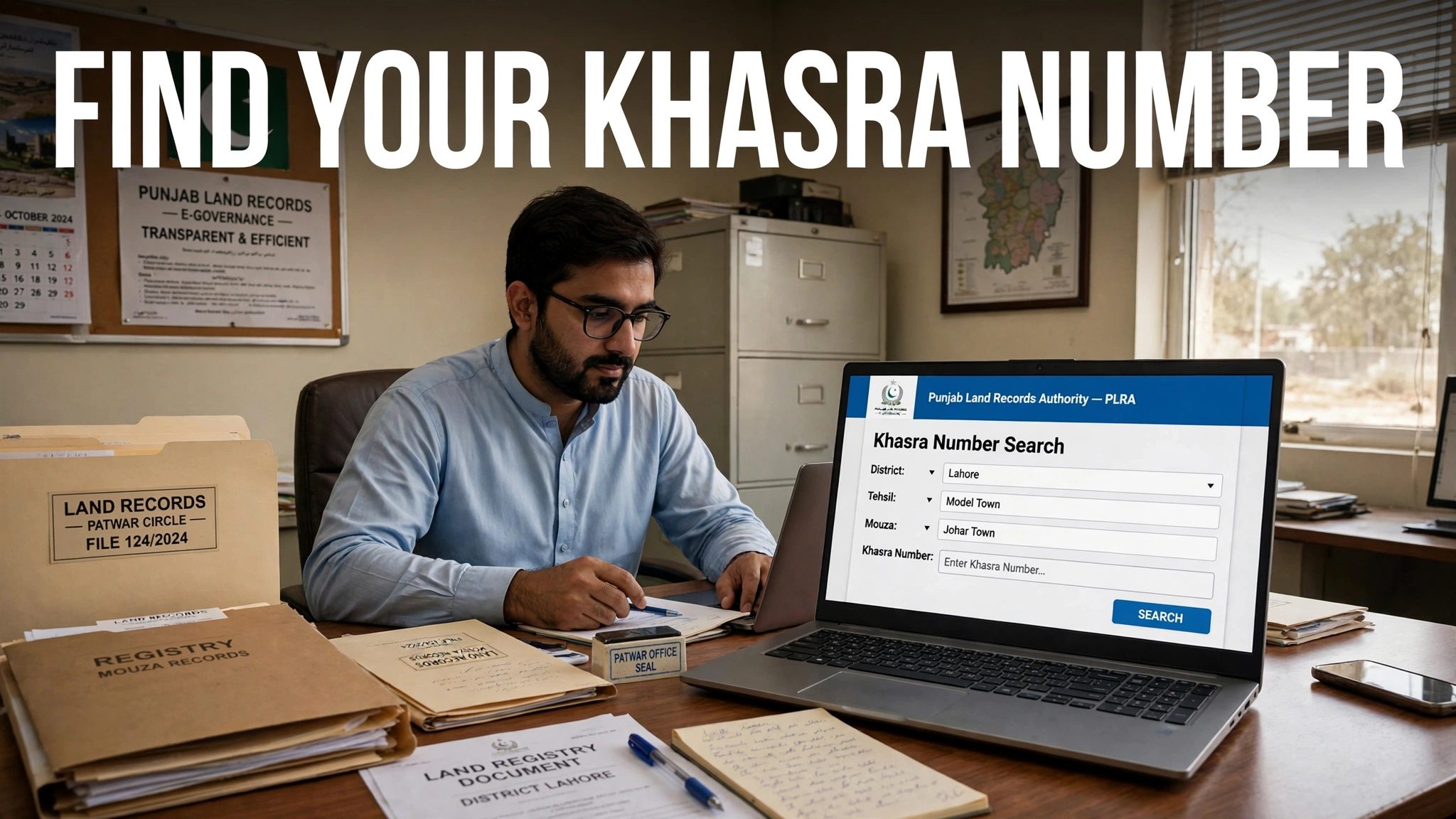
- Open the PLRA portal at punjab-zameen.gov.pk and go to the online land-record services.
- Select your district, tehsil and mouza.
- Choose how to search: by owner name, Khewat number, or Khasra number — you can start from whichever detail you already have.
- Enter the details, complete the verification step, and view the record. The Khasra numbers appear in their column exactly as on the paper Fard.
The online copy is for information and verification. For transactions, courts or bank work, get a certified Fard from your nearest ARC (land record center) — the online view tells you which Khasra to ask for.
Finding It Offline
If the record isn’t digitized for your mouza, or the online details look wrong:
- Visit the patwari of your mouza — he maintains the register that the Khasra number comes from and can point to the parcel on the village map.
- Visit an ARC center with your CNIC and request the Fard for your Khewat; the Khasra numbers come printed on it.
- Check your sale deed — your own registered deed names the Khasra number you purchased.
Why Buyers of Commercial and Business Property Should Care
Khasra numbers matter far beyond farmland. Much of the commercial property in Sheikhupura sits on land that was once agricultural — a commercial plot on a main road may still carry its old Khasra number in the revenue record. Before committing:
- Match the deed to the Fard. The Khasra number on the seller’s sale deed must match the Khasra on the current Fard under the seller’s Khewat.
- Specify subdivided numbers. If you are buying part of a field, the agreement and deed must name the exact sub-number (for example, 127/1) — “part of Khasra 127” is not precise enough.
- Confirm it on the map. The revenue map lets you verify that the Khasra number actually sits where the seller claims the land is.
- Check the cultivation column. A Khatuni entry showing an active tenant means someone else has recorded rights on the land — settle that before paying.
Common Mistakes to Avoid
- Same number, different village. Khasra 127 in one mouza is a completely different parcel from Khasra 127 in the next mouza. Always pair the Khasra number with the mouza, tehsil and district.
- Old vs new settlement numbers. After a re-settlement, Khasra numbers can be re-allotted. Very old documents may show a number that no longer matches the current record — the patwari can reconcile them.
- Trusting a verbal number. Never accept a Khasra number quoted from memory in a deal. Verify it on a current Fard or the PLRA portal before any token money changes hands.
Frequently Asked Questions
Can two people own the same Khasra number?
Yes — co-owners can hold shares in one Khasra under a joint Khewat. The Fard shows each owner’s share against the same Khasra number.
Does the Khasra number change when land is sold?
No. The parcel keeps its Khasra number; only the Khewat (ownership account) and Khatuni entries are updated through mutation (intiqal).
Is the Khasra number enough to prove ownership?
No. It identifies the parcel, not the owner. Ownership is proven by the Khewat entry on a current Fard in the seller’s name, backed by a registered deed.
Get Your Documents Verified Before You Deal
Reading a Fard correctly takes practice, and a wrong Khasra number can derail an entire transaction. Contact Saeed Property Advisors and our team will help you verify the Khasra, Khewat and ownership chain before you commit — for commercial and business property as well as residential deals.
Disclaimer: This article is for general information only and is not legal advice. Always verify land-record details with the Punjab Land Records Authority, your ARC center, or the patwari of the concerned mouza before making any property decision.
2 Comments
Pingback: How to Get a Fard from PLRA: Online and at the ARC | Saeed Property Advisors
Pingback: What Is Jamabandi and Why Buyers Should Check It | Saeed Property Advisors