

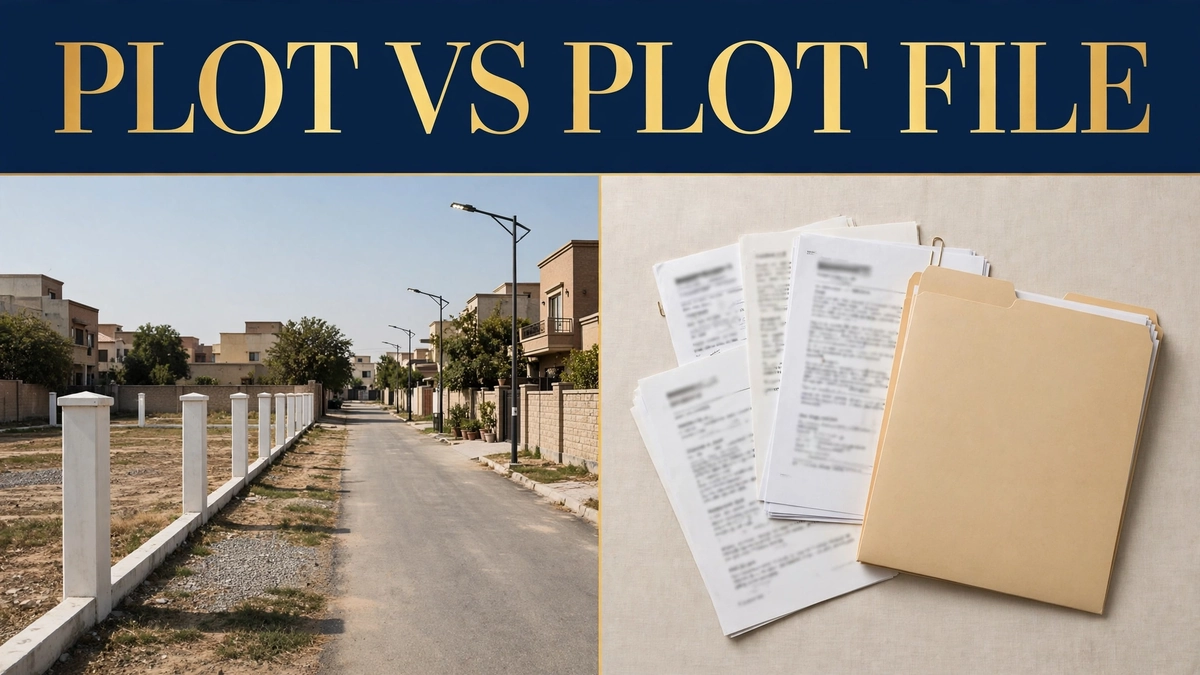
Plot vs Plot File: Complete Difference Explained in Pakistan
Property dealers in Punjab often use the words “plot” and “plot file” as if they meant the same thing. They do not. Getting the plot vs plot file difference right is one of the first things a buyer should do in Pakistan, because the two come with different levels of risk, different documents, and different ways of checking that your money is safe.
In short: a plot is real land with a fixed location. A plot file is a document that represents your future right to receive a plot once a housing project develops and assigns locations. This guide explains exactly what changes between the two.
What Is a Plot?
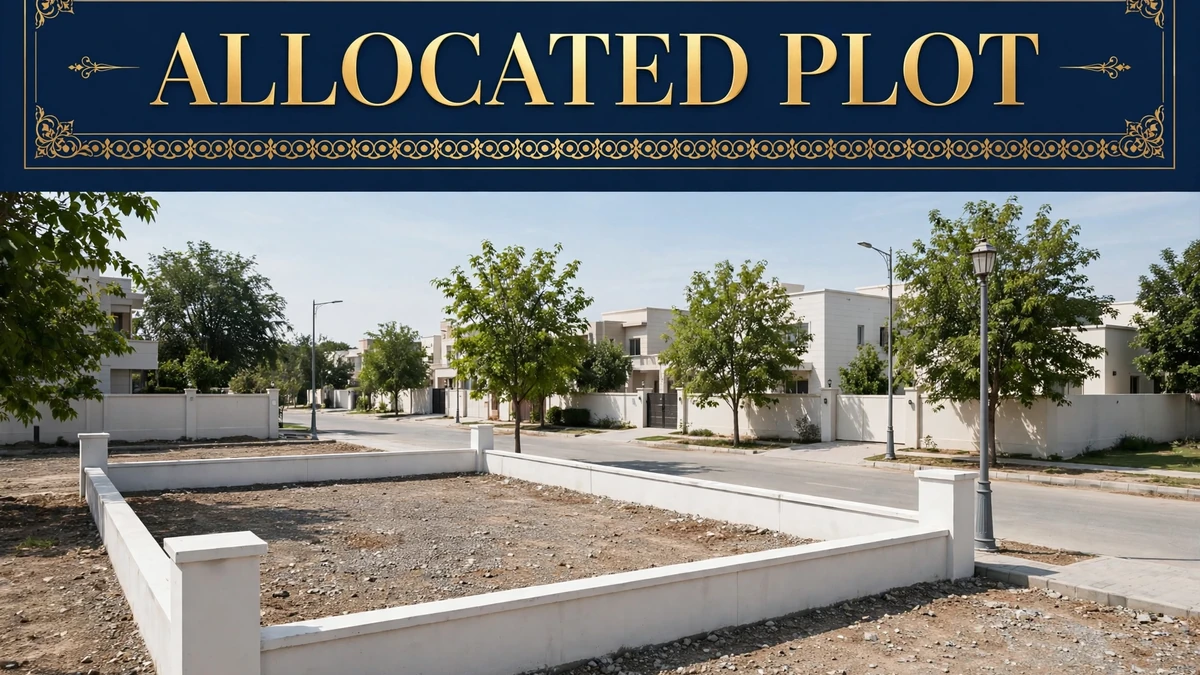
A plot is a physical, demarcated piece of land that already exists on the ground. It has a specific plot number, usually a block or sector, and defined boundaries you can walk around. You can visit it, point to it on the society’s map, and check its position against the project layout.
Plots are normally sold after allocation — the project has assigned that exact parcel to a specific owner. With an allocated plot you receive documents tied to that specific piece of land: an allotment letter, a transfer letter, and eventually possession. Once possession is handed over and the transfer is complete, the land is yours to build on (with the society’s or the relevant authority’s approval).
An allocated plot also connects to the standard ownership chain in the revenue record — the same fard, registry, and intiqal documents that apply to other land in Punjab. That means the verification steps are familiar and well documented.
What Is a Plot File?
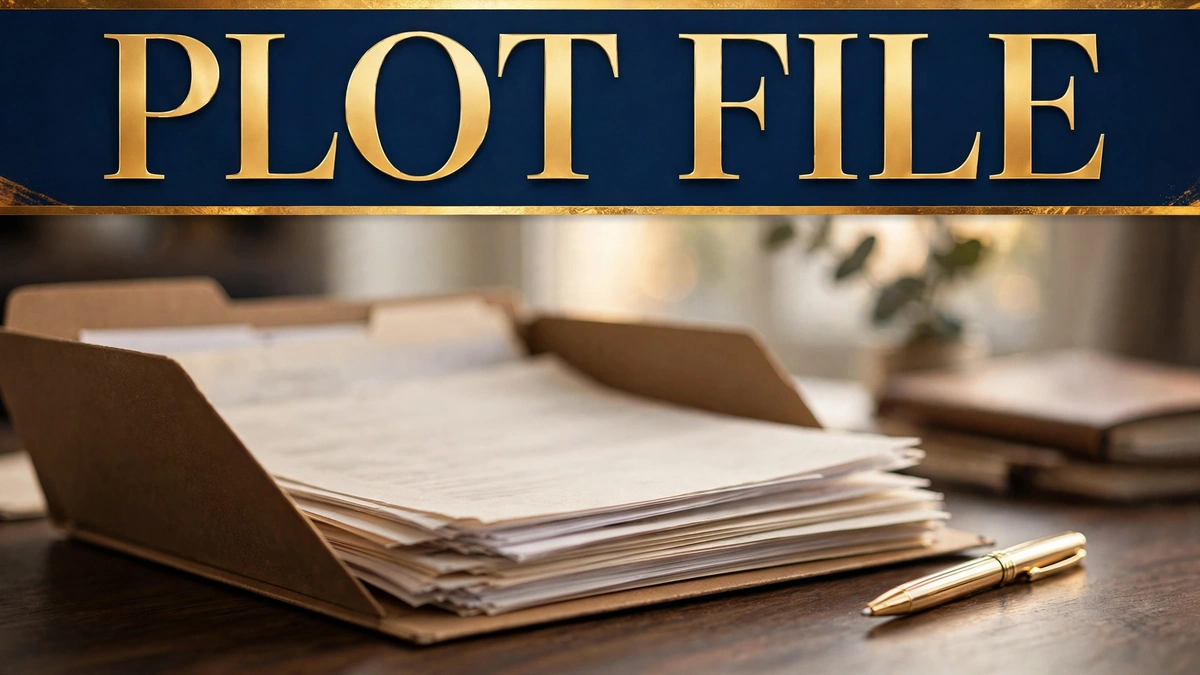
A plot file is a document, not land. It is your booking record — a promise from a housing project that you are entitled to a plot of a certain size (for example 5 marla, 10 marla, or 1 kanal) once development progresses and the society assigns actual locations through balloting.
At the file stage there is no fixed location: no street, no plot number, no boundaries to visit. The file represents a future allocation, and that is precisely why files are cheaper than allocated plots — you are buying earlier in the project’s life, before certainty arrives.
One important detail: “plot file” is market terminology, not one standardized legal instrument. Different projects use different documents — a booking form, a registration file, an affidavit file, an allotment certificate, an allocation letter — and they do not all create the same rights. Before buying any file, verify exactly what the document entitles you to, in whose name it is issued, and how the project records transfers. Never assume two files from two different projects carry identical rights.
Plot vs Plot File: Side-by-Side Comparison
| Feature | Plot (Allocated) | Plot File |
|---|---|---|
| What it is | Physical land with a fixed location | A document representing a future plot entitlement |
| Location | Confirmed plot number, block, and boundaries | Not assigned until balloting |
| Can you visit it | Yes — walk the boundaries and check the surroundings | No specific land to visit yet |
| Possession | Available or on a defined handover schedule | Comes only after allocation |
| Can you build | Yes, after possession and the required approvals | No — only after allocation and possession |
| Balloting needed | No | Yes, to assign the location |
| Legal footing | Tied to a specific parcel in the record | Depends entirely on the document’s terms and the project’s standing |
| Entry cost | Higher | Lower |
| Trading | Formal transfer process | Files usually trade faster and more simply |
| Best suited for | Building now, or long-term holding | Early entry or short-term trading — with higher risk tolerance |
How a File Becomes a Plot
A file does not stay a file forever — if the project proceeds, it converts into an allocated plot in stages:
- Booking. The buyer pays a booking amount and receives the file, which records the plot size and category booked.
- Development and payments. The society develops the land while the buyer pays remaining installments according to the payment plan.
- Balloting. A draw assigns each file holder a specific plot number, block, and street.
- Allocation. The buyer receives the allotment letter naming the exact plot — at this point the file has effectively become a plot.
- Possession and transfer. Once development reaches the plot, possession is handed over and the ownership record is updated.
After allocation, the normal ownership documents apply. Our explainer on the difference between fard, registry, and intiqal covers what each document proves and why you need the full chain — not just one of them.
Which One Suits You?
Neither option is automatically the right purchase; it depends on your goal and your tolerance for uncertainty:
- Choose a plot if you plan to build soon, want to visit and verify exactly what you are buying, or prefer ownership tied to a specific parcel in the record. It costs more to enter, but the uncertainty is lower.
- Consider a file if you have a smaller budget, can wait through development and balloting, and are comfortable with the risk that timelines shift. Files suit early entry into a project — but only in projects whose approvals and development you have actually verified.
- Avoid both when the project itself is questionable. A badly located plot bought at an inflated price can disappoint, and a file in an unapproved or stalled project can become difficult to exit. The project’s approvals, the developer’s record, actual development progress, the documentation, and the price you pay matter far more than whether the label says “plot” or “file.”
5 Checks Before Buying a File
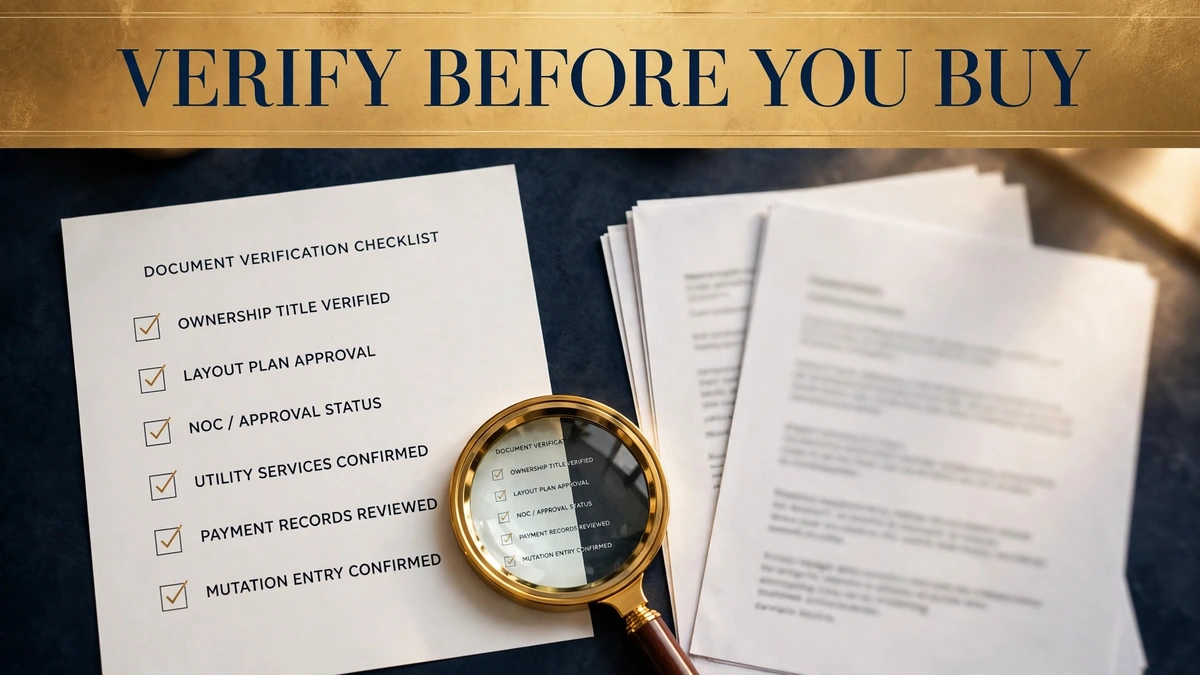
Files carry more uncertainty than allocated plots, so the verification has to be stricter. Before committing:
- Check the project’s approval status. Confirm which authority the society falls under and whether its layout plan and NOCs are in order. An unapproved project is where most file disputes begin.
- Verify the file itself. Check the file’s authenticity with the society’s office, confirm it is in the seller’s name, look at its transfer history, and clear any outstanding dues before you pay. Files have been faked, duplicated, and sold with hidden arrears.
- See the actual development. Visit the project site. A file for a phase where roads, plots, and utilities are visibly progressing is a different proposition from a file for land that is still fields.
- Check the land behind the project. Use our guide on how to check property ownership online in Punjab to understand what the record should show, and learn how to check whether court cases exist against a property — litigation over the project’s land can freeze everything, including your file.
- Know your exit. Ask how files in this project actually resell — who buys them, how transfers are recorded, and what the realistic resale market looks like. A file you cannot resell is not an investment; it is a liability.
Bottom Line
A plot is land you can stand on; a file is a documented promise of land to come. Plots give you location certainty, possession, and a familiar ownership record — at a higher entry cost. Files give you early entry at a lower cost — with balloting risk, development risk, and documentation risk attached. Neither is automatically a good purchase. Get the difference clear, verify the project and the document, and buy certainty when you need it; choose early entry only when you can genuinely afford the uncertainty.
Buying property in Punjab and want a second pair of eyes on the documents first? Call Saeed Property Advisors at 0321 5491754 — we help buyers verify records and compare options before they commit.
Disclaimer: This article is general information about property transactions in Pakistan, not legal or financial advice. For title questions, disputes, or investment decisions, consult a qualified lawyer or financial adviser.
Source: land-record verification guidance on PLRA — punjab-zameen.gov.pk.
6 Comments
Pingback: Is Buying a Plot File Safe in Pakistan? | Saeed Property Advisors
Pingback: Affidavit File vs Allotment File vs Transfer File: What's the Difference? | Saeed Property Advisors
Pingback: How to Verify a Housing Society File Before Buying in Pakistan | Saeed Property Advisors
Pingback: Balloting in Housing Societies: What File Holders Should Know | Saeed Property Advisors
Pingback: File to Plot: How Allocation Works in Pakistan | Saeed Property Advisors
Pingback: Plot File vs Registered Registry: What Each Document Actually Gives You in Pakistan | Saeed Property Advisors