

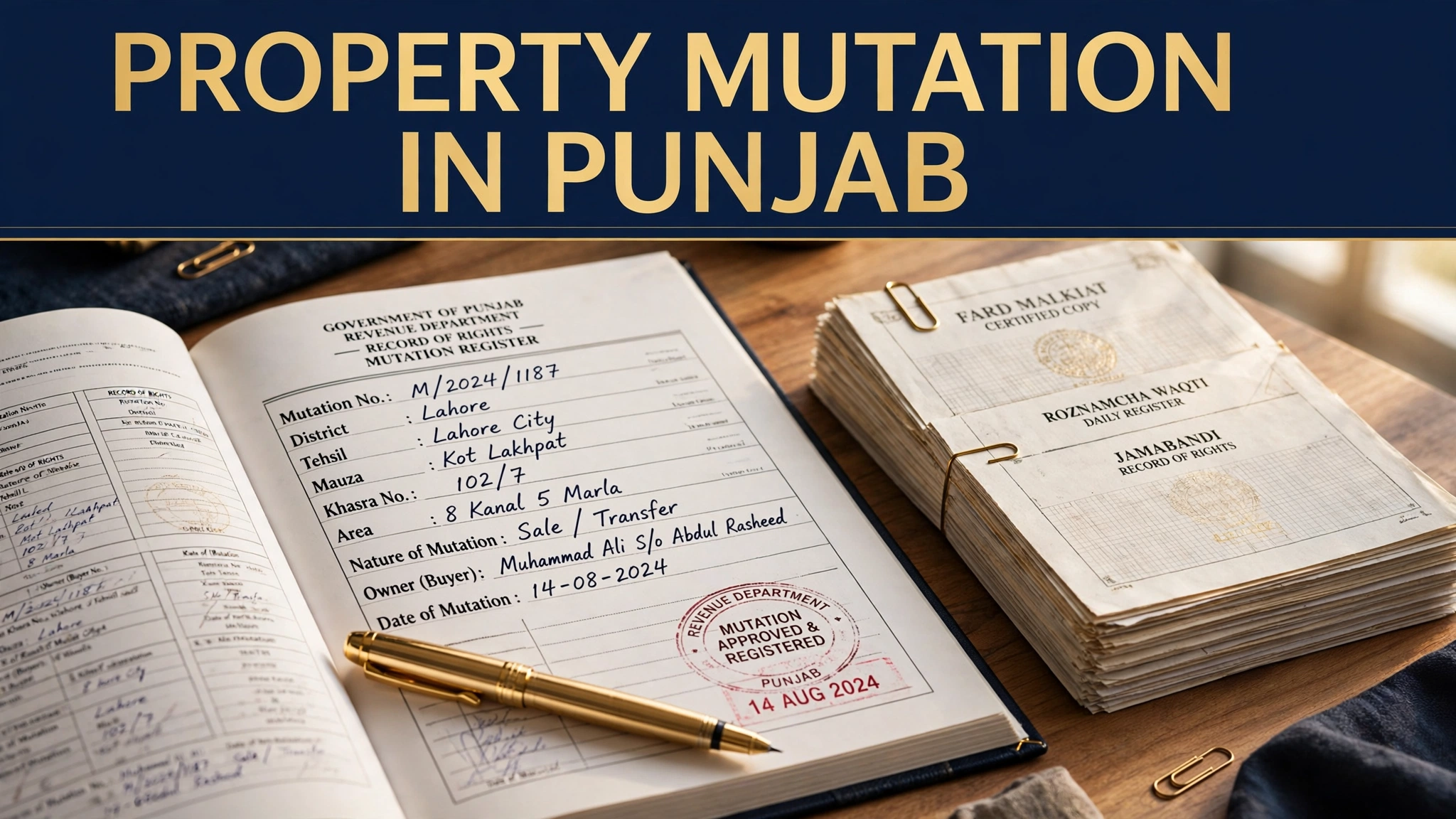
What Is Mutation (Intiqal) and Why Does It Matter After Buying?
You’ve paid the full amount, signed the registry, and the seller has handed over the keys. Done deal, right? Not quite. In Punjab, the sale is only complete in the government’s eyes once the mutation (intiqal) is entered in the land record. Until that happens, the official record still shows the seller as the owner — no matter what your sale deed says.
This guide explains what intiqal actually is, why it matters after you buy, how the process works at the Arazi Record Centre, and what can go wrong if you skip it.
What Mutation (Intiqal) Actually Is
Mutation — called intiqal in revenue terminology — is the official entry of a change in ownership or rights in the revenue record. It is recorded in the Register of Intiqalat maintained under the Punjab Land Revenue Act, 1967. Whenever land changes hands — through a sale, inheritance, gift, or court order — the intiqal is the entry that moves the record from the old owner’s name to the new one.
Think of it this way: the registry (sale deed) is the contract between you and the seller that transfers the property. The intiqal is the government updating its own books. One proves the transaction happened; the other proves the state’s record reflects it. You need both — this is the same relationship covered in our guide to the difference between fard, registry, and intiqal.
Why Registry Alone Isn’t Enough
A registered sale deed is strong evidence of your purchase. But the Punjab Land Records Authority (PLRA) computerised record — the fard, the jamabandi, everything a future buyer or bank will check — is updated through the mutation process, not automatically by the registry. Until the intiqal is entered, every official document you pull will tell the world that someone else owns your property.
Why Mutation Matters After You Buy
Getting the intiqal entered protects you in several concrete ways:
- Your name appears on the fard. The fard (Record of Rights extract) is the document every buyer, bank, and authority asks for. Only an entered mutation puts your name on it.
- You can sell or mortgage the property. A future buyer will trace ownership back to you, and a bank will only lend against a record that shows you as the owner.
- It blocks double-selling fraud. A seller whose name stays on the record can attempt to sell the same property to someone else. Once your intiqal is entered, that door closes.
- The seller’s heirs can’t claim the property. If the seller dies before the mutation is done, their heirs will see the property in the deceased’s name — and you will be the one proving the sale happened.
For business buyers this is even more critical. When you check property ownership online before a deal, you see the seller’s position on record. After you buy, you want the record to show you just as clearly — otherwise the verification work you did protects nothing.
Types of Mutation in Punjab
Sale is the most common type, but intiqal covers every way ownership changes:
- Sale (bai) — after a registered sale deed, the buyer’s name replaces the seller’s.
- Inheritance (virasat) — the deceased owner’s name is replaced by the legal heirs with their shares.
- Gift (hiba) — after a gift deed is registered, the donee’s name is entered.
- Court decree — when a court orders ownership to change, the decree is entered.
- Partition — joint owners divide the land, and each person’s separate holding is recorded.
- Exchange (tabadla) — two parties swap properties, and both records are updated.
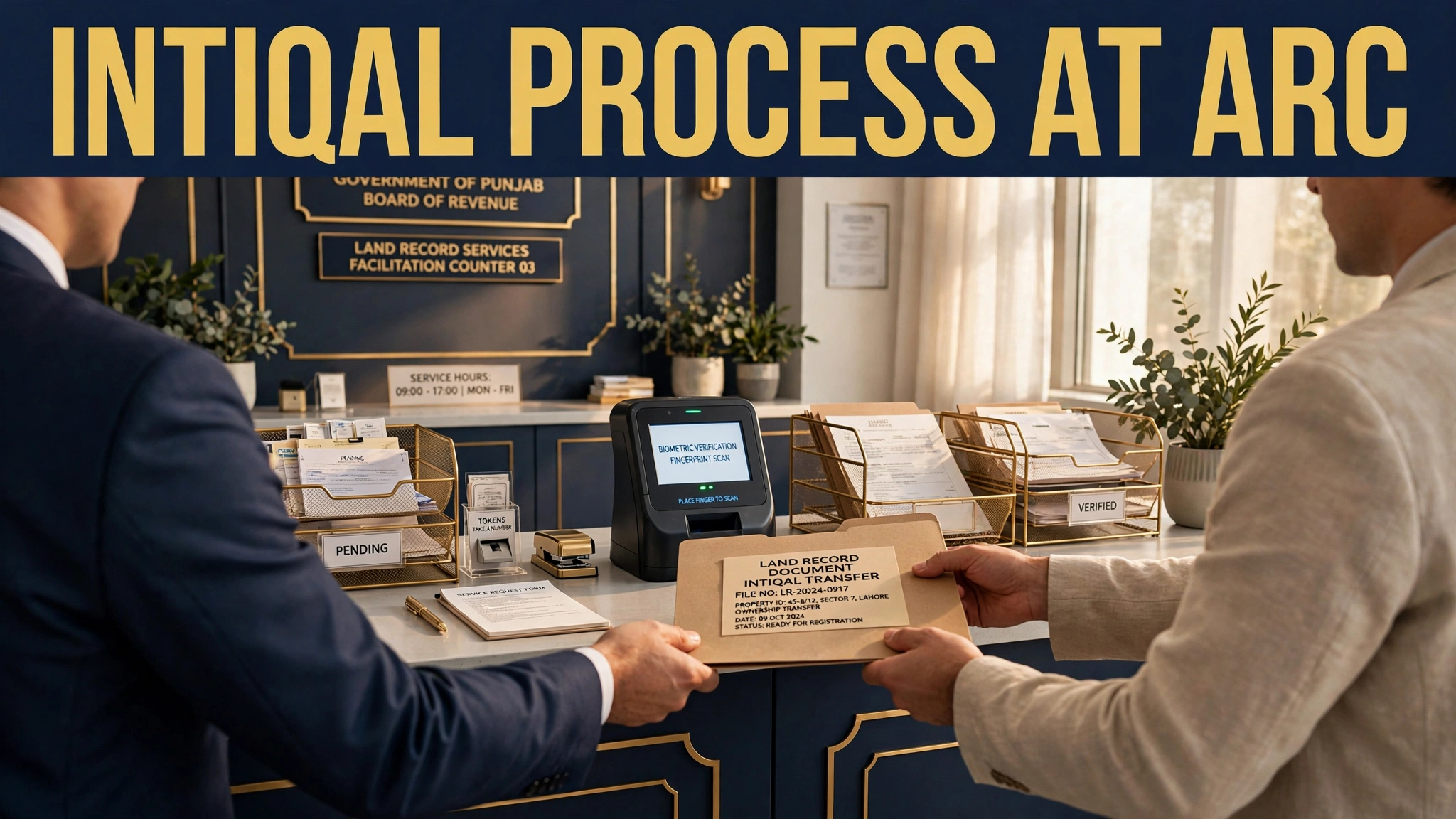
The Intiqal Process at the ARC, Step by Step
In Punjab’s computerised system, mutations are processed at the Arazi Record Centre (ARC) of the relevant tehsil. The usual sequence:
- Gather your documents. You need the registered sale deed, the CNICs of buyer and seller, and the property’s land identifiers (khasra/khewat numbers or a recent fard). If the seller can’t come in person, a registered power of attorney holder can represent them.
- Submit the mutation application at the ARC. Staff verify the documents, enter the mutation, and charge a modest mutation fee at the counter.
- Biometric verification. Both parties (or their authorised representatives) complete biometric verification, which links the transaction to verified identities.
- Attestation. The revenue officer attests the mutation — the official act that makes the entry part of the record. The mutation gets a number, your proof of the entry.
- Collect your proof. Keep the attested mutation record, and get a fresh fard afterward to confirm your name now appears as the owner.
Processing time varies by ARC and workload, but straightforward sale mutations are typically completed within days to a couple of weeks. Complex cases — disputed entries, missing documents, inheritance shares — take longer.
What Happens If You Skip the Mutation
Skipping the intiqal is one of the most common and most costly mistakes buyers make in Punjab. The consequences are all practical:
- The official record keeps showing the seller as owner, so your “ownership” exists only on paper you hold privately.
- You cannot get a fard in your name — so every serious buyer, bank, or business partner hits a wall when they verify the property.
- The seller can attempt to sell the property again — and that second buyer, who checks the record and sees the seller’s name, will look like the legitimate one.
- If the seller dies, you may face claims from their heirs, who find the property recorded in the deceased’s name.
- When you later try to sell, your own buyer will discover the broken chain — and you will be chasing a seller who may be untraceable.
This risk scales with the value of the property. For commercial property in Sheikhupura — shops, plazas, and business plots on the main roads — the amounts involved make an unmutated record an open invitation to fraud. High-value deals attract disputes; a completed intiqal is the cheapest insurance available.
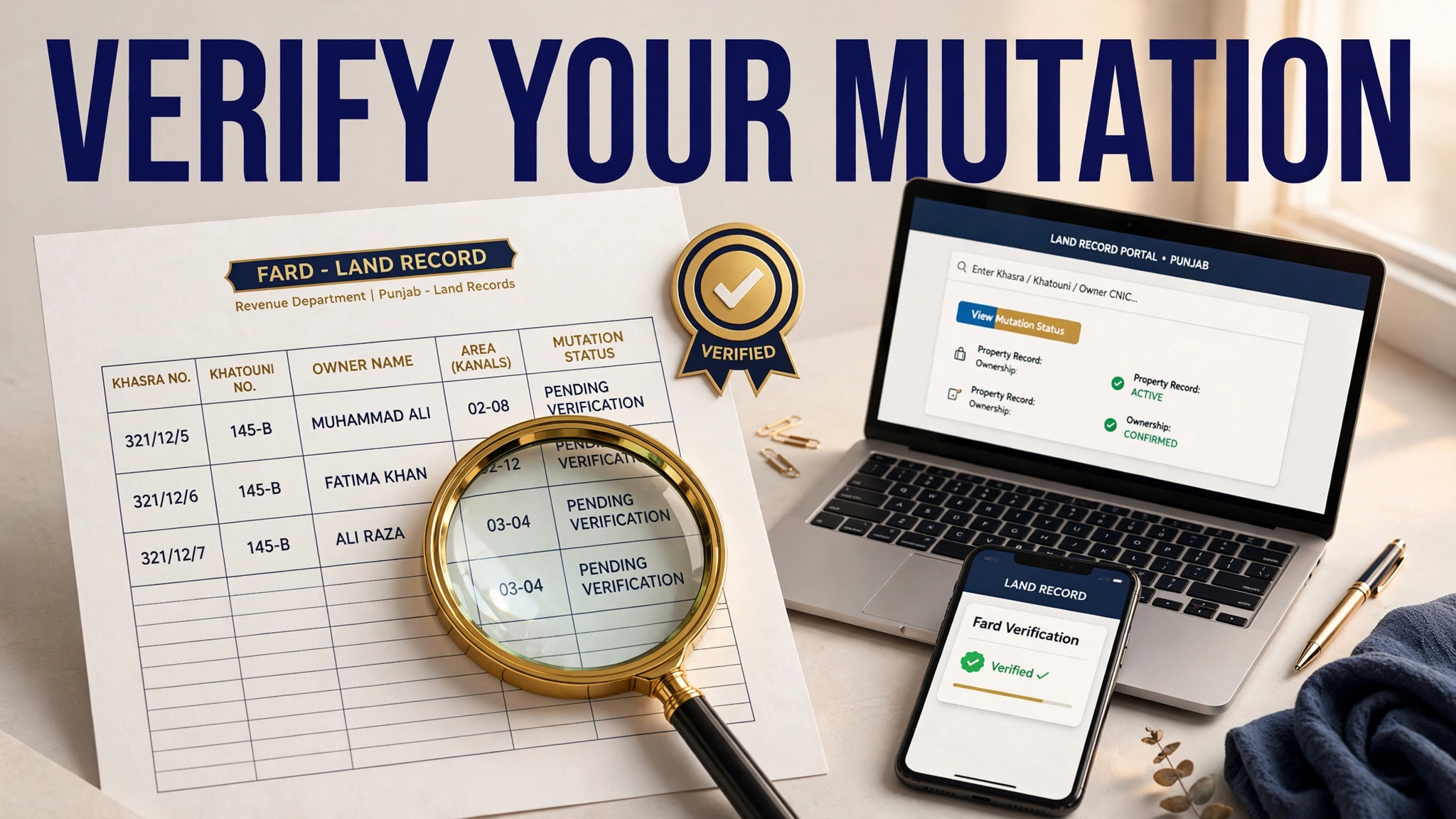
How to Confirm Your Mutation Was Entered
Don’t assume the job is done when you leave the ARC. Confirm it:
- Get a fresh fard after the mutation is attested and check that your name appears as the recorded owner.
- Check that the mutation number on your attested copy matches the reference shown on the fresh fard.
- Verify the khasra numbers and area on the fard match what you bought — a mutation entered against the wrong khasra is a real problem worth catching early.
- Keep the attested mutation record with your property file permanently. It is the link between the seller’s ownership and yours.
You can obtain a fard online through the PLRA portal — punjab-zameen.gov.pk — or in person at the ARC, and compare it against the documents you hold.
FAQs
Is mutation the same as registry?
No. The registry (sale deed) is the registered contract that transfers the property between buyer and seller. The mutation (intiqal) is the entry in the revenue record that updates the government’s books to show the new owner. You need both.
Does a mutation alone prove I own the property?
Courts in Pakistan have treated the mutation as an administrative entry recording a change — not as a standalone title deed by itself. It is what the official record shows, but the registered deed remains the foundation of the transfer, which is exactly why the two must agree.
What if the seller refuses to come to the ARC?
This is a red flag. A genuine seller has no reason to avoid the mutation. If the seller is unavailable, a registered power of attorney holder can represent them — but a seller who disappears after taking payment is a classic fraud signal. Never pay the full amount before the mutation process is underway.
Do I need a mutation for inherited property?
Yes — inheritance mutation (intiqal virasat) is how the deceased owner’s name is replaced by the heirs’ names with their shares. Without it, none of the heirs can sell, mortgage, or divide the property in their own names.
Bottom Line
Enter the mutation immediately after every purchase — sale, gift, or inheritance — confirm it with a fresh fard, and keep the attested copy with your property file. It is a small step at the ARC that protects the entire investment.
If you’re buying property in Sheikhupura and want the transfer done right — verified documents, completed intiqal, and a clean record in your name — Saeed Property Advisors guides buyers through the whole process. Call or WhatsApp us on 0321-5491754 before you close the deal, not after something goes wrong.
Disclaimer: This article is general information about the mutation process in Punjab, not legal or tax advice. Procedures and fees can change, and every property has its own document history. For any specific transaction, consult a qualified property lawyer before making a decision.
4 Comments
Pingback: Registry vs Intiqal in Punjab: Why You Need Both
Pingback: Can You Skip Intiqal If You Have the Registry? (No — Here's Why) | Saeed Property Advisors
Pingback: How Long Does Intiqal Take in Punjab? | Saeed Property Advisors
Pingback: Plot File vs Registered Registry: What Each Document Actually Gives You in Pakistan | Saeed Property Advisors