

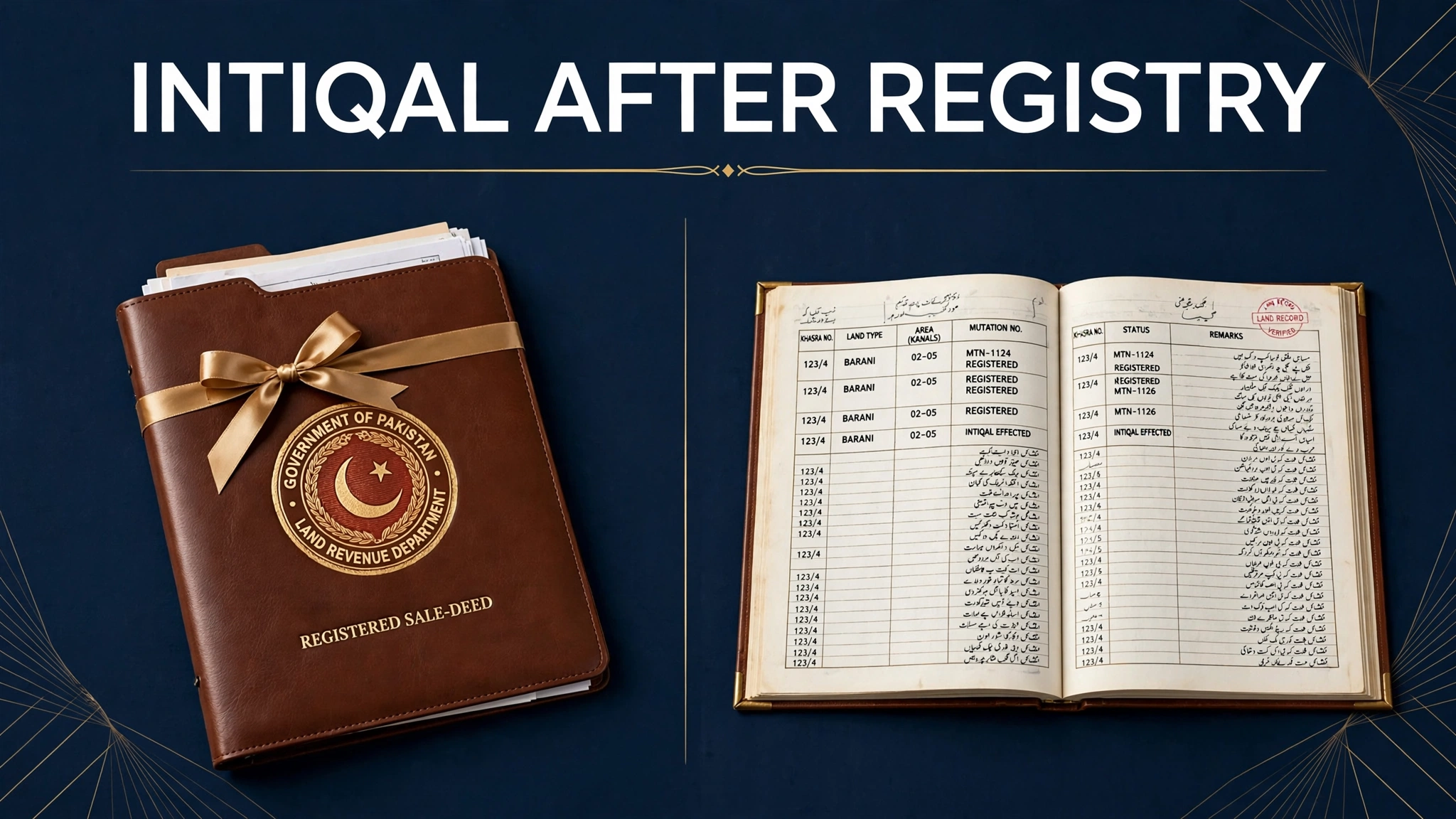
Can You Skip Intiqal If You Have the Registry? (No — Here’s Why)
If you have ever bought property in Punjab, you have probably heard someone say it: “Registry ho gayi hai, intiqal ki kya zaroorat?” — the registry is done, so why bother with intiqal? It is one of the most common, and most dangerous, shortcuts in Pakistani property deals. The short answer is no: you cannot safely skip intiqal just because you hold a registered sale deed.
Here is why, in plain terms. The registry is your contract with the seller. Intiqal is what tells the government you are now the owner. Hold the first without the second, and on paper the property still belongs to the person who sold it to you.
What the Registry Actually Gives You
A registry (baye-nama) is a sale deed executed on stamp paper and registered before the sub-registrar. It records who sold, who bought, which property changed hands, and that consideration was paid. It is strong evidence in court, and it is entered in the sub-registrar’s books with a bahi (book) and jild (volume) number.
What it does not do is update the land revenue record. The sub-registrar’s office and the revenue record (jamabandi) are two different systems. Until the intiqal is sanctioned, the revenue register still shows the seller as the owner — even though you paid in full and hold a stamped deed. For the full breakdown of how the three key documents fit together, see our guide on the difference between fard, registry and intiqal.
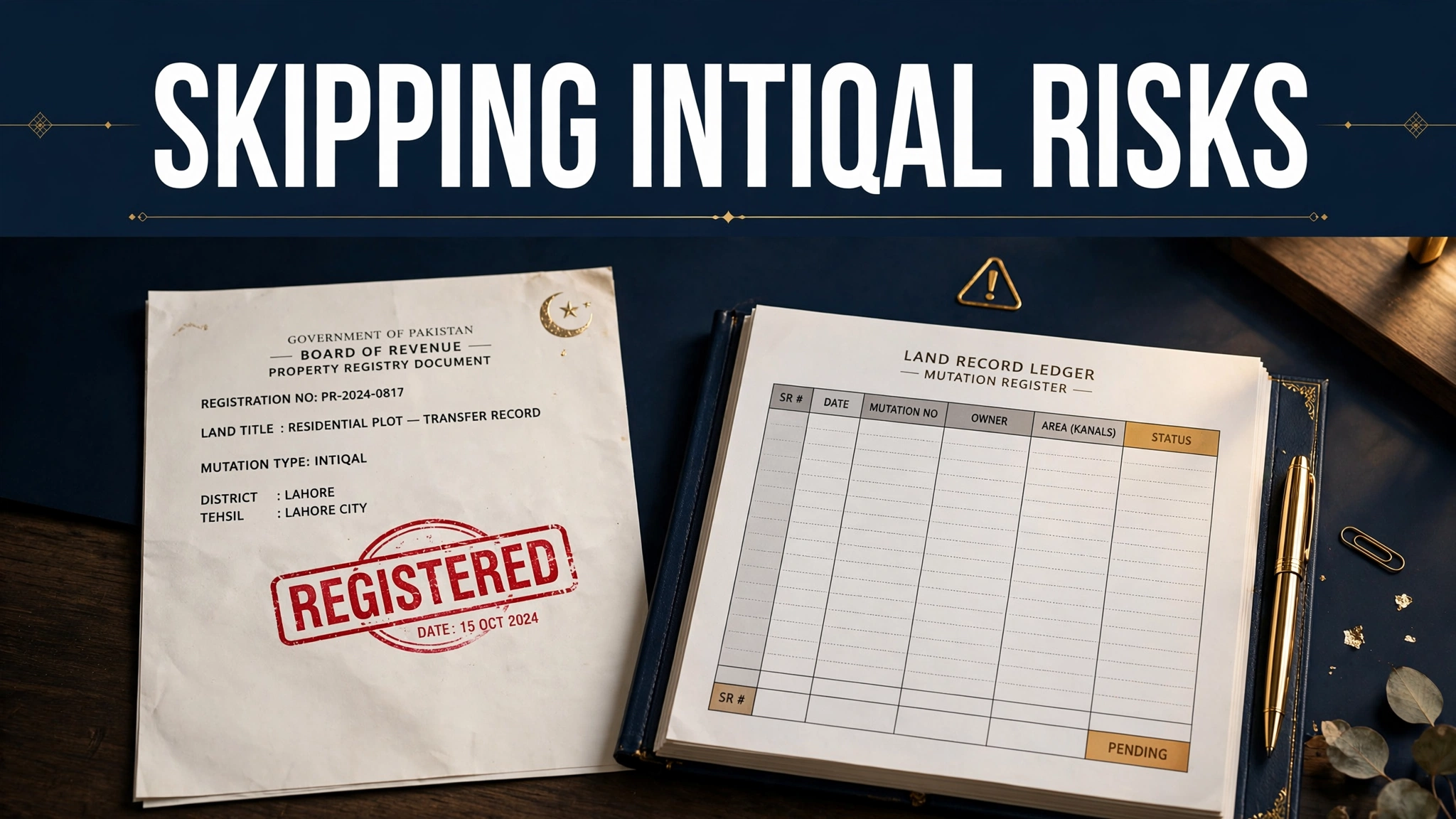
What Only Intiqal Does
Intiqal (mutation) is the revenue officer’s formal entry transferring a khasra or parcel from the seller’s name to yours in the jamabandi. Once sanctioned, three things become possible that a registry alone can never give you:
- The government record — the same one banks, courts and future buyers check — shows your name.
- You can obtain a fard (ownership record) in your own name.
- The seller’s name is removed from the record for that property.
Our article on what intiqal does after you buy walks through the Arazi Record Center process step by step.

5 Risks of Skipping Intiqal
1. Double-selling: the seller can sell your property again
This is the nightmare scenario. Because the record still shows the seller as owner, a dishonest seller can obtain a fresh fard in their own name and execute a second registry with a new buyer. You would eventually win in court with your registered deed — but only after years of litigation that one intiqal would have prevented.
2. The seller’s legal troubles attach to your property
If a court issues a stay order or attachment against the seller — a loan default, a family dispute, a business liability — it lands on whatever the record says they own. That includes the property you bought but never mutated. Checking for court cases against a property protects you before purchase; completing intiqal protects you after it.
3. Inheritance claims surface years later
If the seller passes away, their legal heirs look at the record, see the deceased’s name, and claim the property as part of the estate. Your registry is evidence in your favour, but you are now fighting the seller’s entire family instead of simply pointing at a jamabandi entry in your name.
4. You cannot resell or finance cleanly
No serious buyer completes a deal without a fard in the seller’s name — and no fard will show your name without intiqal. Banks work the same way. Skipping intiqal does not just leave your ownership half-done; it freezes the property’s marketability until you fix it.
5. Time makes everything harder
The longer you wait, the messier the fix. Sellers move abroad, pass away, or stop cooperating. Original documents get misplaced and witnesses forget. An intiqal done the same month as the registry is routine paperwork; the same intiqal five years later is a project.

The One Case People Confuse This With (Intiqal Without Registry)
There are transfers where intiqal happens without a registry — but they are not sales. When an owner dies, the heirs apply directly for an inheritance (wirasat) mutation with the death certificate and family registration certificate; no registry is involved. An oral gift (hiba) is likewise recorded through mutation. These are the reverse of your situation: transfers that never had a sale deed. A sale always needs both steps — registry first, then intiqal.
How to Fix a Missed Intiqal
If you are reading this with a registry in your drawer and no intiqal on record, do not panic — this is fixable. Take the original registered deed to your nearest Arazi Record Center and apply for mutation of sale. The revenue officer processes it against the registered deed already on file. Then verify the fix yourself:
- Open the PLRA portal at punjab-zameen.gov.pk, select your district, tehsil and mauza, and confirm your name appears in the ownership column.
- Obtain a fresh fard — it should now show your name.
- Keep the original registry, the sanctioned intiqal, and the fard together in one file.
Bottom Line
A registry without intiqal is an unfinished purchase. The deed proves you paid; only the mutation proves you own. Never let anyone — dealer, relative, or well-meaning friend — convince you the second step is optional. Complete both, verify your name on the record, and the property is truly yours.
Disclaimer: This article is general information about Punjab’s land-record system, not legal advice. For your specific transaction, consult a qualified lawyer.
1 Comment
Pingback: How Long Does Intiqal Take in Punjab? | Saeed Property Advisors