

Intiqal for Inherited Property (Virasat): Step by Step in Punjab
When a property owner passes away in Punjab, the land does not move to the heirs automatically. An inheritance intiqal (intiqal virasat) is the mutation that removes the deceased owner’s name from the revenue record and enters each legal heir’s name with their share. Until it is done, the heirs cannot sell, divide, gift, or mortgage the property in their own names — no matter what the family has agreed among themselves.
This guide walks through the process step by step: who counts as an heir, which documents the Arazi Record Centre asks for, how the mutation actually gets attested, and what to do when something goes wrong.
Who Counts as a Legal Heir?
The heirs are the deceased’s legal successors according to their personal law — typically the spouse, children (sons and daughters alike), and, depending on who survives, parents or other relatives. For Muslims, shares follow Islamic inheritance rules; for non-Muslims, the relevant succession law applies.
The practical foundation is the shajra nasab — the family tree in the revenue record — which the ARC staff verify against NADRA’s Family Registration Certificate (FRC). The FRC is NADRA’s official list of the family, and it is the document the record centre uses to know exactly who the heirs are. Before you visit the ARC, get the FRC and check that every child is on it, including married daughters living in another city. Being married or living elsewhere does not remove a daughter from the list of heirs — and a name left off the FRC is the single most common reason inheritance mutations get stuck.
Documents You Need for an Inheritance Mutation
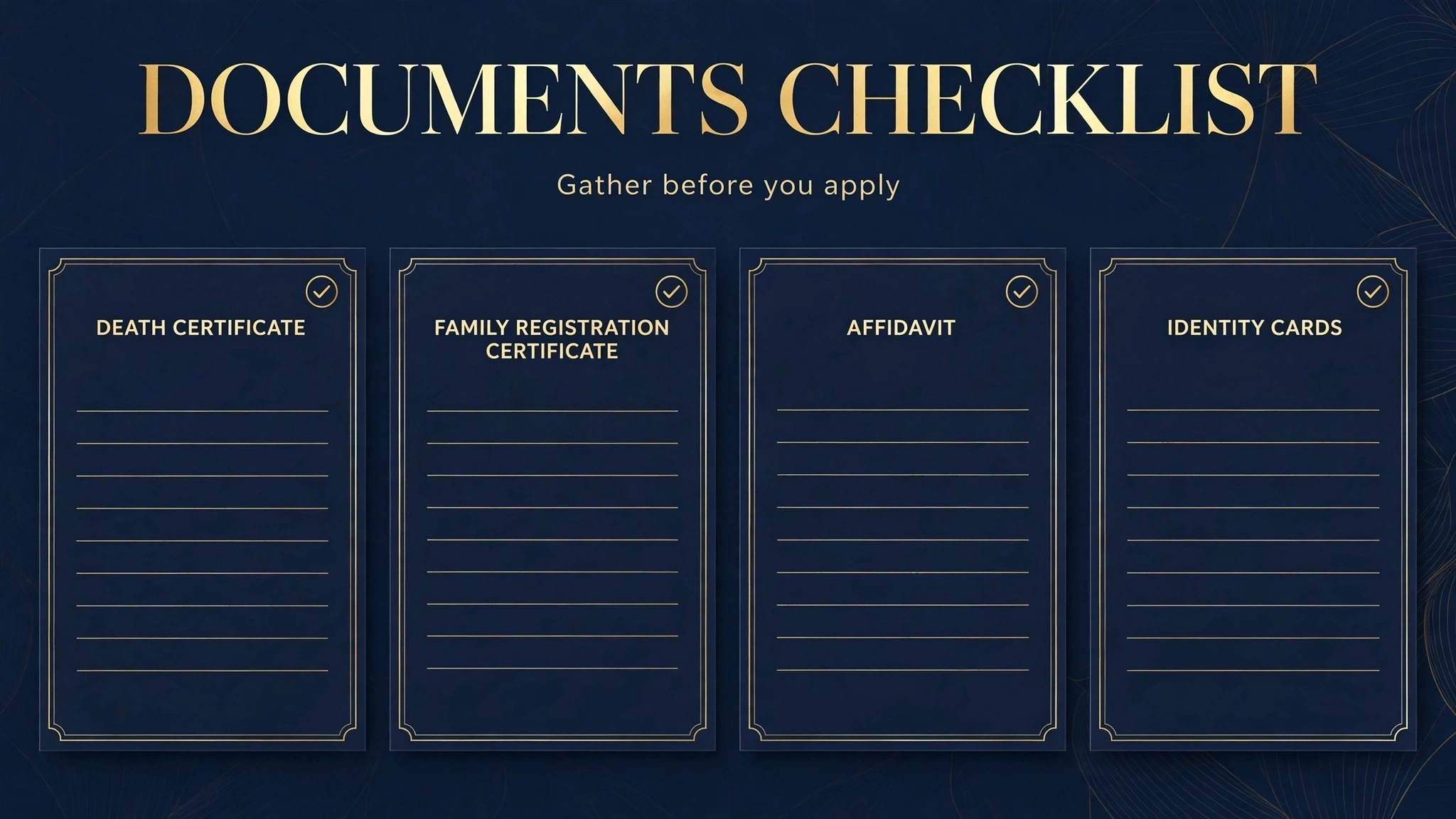
PLRA’s own FAQ lists five items for an inheritance mutation at an ARC. Gather all of them before you go:
| Document | Where it comes from |
|---|---|
| Death certificate of the owner | Union council, then NADRA |
| Family Registration Certificate (FRC) | NADRA |
| Affidavit | Made by the applicant heir |
| Property details | Recent fard, khewat or khasra number, mauza |
| CNIC copies of every legal heir | Each heir — sons and daughters alike |
Any one legal heir can apply; PLRA does not require every heir to appear for the filing itself. For the property details, a recent fard is the easiest proof — see our guide on how to check property ownership online in Punjab to confirm exactly what stands in the deceased’s name first. If the death has not been registered yet, apply for the death certificate before anything else.
Step by Step at the Arazi Record Centre
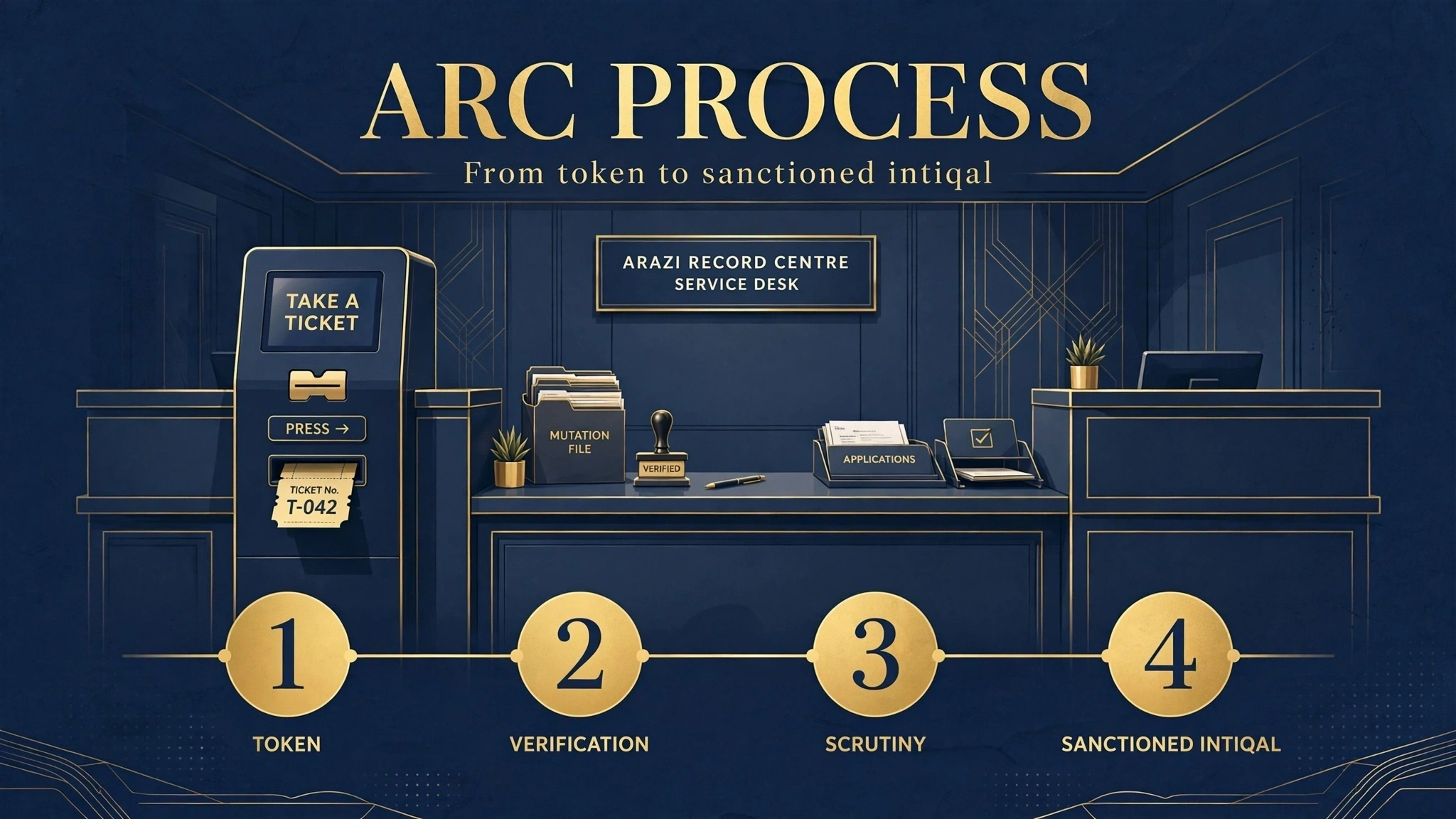
- Register at the ARC reception. Any legal heir goes to the Arazi Record Centre with the documents above, gives their CNIC, photograph, and fingerprints, and takes a token.
- File the mutation. When the token is called, hand the documents to the service-centre official, who enters the inheritance mutation into the system.
- Family-tree verification. The file goes to field staff, who verify the shajra nasab against the FRC and confirm that every legal heir is listed with the correct share.
- Attestation. After their report, the Revenue Officer attests the inheritance mutation at the ARC. The mutation can be entered at any ARC in Punjab, but the statements are recorded before the Revenue Officer of the area where the land lies.
- Collect and check. Collect the attested copy and check every heir’s name, CNIC number, and share carefully. Once attested, the change appears in the Jamabandi — the periodic land register — and the attested copy carries a QR code you can scan to verify it.
It is worth understanding how this differs from the documents heirs sometimes confuse it with — our explainer on the difference between fard, registry, and intiqal lays out what each document actually proves and where the mutation fits.
Do You Need a Succession Certificate?
For the land itself, no. PLRA’s document list for inheritance mutation does not include a succession certificate — the Land Revenue Act treats inheritance as its own route into the record. A succession certificate from NADRA (or letter of administration from the court) is the document for bank accounts, shares, and vehicles, not for the revenue record. That said, some buyers and banks ask heirs for one before they deal with inherited property — that is their demand, not a condition of the mutation.
How Long Does Intiqal Virasat Take?
PLRA publishes no fixed timeline for inheritance mutation. Under Section 42(10) of the Punjab Land Revenue Act, 1967, if the Revenue Officer makes no order within three months of the field report, he must report the delay to the Collector. In practice the biggest delay factors are an incomplete FRC, a missing death certificate, or a disagreement among heirs about shares — sort those out before filing and the process moves far faster. We covered realistic timelines and delay factors in detail in our guide on how long intiqal takes in Punjab.
After the Mutation: Joint Ownership and Partition
After an inheritance mutation, the heirs usually own the land jointly — each holds a share, but the land itself is not physically divided. If the heirs want separate portions, the Land Revenue Act provides for partition: the Revenue Officer must first give all joint owners notice to agree a private partition within 30 days, and if they cannot, he starts the partition himself and must decide within 60 days. Remember that until the mutation is attested, the deceased’s name stays on the record regardless of any family arrangement.
Fixing Mistakes in an Inheritance Mutation
A wrong name, CNIC number, or share should be caught on the attested copy before the mutation enters the Jamabandi — at that stage the same Revenue Officer can review it. After entry, correction goes through the District Collector. If a mutation was wrongly approved — for example, an heir was left out — it can be appealed before the Assistant Commissioner. A woman kept from her inherited property can also complain to the Ombudsperson under the Punjab Enforcement of Women’s Property Rights Act, 2021. PLRA’s helpline is 0800-PLRA, and record correction is free according to PLRA.
Bottom Line
Intiqal virasat is one of the most straightforward mutations in Punjab’s land system — five documents, one ARC visit by any heir, and the record moves from the deceased to the heirs. The process fails only when the groundwork is sloppy: an incomplete FRC, a missing death certificate, or shares nobody agreed on. Get the documents right, check the attested copy line by line, and the inheritance enters the record cleanly. For any disputed or unusual case, speak to a lawyer — this guide is general information, not legal advice.
Disclaimer: This article is general information about Punjab’s land record process, not legal or tax advice. For disputed shares, missing heirs, or court matters, consult a qualified lawyer.
Source: PLRA FAQ and service text on punjab-zameen.gov.pk (read October 2026), and Sections 42, 42-A, 46, and 135-A of the Punjab Land Revenue Act, 1967.