

Is Buying a Plot File Safe in Pakistan?
A plot file looks like a bargain: a document that promises you a plot in a housing society, often at a fraction of the cost of developed land. Files power a huge part of Pakistan’s property market, and many genuine buyers have done well with them. But a file is not land — it is a promise of land, and promises can be broken.
So is buying a plot file safe? The honest answer: it can be reasonably safe in an approved, genuinely developing society — and it can be a disaster anywhere else. The difference is almost entirely in what you verify before you pay.
What a Plot File Actually Is

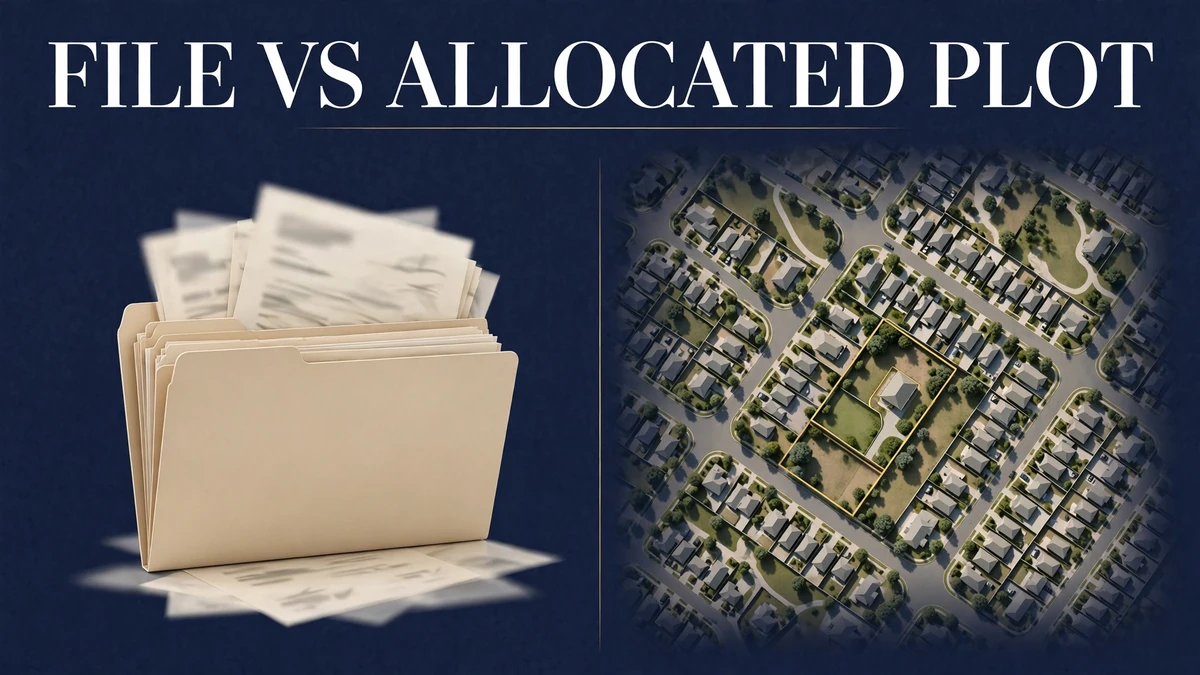
A plot file is essentially a booking or membership document. It says you have bought a claim on a future plot in a housing scheme — but it carries no plot number, no block, and no defined location until the society holds balloting and converts your file into an allotment. Only after that does the plot get registered or transferred to your name.
This is the most important thing to understand: a file does not create legal ownership of immovable property. Ownership of land in Pakistan is created through lawful transfer by a registered instrument. A file gives you a contractual expectation — the right to claim a plot when the society allocates one. Courts have consistently treated it that way, which means if things go wrong, a file buyer is usually standing in line for a refund, not fighting for possession of a specific plot.
Why Files Are Risky: Five Real Risks
1. You Own Nothing Until Allocation
Until your file becomes an allotted plot with a defined number and block, you cannot build on it, sell a specific plot, or register anything in your name. You are holding a promise, not an asset. If the project never develops, there is no land to fall back on — only the paper trail of your payments.
2. The Scheme May Never Get (or Keep) Approval
Many societies sell files for projects that lack approval from the relevant development authority — or whose approval lapses. Development authority status changes over time: layouts get approved, NOCs get issued, and sometimes they get cancelled. Never rely on a dealer’s word that a scheme is “approved”; approval of one phase does not automatically prove the status of every extension or block.
3. Balloting Delays Can Run for Years
Some societies sell files for years without ever balloting plots. Your money sits with the developer while the promised development crawls or stops entirely. Files in schemes with no balloting timeline are where buyer savings most often get trapped.
4. Overselling and Duplicate Files
In unregulated schemes, the number of files sold can exceed the number of plots that will ever exist. When allocation finally happens, some file holders discover there is nothing to allocate. Duplicate or tampered files are another classic fraud pattern — the society’s own ledger is the only record that matters, and if it does not show you as the buyer, you are not the buyer.
5. Unclear Refund and Exit Terms
Many file agreements have vague or missing refund, possession-timeline, and cancellation clauses. When projects stall, buyers discover there is no written exit path — just verbal assurances. Without documented terms, even a genuine developer’s refund process can drag for years.
When a Plot File Purchase Is Safer
Not every file is a trap. A file purchase is meaningfully safer when several conditions line up:
- The scheme has genuine approval. The project is listed as approved by the relevant development authority, with a valid NOC — not just a company registration certificate (an SECP certificate is not scheme approval).
- There is real development on the ground. Roads, boundary work, utilities — visible progress that matches the marketing.
- The balloting timeline is specific. A society that names a balloting schedule and sticks to past ones is very different from one selling files indefinitely.
- The society’s own records confirm you. After transfer, the society’s ledger and records show you as the file holder, and they issue proper receipts.
- Payments go to the society’s official account. By crossed cheque, pay order, or bank transfer — never cash into a manager’s personal account, no matter how trustworthy he seems.
A 6-Point Verification Checklist Before You Buy a File
- Check the scheme’s approval status with the development authority. Use the authority’s published records — not screenshots, not old marketing material. Confirm the exact phase or block you are buying into. You can also cross-check related land records on the PLRA’s online land record portal.
- Ask specifically about NOC and layout-plan status. “Approved” is not one thing: ask whether the layout plan is approved and whether the NOC is issued, lapsed, or cancelled.
- Visit the site. Walk the project. Compare actual development with what was promised. Talk to existing allottees, not just the sales office.
- Verify the file at the society’s office. Confirm the file is genuine, check its transfer history, and confirm there are no outstanding dues. Learn how to verify property documents in Punjab so you know which papers to demand.
- Read the written agreement end to end. It must spell out the plot size, total price, payment schedule, possession/balloting timeline, and refund, penalty, and cancellation clauses. Blank or incomplete fields are an automatic walk-away.
- Check the background for disputes. Learn how to check if a property has court cases against it — stay orders and litigation around a scheme are loud red flags for file buyers.
Common Mistakes That Burn File Buyers
- Paying in cash without receipts. Cash payments with no paper trail are the number one case-killer. Every rupee should be traceable to the society’s official account.
- Treating company registration as approval. An SECP certificate proves a company exists — it says nothing about whether its housing scheme is legal.
- Buying on marketing claims alone. Glossy brochures and old “approved” screenshots are cheap. Only the development authority’s current records count.
- Skipping independent review. Have a property lawyer review the agreement before you sign, especially if you are an overseas Pakistani buying remotely. Once you reach the registry and intiqal stage, knowing the difference between Fard, registry and intiqal will matter even more.
Bottom Line
A plot file is not inherently a scam — but it is inherently a risk. In a genuinely approved society with real development, a clear balloting timeline, proper society records, and banked payments, a file is a legitimate way to buy into a project early. Outside those conditions, you are betting your savings on a developer’s word with no land to show for it. Do the six checks above before you pay, and you will know which kind of file you are looking at.
Disclaimer: This article is general information about property transactions in Pakistan, not legal or financial advice. Property rules and scheme approvals change over time — verify the current status with the relevant development authority and consult a qualified lawyer before making any decision.
If you are evaluating a file or a developed property and want a second opinion on the documents, contact Saeed Property Advisors — we help buyers verify before they pay.