

Balloting in Housing Societies: What File Holders Should Know
If you hold a plot file in a housing society, balloting is the event that decides whether — and where — you actually get a plot. A ballot is a public draw that assigns plot numbers to file holders, and in Pakistan’s housing-society market, it is the single most watched milestone in a file’s life. This guide explains what balloting in housing societies in Pakistan really does, what it doesn’t do, and the checks every file holder should run before and after the draw.
What Is Balloting in a Housing Society?
Balloting is a draw — usually computerized — through which a housing society or developer allocates specific plots to people who hold plot files. Because a file is only a promise of a future plot (not the plot itself), the society needs a fair, public way to convert those promises into assigned plots. The ballot does that: each eligible file holder’s name is entered, a random draw is conducted, and successful applicants receive a plot number, a block, and an allotment letter.
Ballots are typically announced in advance, held at a public ceremony or published online, and conducted in the presence of the developer’s management — sometimes with a third party running the computerized draw to ensure transparency. Some societies also hold separate “booking ballots” for installment buyers and “plot ballots” for file holders who have cleared their dues.
Balloted vs Non-Balloted Files: The Core Difference
The entire balloting system divides files into two categories, and the difference matters for both buyers and sellers:
| Aspect | Balloted File | Non-Balloted File |
|---|---|---|
| Plot allocation | Specific plot number assigned | No plot assigned yet — depends on a future ballot |
| Certainty | High — the plot is identified on the society’s plan | Low — allocation is not guaranteed |
| Documents you hold | Allotment letter with plot number and block | Affidavit or booking file only |
| Price level | Usually commands a premium in the resale market | Usually trades cheaper than balloted files |
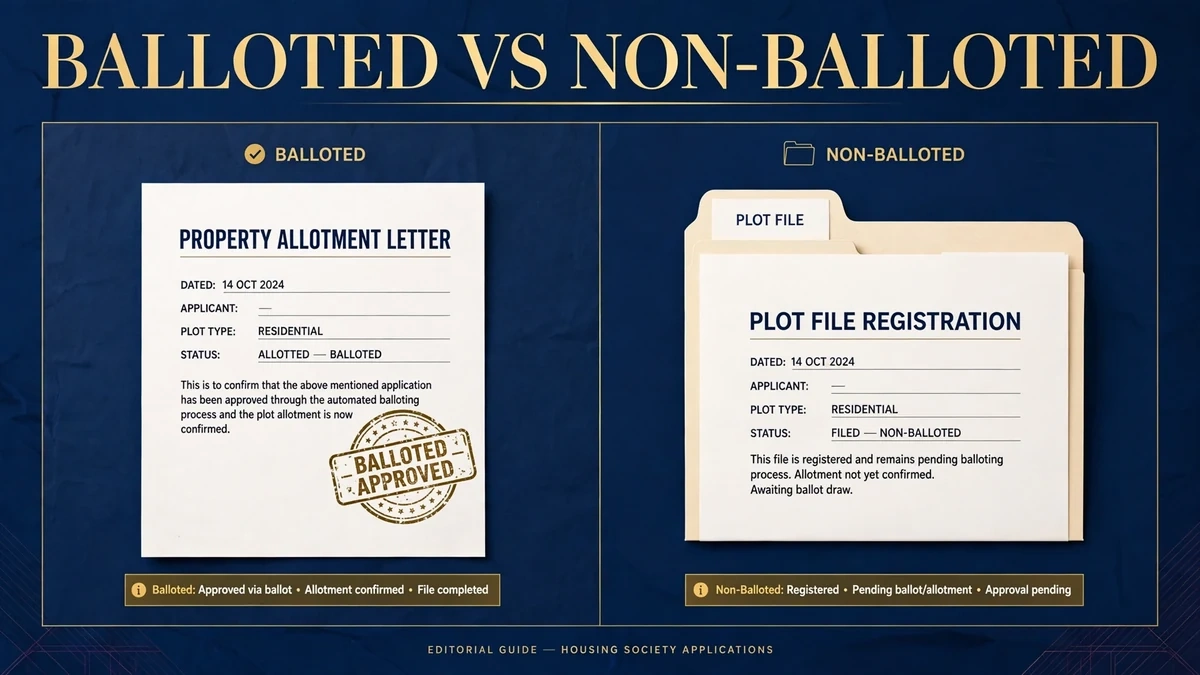
Knowing which kind of file you hold — and which kind you are being sold — is the first thing to settle before any deal. A file sold at balloted-file prices should come with an allotment letter showing a plot number; if it doesn’t, treat it as non-balloted.
How Balloting Actually Works
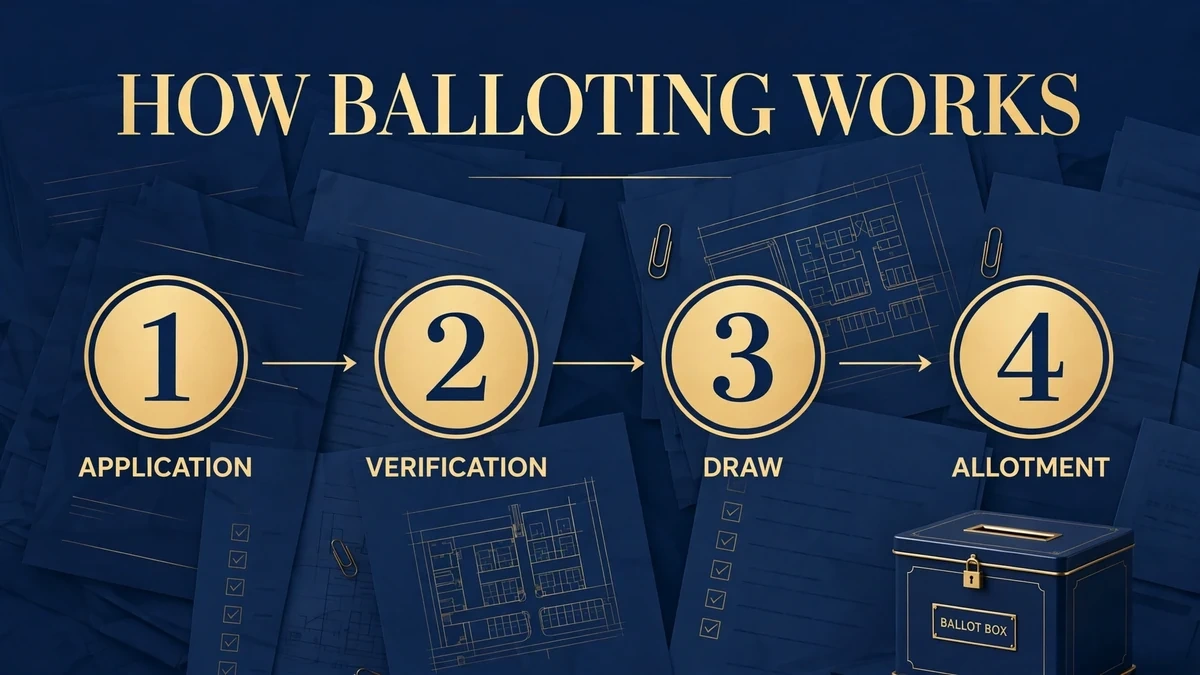
While every developer has its own paperwork, the balloting process in Pakistan follows roughly the same sequence:
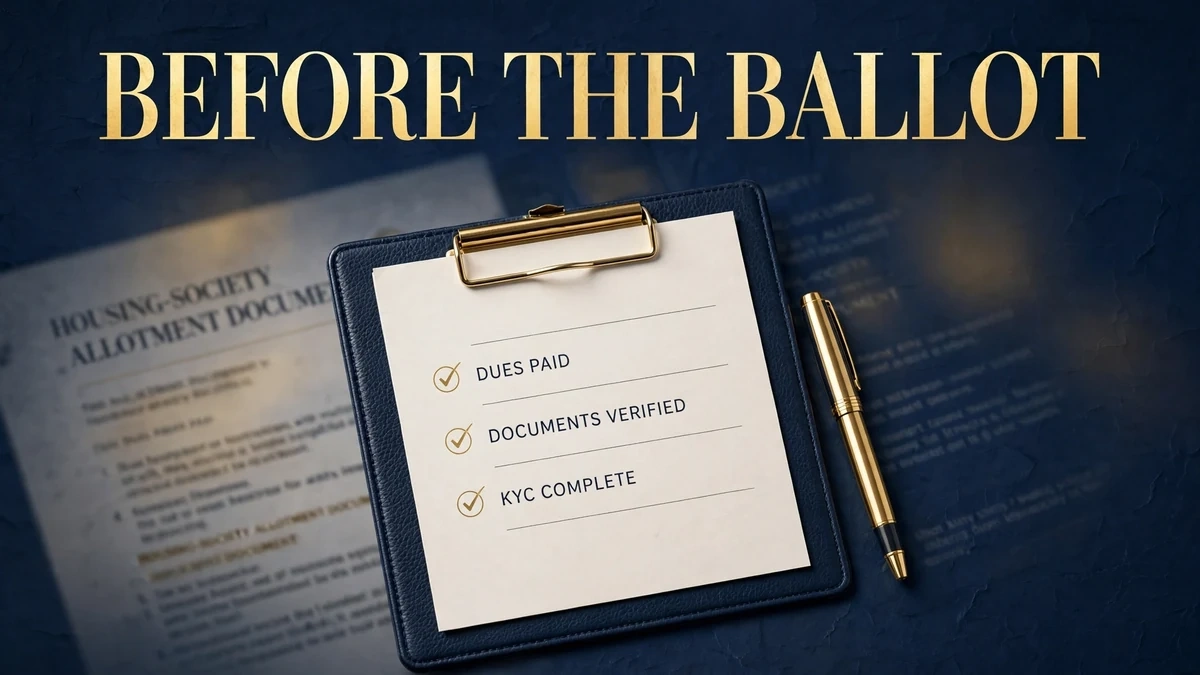
- Eligibility check. Only file holders who have cleared their dues — installments, development charges, and transfer fees — are entered into the ballot. Unpaid files are typically excluded, which is why many ballots are announced after a “dues clearance” window.
- Application and document verification. File holders submit their applications along with CNICs and payment receipts. The society verifies that the file is genuine and the dues are clear.
- The draw. A computerized draw assigns plot numbers to eligible applicants. Reputable developers conduct this publicly or publish the method used.
- Result announcement. Results are published — on the developer’s website, at the site office, or through a public ceremony — keyed to file numbers.
- Allotment letter. Successful applicants receive an allotment letter naming their plot number and block. This is the file’s most valuable document — but note, it is still not a registered title.
What a Ballot Does — and What It Doesn’t
A successful ballot does three things for a file holder: it converts a promise into a specific, identified plot; it usually upgrades the file’s market value; and it unlocks the next legal steps (registry and intiqal) that make you the recorded owner.
But a ballot does not do several things buyers often assume it does:
- It does not give you legal ownership. Courts in Pakistan have treated file holders as creditors rather than owners until a registered sale deed and intiqal (mutation) are completed. A plot number on an allotment letter is not the same as a registered title.
- It does not fix an unapproved scheme. A ballot cannot make an illegal or unapproved housing scheme legal. Balloting conducted by a scheme that lacks lawful approvals has been nullified where it was challenged — the draw changes nothing about the scheme’s legal standing.
- It does not replace the land record. The allotment letter is a developer document. Your ownership is only recorded when the transfer is registered with the sub-registrar and the mutation is entered in the land revenue record.
In short: the ballot gets you a plot. The registry and intiqal make it yours. Understanding the different file stages before a registered transfer saves file holders from expensive assumptions.
5 Checks File Holders Must Run
1. Verify the society’s approvals first
Before anything else, confirm the housing scheme itself is approved by the relevant development authority — LDA for Lahore, RDA for Rawalpindi, or the district’s tehsil municipal administration, depending on location. Check the authority’s published list of approved and unapproved schemes. A file in an unapproved scheme is risky whether or not a ballot has been held. See our guide on verifying a housing society file for the full sequence.
2. Clear your dues before the ballot date
Societies publish a cut-off date for dues. Miss it and your file may be excluded from the draw even if everything else is in order. Keep every payment receipt and confirm clearance in writing — verbal confirmations at the site office are not evidence.
3. Confirm exactly which file you hold
Affidavit files, allotment files, and transfer files sit at different stages of the journey from file to plot. Make sure your documents match what the seller claims, and that the file number you are tracking is the same one entered in the ballot.
4. Trust only official ballot results
Check your file number only on the developer’s official website or published list. Unofficial WhatsApp forwards and forwarded screenshots are a common vehicle for misinformation around ballot time — if your number isn’t on the official list, it isn’t a win.
5. After the ballot: complete the transfer properly
Winning a ballot is the middle of the journey, not the end. Collect your allotment letter, then move toward the registered sale deed and intiqal in the land record. Until the mutation is entered in your name, verify your status on the PLRA’s online land record portal — a step most file holders skip until a dispute forces them to look.
Common Mistakes File Holders Make
- Buying on ballot hype. Files often trade at a premium just before an announced ballot. Buying into that hype without verifying the society’s approvals and the file’s dues status is how buyers overpay for risk.
- Assuming the ballot equals ownership. The allotment letter feels like a title — it isn’t. Plan for the registry and intiqal as part of the same purchase, not as an optional later step.
- Ignoring dues. Unpaid installments and development charges exclude you from the ballot — and in some schemes, from the plot entirely. Settle dues before the cut-off, not after the results.
- Skipping post-ballot verification. After the draw, confirm the plot number actually exists in the society’s layout and that no two files claim the same plot. Paper allotments that don’t match the ground plan are a known dispute pattern.
Bottom Line
Balloting is how a housing society turns files into plots — a fair draw that assigns plot numbers to eligible file holders. For file holders, the ballot is the moment of truth: clear your dues, verify the society’s approvals, know exactly which file you hold, trust only official results, and treat the allotment letter as the start of the legal transfer — not the end of it.
This article is general information, not legal or financial advice. Property and file transactions involve legal and financial risk — verify documents through the relevant development authority and land record office, and consult a qualified lawyer before making decisions.