

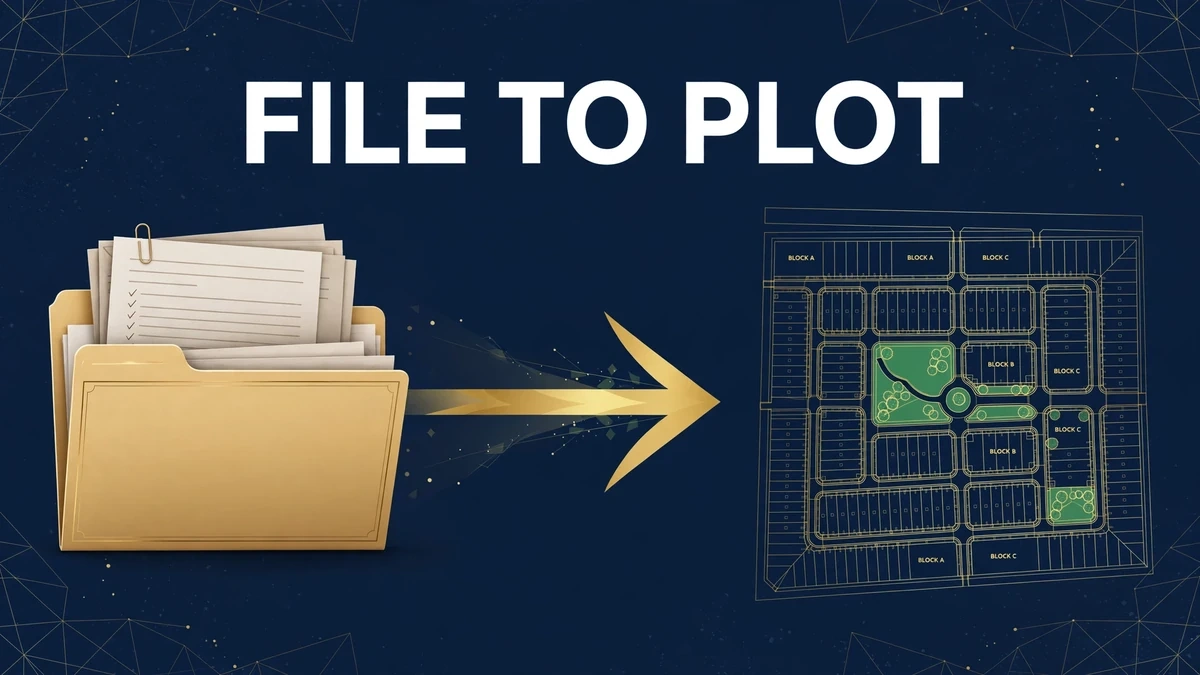
File to Plot: How Allocation Works in Pakistan
If you hold a plot file in a housing scheme, there is one question that matters more than any other: when — and how — does this file turn into an actual plot with a number you can point to on a map? Understanding how allocation works in Pakistan is the difference between buying a genuine entitlement and buying a paper promise you can’t verify.
Before going further, one clarification: a plot file represents a booking or an entitlement for a plot in a housing scheme. It is not the same thing as owning a piece of land. Allocation is the step where that entitlement converts into a specific plot — with a block name, a plot number, and a size — assigned to your name. Here’s how that journey usually works.
The Full Journey: File to Allocated Plot
Think of the process as a sequence, not a single event. In most housing schemes, a file holder moves through these stages:
- File booking — you purchase a plot file (affidavit, booking, or general file) for a plot size in a scheme or phase.
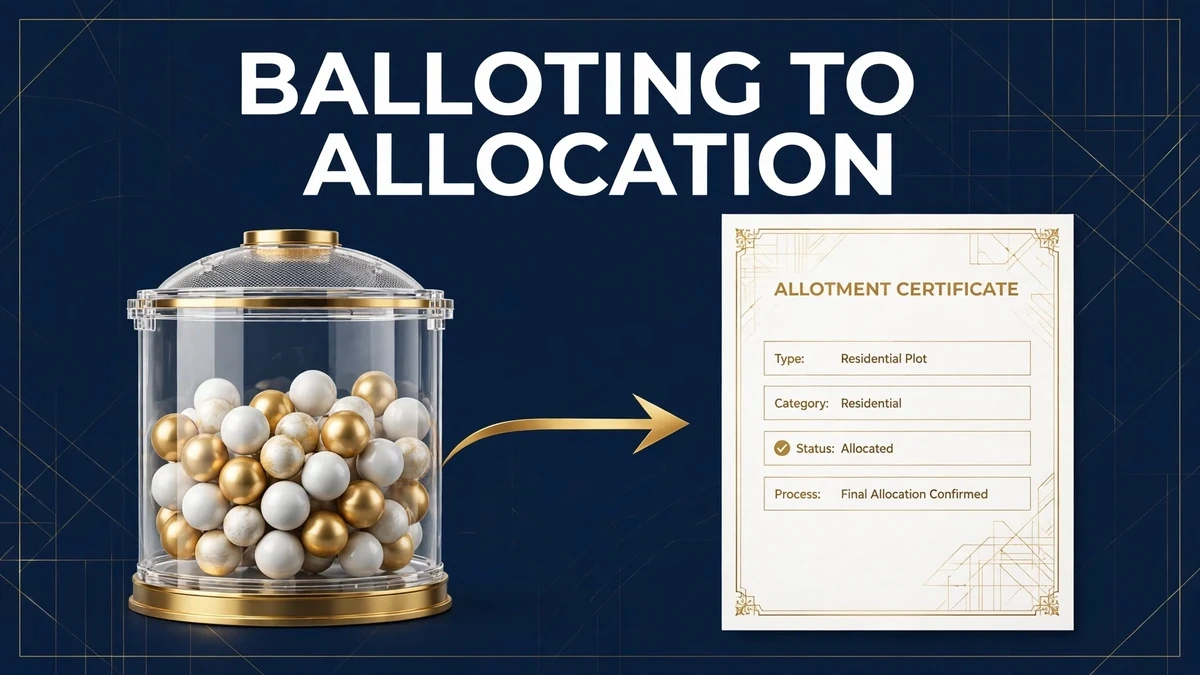
- Balloting — the developer holds a draw that assigns specific plot numbers to file holders.
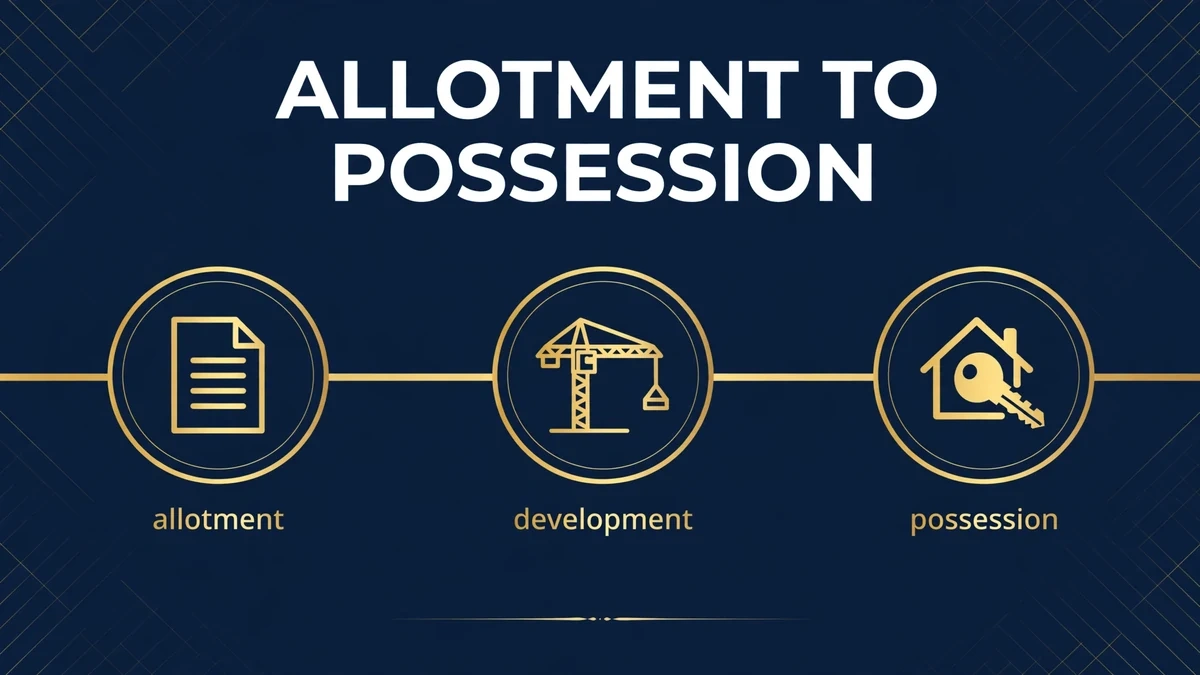
- Allocation — the society issues an allotment/allocation letter in your name against the drawn plot number.
- Development — the scheme develops the block: roads, utilities, boundary walls, streetlights.
- Possession — the plot is physically handed over, often against development charges.
- Registry (transfer) — the plot is registered or transferred in the buyer’s name in the land record.
The exact terminology and paperwork vary between developers — some societies call it an “allotment letter,” others an “allocation letter” or “plot number certificate.” The function is the same: it identifies the exact plot that is now tied to your name.
How Societies Actually Allocate Plots
Most commonly, allocation follows balloting. The society announces a ballot date, eligible file holders are entered in the draw, and plot numbers are assigned — by block, by size category, or both. After the ballot, the society’s transfer/allotment office updates its records and issues the allotment letter to each successful file holder.
Some buyers skip the ballot stage entirely through direct allotment: the developer assigns a specific plot at the time of booking or through a special allotment (common in launch phases or when booking leftover inventory). Either way, the outcome is identical — a named plot number attached to your file.
A point worth repeating: allocation is a society-level event. It happens inside the developer’s own records and transfer office. It does not, by itself, register the plot with the sub-registrar or update the government land record. That happens at the transfer/registry stage, much later.
What the Allotment Letter Actually Gives You
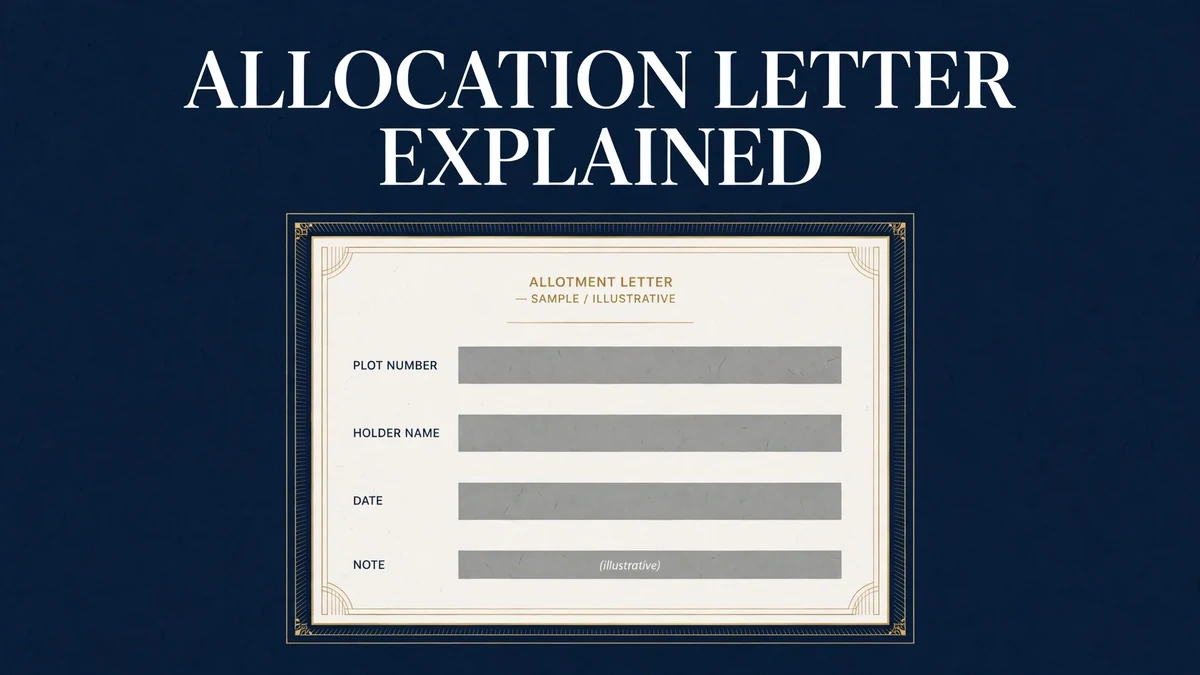
The allotment or allocation letter is the single most important document in this process. A proper one should clearly state:
- The plot number, block/sector name, and plot size
- The name of the allottee (you)
- The scheme and phase it belongs to
- Payment status — what’s paid, what’s outstanding (development charges, surcharges)
- The society’s terms for transfer, construction, and possession
What it does not give you: government-verified title. An allotment letter is issued by the society, not by the land revenue department. Your ownership in the legal sense is completed when the plot is transferred/registered in your name — and when the land record reflects it. That’s why the verification step matters so much.
Verifying an Allocated Plot Before You Accept It
Whether you’re buying a file that’s already balloted or taking an allotment letter from a seller, run these checks before money moves:
- Confirm the plot number at the society’s transfer office. Ask the society directly — not the seller — whether the plot number exists, whether it’s assigned to the seller, and whether the file is clear for transfer.
- Check the plot exists in the approved layout. The plot number should sit inside the scheme’s approved layout plan. A number with no matching position on the approved map is a red flag.
- Ask about outstanding dues. Development charges, surcharges, and transfer dues stay attached to the plot. Get the society’s written statement of what’s paid and what’s due.
- Cross-check the society’s legal standing. An allocation letter from a scheme without proper approvals is a weak document. Start with verifying a housing society file the same way you would for any file purchase.
- Check the land record after registry. Once the transfer is complete, confirm the plot in the PLRA’s online land record portal (for Punjab) so the government record matches what the society told you.
Common Mistakes File Holders Make
Mistake 1: Treating a non-balloted file like an allocated plot. Until a plot number is assigned, you hold an entitlement, not a piece of land. Its value and transfer process are different — don’t let anyone sell you a file as if the plot were already fixed.
Mistake 2: Assuming the allotment letter is ownership. It’s a society-issued allocation, not a registered title. Ownership is completed at transfer/registry. Keep that distinction clear in every negotiation.
Mistake 3: Skipping the society’s own office. Sellers can present convincing paperwork. The society’s transfer office is the only authority that can confirm a plot number is real, assigned to the seller, and clear for transfer. Always verify there first.
Mistake 4: Ignoring development dues. An allocated plot with heavy unpaid development charges can cost far more than its asking price suggests. Always get the society’s dues statement in writing before you commit.
Bottom Line
Allocation is the moment a plot file stops being a general entitlement and starts being a specific plot with a number, a block, and a map position. It usually runs through balloting, ends with an allotment letter from the society, and still isn’t full legal ownership until transfer and registry are done. Buyers who verify the plot number at the society’s office, confirm it on the approved layout, clear the dues question, and check the land record after transfer rarely get surprised — and that’s the whole point.
If you’re evaluating a file or an allocated plot and want a second pair of eyes on the paperwork before you commit, talk to Saeed Property Advisors — we help buyers in Sheikhupura and across Punjab verify what they’re actually buying.
Disclaimer: This article is general information about how plot allocation works in Pakistan. It is not legal or financial advice. Property paperwork varies between developers and cities — confirm the specifics of any deal with a qualified lawyer and the society’s own transfer office before making a decision.