

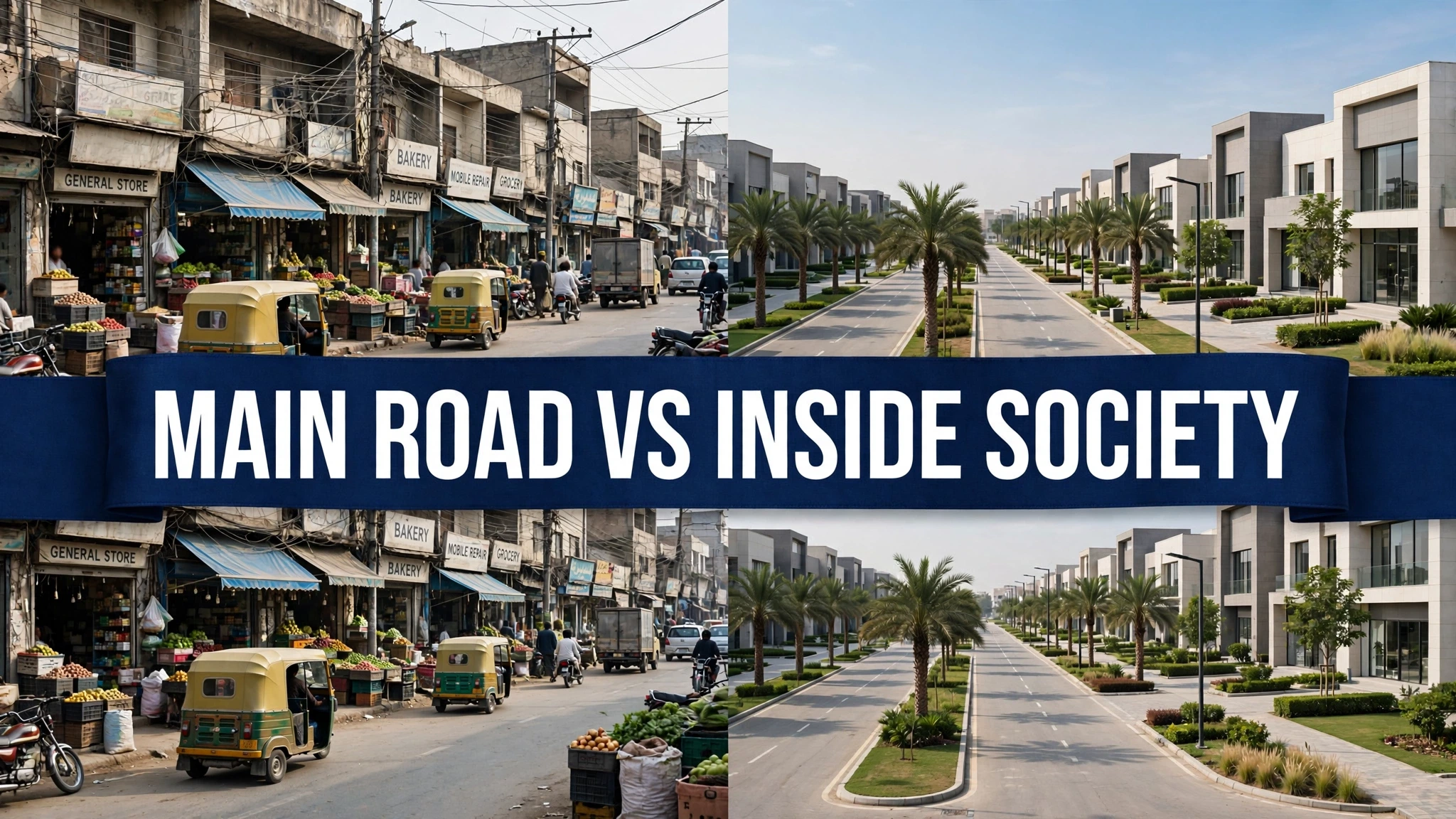
Plot on Main Road vs Inside a Housing Society: Pros and Cons in Sheikhupura
Every serious commercial plot buyer in Sheikhupura reaches the same fork in the road — literally. Do you buy frontage on a main road like GT Road, Lahore Road, Sargodha Road or Faisalabad Road, where thousands of eyes pass every day? Or do you buy inside a housing society’s commercial strip, where the paper trail is cleaner and the streets are planned? Both options build wealth for people who choose well. Both punish people who choose blindly. This guide gives you the honest pros and cons of each, framed for the Sheikhupura market, so you can decide based on your goal — not on someone else’s sales pitch.
First, Define the Two Options
A main-road plot sits on the frontage of an arterial road. In Sheikhupura, that means the GT Road corridor (the N-5 national highway), Lahore Road, Sargodha Road, Faisalabad Road, or major city arteries like the ones running through Housing Colony and the bypass areas. The plot’s value comes from the road: visibility, footfall, and passing traffic.
An inside-society plot sits in the commercial area of a planned scheme — the commercial strips and blocks laid out within a society’s approved layout. Its value comes from the development around it: an approved plan, utilities, parking, security, and a growing resident population that needs shops and services.
Neither is automatically better. The right answer depends on what you intend to do with the plot — open a shop, build a plaza, run a business, or hold it for appreciation. Keep that goal in mind as you read.
Main Road Plots: The Honest Pros
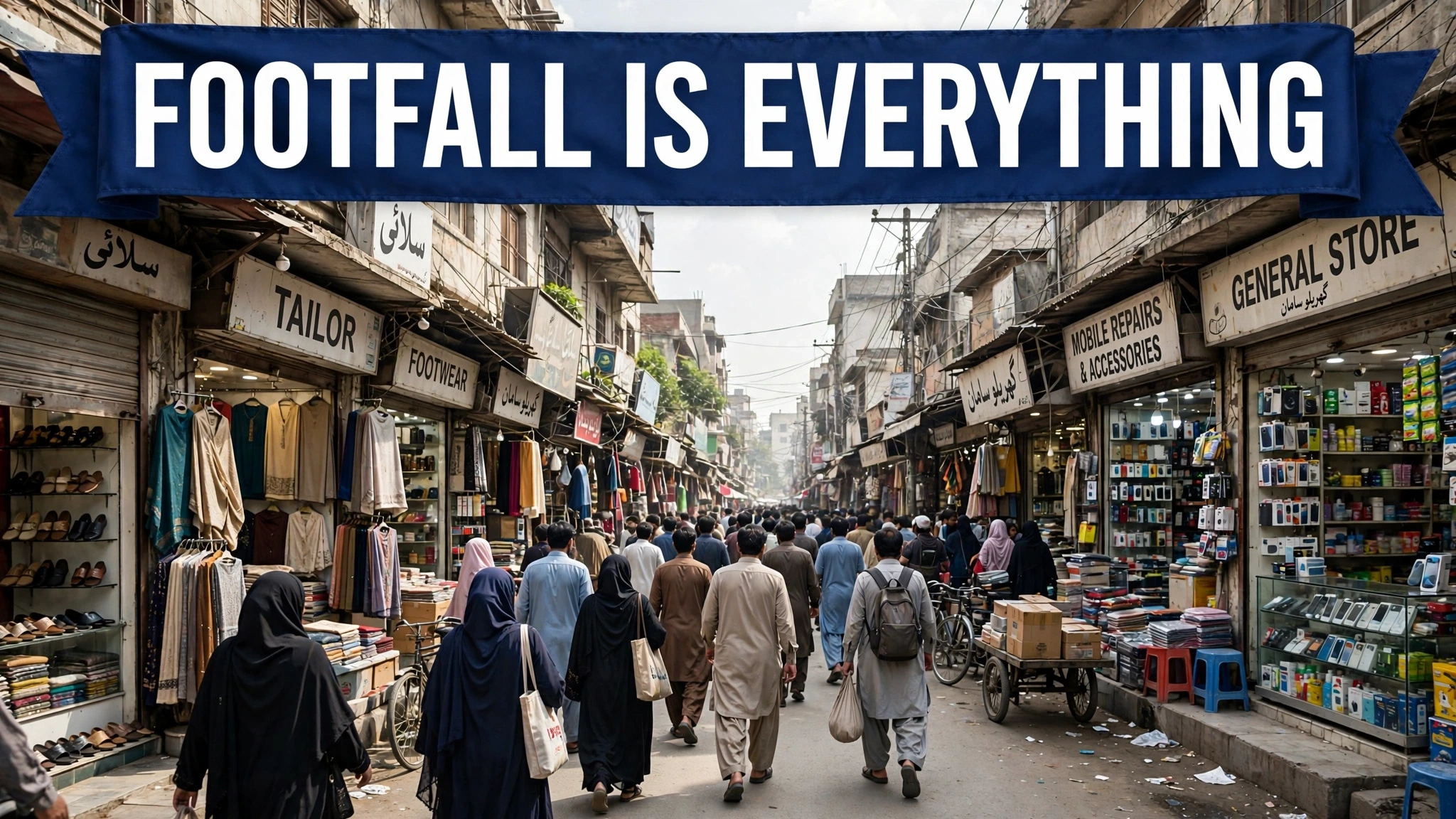
1. Footfall and visibility money cannot buy elsewhere. A shop on GT Road or a busy Sheikhupura artery advertises itself. Passing traffic is free marketing, day after day, for retail businesses, food outlets, and showrooms. This is why main-road commercial space is the first choice for brands and franchise outlets that live on visibility.
2. Strong rental demand. Businesses pay a premium for exposure. Shops, banks, restaurants and brand outlets all prefer main-road frontage when they can get it, which keeps occupancy high and gives owners stronger negotiating power with tenants.
3. Resale liquidity. Prime frontage on a major road is scarce — no one is building new GT Road. When you decide to sell, there is almost always a queue of buyers, which means faster exits at fair market prices.
4. No society rules to follow. On a main road, there is no society office charging transfer fees, no bylaws dictating your facade or business hours, and no maintenance charges. You deal directly with the government revenue system and the municipal authorities.
Main Road Plots: The Real Downsides
1. Higher entry cost. Everything above is priced in. Main-road commercial plots command the highest rates in Sheikhupura per marla — your capital outlay is significantly larger than a comparable plot a few streets inside.
2. Noise, dust and pollution. Living or working on GT Road frontage means constant traffic. For offices, clinics, and call centers, this is a real working-environment cost that buyers underestimate.
3. The right-of-way problem. The N-5 is a national highway, and the National Highway Authority enforces a protected right-of-way along it. If any part of your plot — or your future construction — falls inside that corridor, you can face demolition action regardless of what a seller told you. Measure carefully and confirm the boundary before you commit.
4. Parking and access headaches. Highways have dividers; your customers may need to drive to the next U-turn and come back. Service roads get choked at peak hours. Visit the site at rush hour before deciding — a plot that looks perfect at noon can be a bottleneck at 7 PM.
5. Messier title verification. Unplanned main-road frontage often comes with fragmented khasras, old family ownership, and undocumented partitions. The verification checklist is longer here, so check whether the plot carries any court cases or stay orders and confirm the ownership chain is complete before paying.
Inside-Society Plots: The Honest Pros
1. Cleaner paper trail. Approved societies work from a sanctioned layout plan. The plot number, dimensions and commercial designation are documented in the society’s record, which makes ownership verification more straightforward than piecing together fragmented frontage land.
2. Planned infrastructure. Wide internal roads, drainage, electricity and water lines, and — crucially — designated parking are designed in, not improvised. Customers can park and walk in, which matters more to a shop’s daily sales than buyers realize.
3. Organized, secure environment. Gated or managed schemes offer boundary walls, guards and a maintained commercial area. For offices, clinics, and businesses that value a calm environment, this is a genuine advantage over highway frontage.
4. Growth runway. In an established, well-managed society, commercial values tend to rise as the resident population grows — more residents means more demand for shops, services and offices. You are buying into a built-in customer base that expands over time.

Inside-Society Plots: The Real Downsides
1. Society charges and bylaws. Transfer fees, development or maintenance charges, and society bylaws come with the plot. Some schemes restrict what you can build or operate — heavy industry, warehouses with truck traffic, and late-night businesses are commonly disallowed in residential societies’ commercial areas. Read the bylaws before you buy, not after.
2. Slower rental start in newer schemes. A commercial strip in a half-populated society can sit vacant for years. The society’s success is your success — and its delays are your delays. Check actual occupancy, not the developer’s brochure.
3. Approval risk. Not every scheme advertising plots in Sheikhupura holds a valid layout approval or NOC. An unapproved society’s commercial plot is paper with a question mark. Confirm the scheme’s approval status with the relevant authority before paying anything.
4. Captive resale market. Your buyer pool is largely people who want to be in that society. That is fine when the society is thriving — but if the scheme stagnates, your plot’s resale value stagnates with it.
Decision Framework: Match the Plot to Your Goal
Instead of asking “which is better,” ask “which is better for me.” Here is how the two options line up against common buyer goals in Sheikhupura:
| Your goal | Usually better fit | Why |
|---|---|---|
| Open a retail shop right away | Main road | Immediate footfall and visibility from day one |
| Build a plaza for rental income | Either — decide on budget | Main road: higher rent, higher cost; society: lower cost, steady tenants |
| Run a showroom or godown | Main road | Loading access and visibility; check society bylaws if considering inside |
| Set up an office (call center, software house) | Inside society | Lower cost, quieter environment, easy staff parking |
| Open a clinic | Either | Main road for walk-ins; society for a calm, trusted setting |
| Long-term hold for appreciation | Depends on the specific road and the specific society | Prime frontage is scarce; established societies compound — verify each case |

5 Checks That Matter Whichever You Choose
- Fard in the seller’s name. Get a fresh fard and confirm the seller on paper matches the person you are paying. If the ownership documents don’t line up, walk away — our guide on the difference between fard, registry and intiqal explains exactly what each document proves.
- Ownership record on PLRA. Cross-check the fard against the Punjab Land Records Authority portal at punjab-zameen.gov.pk before signing anything.
- Right-of-way or NOC, depending on location. Main road: confirm no part of the plot falls in the highway right-of-way. Inside society: confirm the scheme’s approval and your plot’s commercial designation in the layout plan.
- Actual measurement (pemaish). Especially on main-road frontage, where road widening and old partitions shrink plots. Measure on site with the revenue record in hand.
- Visit at different hours. Footfall at noon is not footfall at 8 PM. Noise, parking, and access all change with the hour. Walk the site on a weekday evening and a weekend afternoon before you decide.
Bottom Line
Main-road plots sell you the present: footfall, visibility and liquidity at a premium price with messier paperwork. Inside-society plots sell you a managed future: cleaner records and planned infrastructure, tied to the society’s fortunes and its rulebook. The smart buyer in Sheikhupura doesn’t ask which is better in the abstract — they define their goal, run the verification checklist, and pick the option their business plan actually fits.
If you are weighing a specific plot on GT Road against a commercial strip inside a scheme, talk to our commercial plot team before you commit. Saeed Property Advisors works both sides of this market every day — main-road frontage and society commercial — across commercial property in Sheikhupura, and we will tell you plainly which option suits your goal, even if the answer is “neither of these two.”
Disclaimer: This article is general information about buying commercial plots, not legal advice. For your specific transaction, consult a qualified lawyer and verify all records independently.