

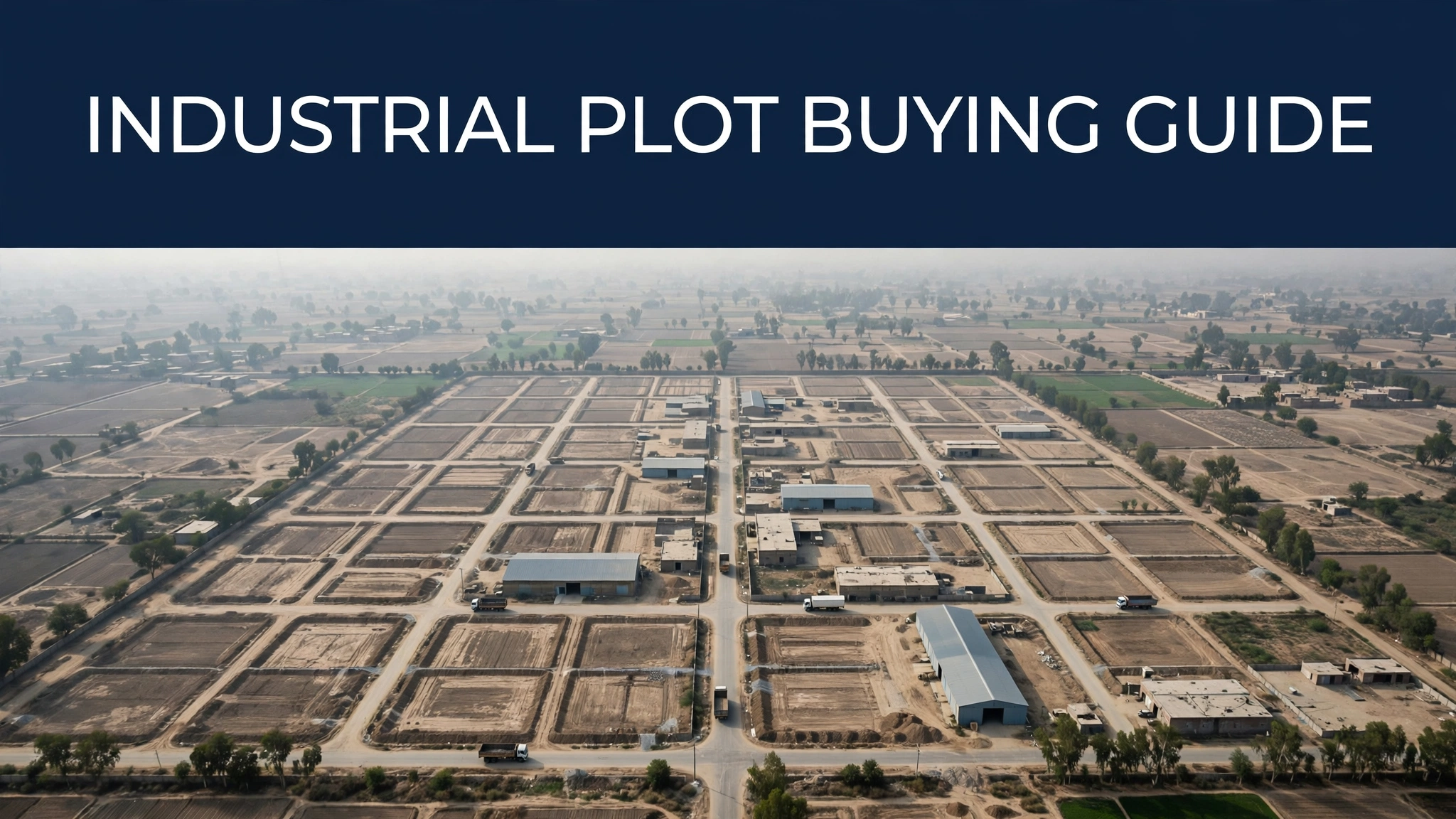
How to Buy an Industrial Plot in Sheikhupura: Documents, NOCs & Checklist
Most guides that explain how to buy an industrial plot in Sheikhupura are written for Islamabad or Karachi — and Sheikhupura’s industrial market works differently. Between the managed industrial estates like Quaid-e-Azam Business Park and the standalone agricultural land along the GT Road corridor, a buyer faces two completely different rulebooks. This guide gives you a practical checklist: which documents to verify, which NOCs and approvals apply, what to check on the ground, and how the buying sequence works — so you decide with your eyes open.
What Counts as an “Industrial Plot” in Sheikhupura?
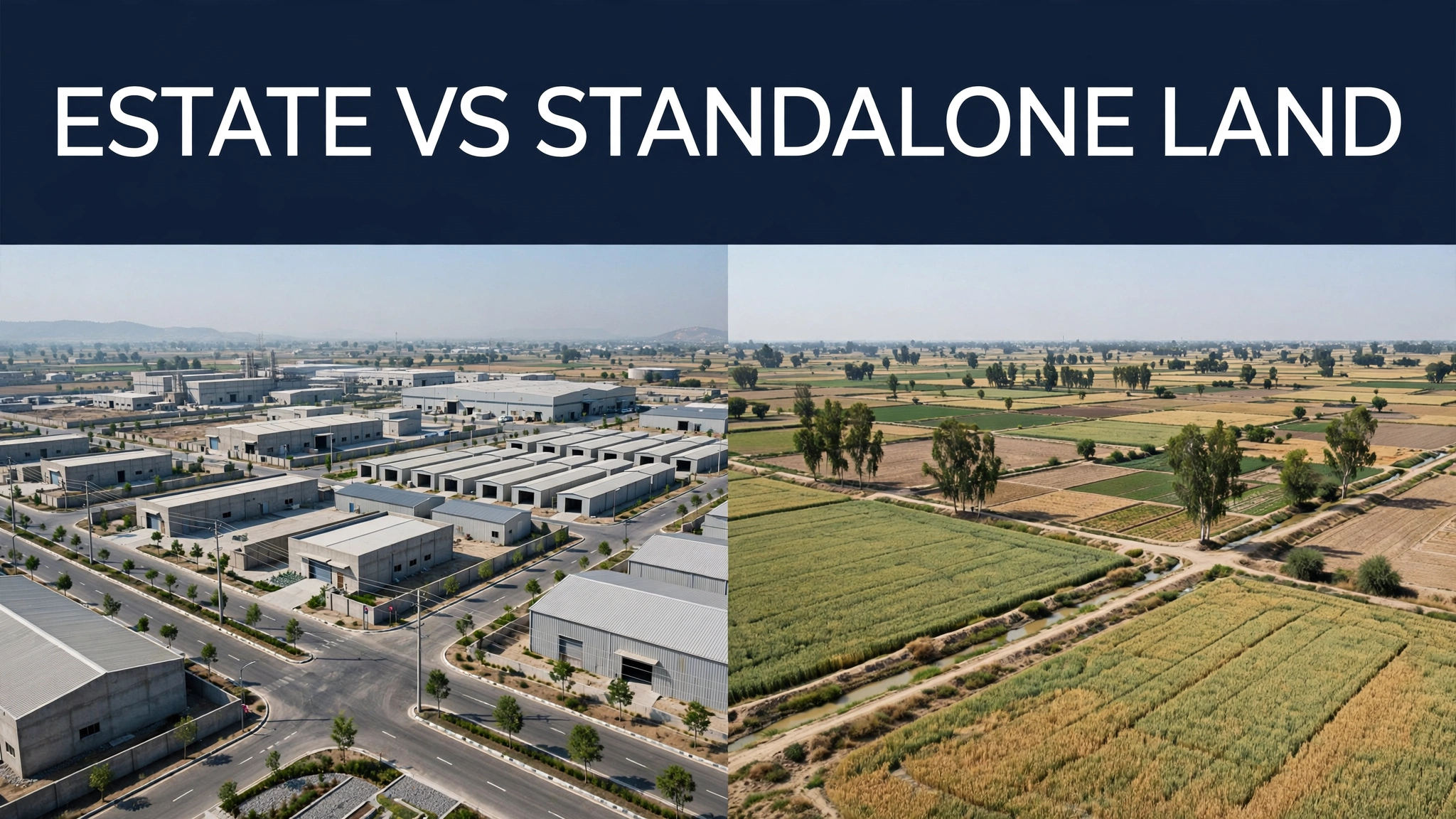
Not all industrial land is the same product. In Sheikhupura, you will generally meet three types:
- Industrial estate plots — demarcated plots inside a managed estate (for example, Quaid-e-Azam Business Park, also known locally as the China Scheme). These transfer through an allotment/transfer system run by the estate’s management, with estate-level infrastructure and rules.
- Standalone industrial land — revenue land outside any estate, bought through normal registry. You get flexibility on size and location, but every approval is your own responsibility.
- Commercial plots — meant for shops, offices, and retail, not factories. Different approval path, different buyers. If that is what you actually need, see our commercial plot checklist for Sheikhupura.
The right choice depends on your plan. If you want to set up a factory quickly with utilities and estate services in place, an estate plot simplifies life. If you need a non-standard size, a specific location near a highway, or room to expand over time, standalone land may suit you better — provided you are ready to handle the approvals yourself.
Industrial Estate vs Standalone Land: A Decision Framework
Run through these five questions before shortlisting anything:
- Approvals: Estate plots usually come with estate-managed allotment and building rules; standalone land needs you to arrange every clearance yourself.
- Utilities: Estates typically plan power, gas, water, and drainage at scale. On standalone land, confirm an industrial-load electricity connection and gas availability before you commit — not after.
- Restrictions: Estates set what you can build and which industries are allowed. Standalone land gives you freedom, but nearby residential pockets can later object to noise, traffic, or emissions.
- Transfer process: Estate plots transfer through the estate office’s own procedure (allotment/transfer letter), while standalone land transfers through registry and intiqal at the revenue record.
- Expansion: Estates sell fixed plot sizes; growing means buying an adjacent plot if one exists. Standalone land lets you buy the exact footprint — and the buffer around it — from day one.
Neither option is “better” in the abstract. Match the option to your industry type, timeline, and how much approval work you are prepared to do.
The Document Checklist
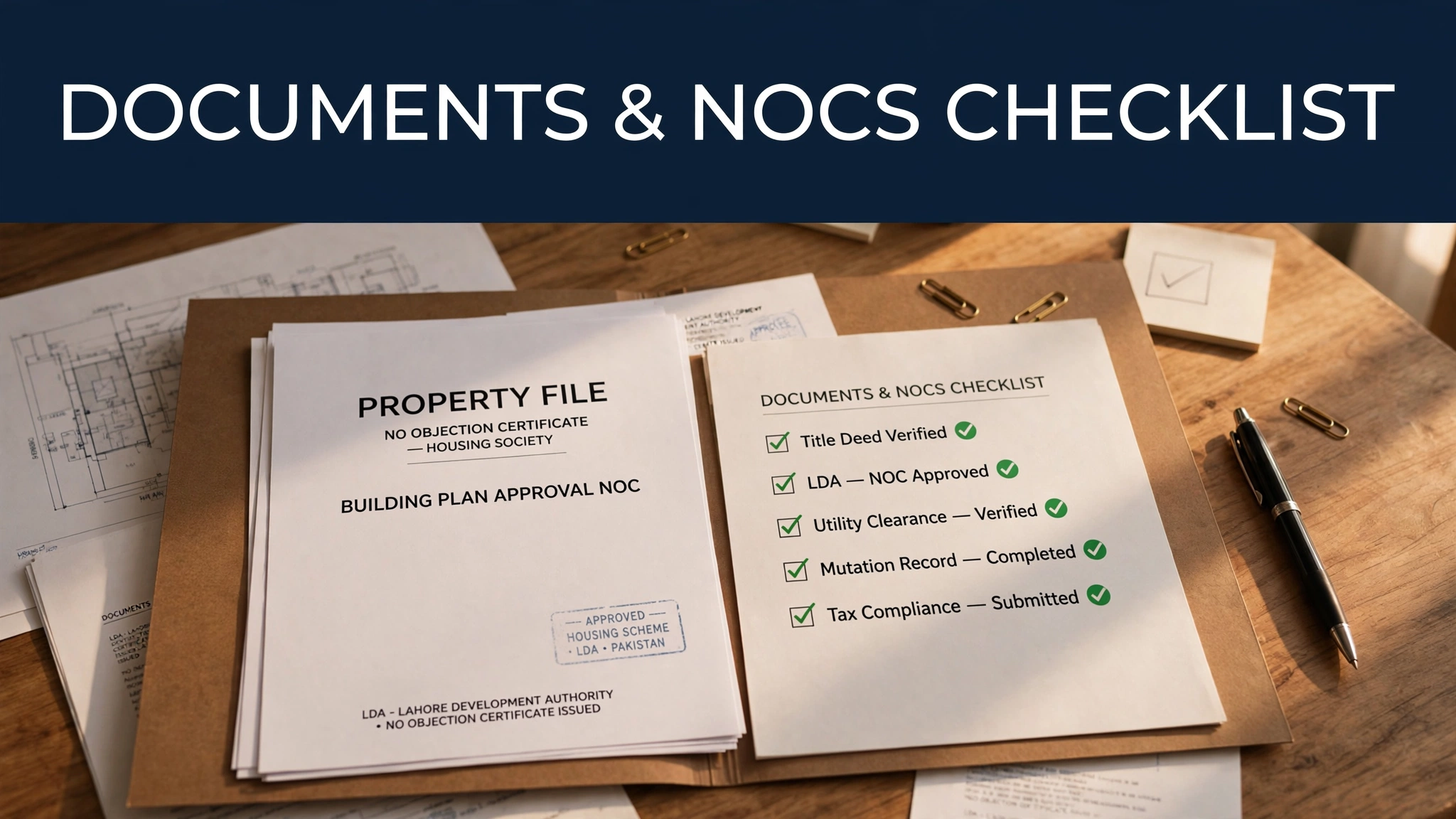
Whatever route you take, verify this paper trail before any token money changes hands:
- Ownership title: For estate plots, the allotment or transfer letter from the estate management; for standalone land, the registered registry (sale deed) in the seller’s name.
- Fard-e-Malkiat: the current record-of-rights showing who owns the land. Cross-check it on the Punjab Land Records Authority’s online portal before you visit the ARC.
- Intiqal (mutation) record: confirm the last ownership transfer was mutated in the seller’s name. An un-mutated registry is a red flag — the revenue record should match the person selling to you.
- Khasra number and jamabandi: pin down the exact plot on the revenue map and confirm there are no entries for disputes, stays, or mortgages.
- Dues clearance: for estate plots, a clearance certificate from the estate office showing no outstanding development or maintenance dues. For standalone land, check for unpaid dues or tax liabilities attached to the property.
- Seller identity: the seller’s CNIC, and if someone is selling on the owner’s behalf, a registered power of attorney — verbal authority is worthless.
- Physical verification: walk the plot with the khasra map and confirm the boundaries on the ground match the paper. Encroachments are common on open land.
NOCs and Approvals You May Need
Industrial use brings approvals that a shop or house never needs. Confirm these early — some take weeks:
- Environmental clearance: the Environment Protection Department Punjab requires environmental approval for industrial projects. Whether you need a full assessment or a simpler clearance depends on your industry type — check before you buy, because a plot that cannot legally host your plant is a dead investment.
- Building plan approval: your factory building plan must be approved by the relevant authority — the estate office inside an industrial estate, or the municipal/development authority for standalone land.
- Utility sanctions: an industrial electricity load sanction (Sheikhupura falls in the LESCO service area) and a gas connection from SNGPL if your process needs it. Ask for written confirmation of load availability in the area.
- Estate transfer NOC: inside an industrial estate, the estate office must clear the transfer — unpaid dues or unapproved construction by the previous allottee can block it.
- Change of land use: if you are buying agricultural (raqba) land for industrial use, the land-use change must be formally processed. Buying farm land and “just building” is how buyers end up in litigation.
Seven Site Checks Before You Pay
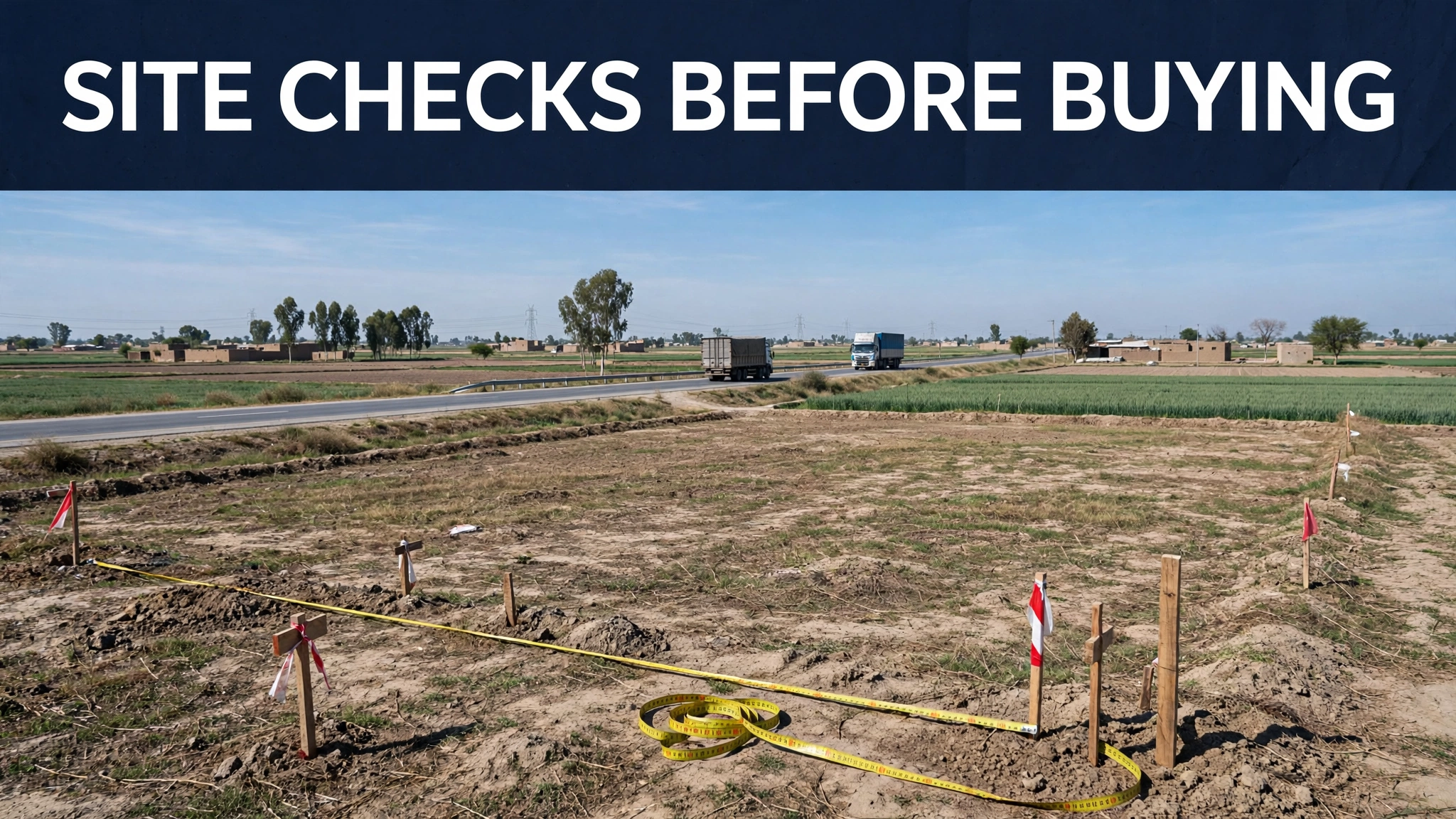
Paper can be perfect while the plot itself is wrong. Verify on the ground:
- Truck access: can heavy vehicles reach the plot and turn comfortably? Narrow approach roads strangle a factory’s daily operations.
- Frontage: adequate road frontage matters for loading docks, gates, and future signage — not just for shops.
- Soil and water table: industrial buildings carry heavy loads. Soft soil or a high water table raises foundation costs sharply; a soil test is cheap insurance on a large plot.
- Drainage and flooding: ask about monsoon waterlogging in the area and check the plot’s level against the road. Standing water and factories do not mix.
- Power infrastructure nearby: a transformer or feeder close to the plot makes your load sanction faster and cheaper than a long new line.
- Logistics position: distance to the GT Road and motorway access decides your freight cost for years. Sheikhupura’s edge is its position on the Lahore–Punjab freight corridor — use it.
- Buffer and expansion: keep distance from dense residential pockets (complaints follow factories), and if growth is likely, secure adjoining space now rather than hoping it stays available.
The Buying Sequence
The standard sequence for an industrial plot purchase in Sheikhupura:
- Shortlist and verify — documents first (checklist above), site checks second.
- Bayana (token/advance agreement) — a written agreement with clear timelines, forfeiture terms, and the documents the seller must produce. Never rely on a verbal commitment.
- Registry — the sale deed registered at the sub-registrar’s office, with both parties (or their attorneys) present.
- Intiqal — mutation of the revenue record into your name at the ARC. For estate plots, this step is replaced or accompanied by the estate office’s transfer/allotment procedure — confirm which applies to your plot.
- Possession and demarcation — take physical possession with the boundaries marked, and keep copies of every document in one file.
Common Mistakes Industrial Buyers Make
- Buying agricultural land and assuming industrial construction is automatically allowed.
- Skipping the environmental clearance until after construction starts — when stopping work costs far more than the approval.
- Not checking estate dues on an “allotment” plot, then discovering the arrears transfer with the plot.
- Accepting a photocopied allotment letter without verifying it at the estate office.
- Paying a large bayana before the fard, registry, and intiqal chain is verified.
Bottom Line
Buying an industrial plot in Sheikhupura is a two-track decision: pick the right type of land for your plan (estate vs standalone), then run the document, NOC, and site checklists without shortcuts. The buyers who get burned are rarely the ones who paid too much — they are the ones who verified too little. Before you commit to a plot, talk to an industrial property dealer in Sheikhupura who works this market daily; a one-hour ground check can save you from a years-long dispute.
Disclaimer: This article is general information for property buyers, not legal or tax advice. Industrial approvals and procedures change over time — confirm the current requirements with the relevant authority or a qualified professional before making a purchase decision.
3 Comments
Pingback: How to Buy a Warehouse (Godown) in Sheikhupura: A Practical Checklist | Saeed Property Advisors
Pingback: How to Buy a Factory in Sheikhupura: A Legal Checklist | Saeed Property Advisors
Pingback: Factory in an Industrial Zone or a Standalone Plot in Sheikhupura: Which Is Right for Your Business? | Saeed Property Advisors