

How Long Does Intiqal Take in Punjab?
You bought the property, paid the token and bayana, and registered the sale deed. Then someone tells you the intiqal still isn’t done — and the seller is in no hurry. Or you filed an inheritance mutation at the ARC weeks ago and nobody can tell you when the Revenue Officer will attest it. So: how long does intiqal take in Punjab?
The honest short answer: the Punjab Land Records Authority (PLRA) publishes no fixed timeline for intiqal. The law gives one hard number — if the Revenue Officer makes no order within three months of the report, he must explain the delay to the Collector (Section 42(10) of the Punjab Land Revenue Act, 1967). Everything between “filed” and “attested” depends on the type of mutation, the completeness of your documents, and how busy the verification chain is.
The Stages of an Intiqal — and Where the Time Goes
An intiqal is not one signature; it is a chain of steps, and a delay at any one of them stalls the rest:
- Report and entry. The acquisition of rights is reported and entered in the register of mutations. For a sale, the report follows the registry; for inheritance, any legal heir can apply at an ARC with the death certificate, NADRA FRC, affidavit, property details, and CNIC copies of all heirs.
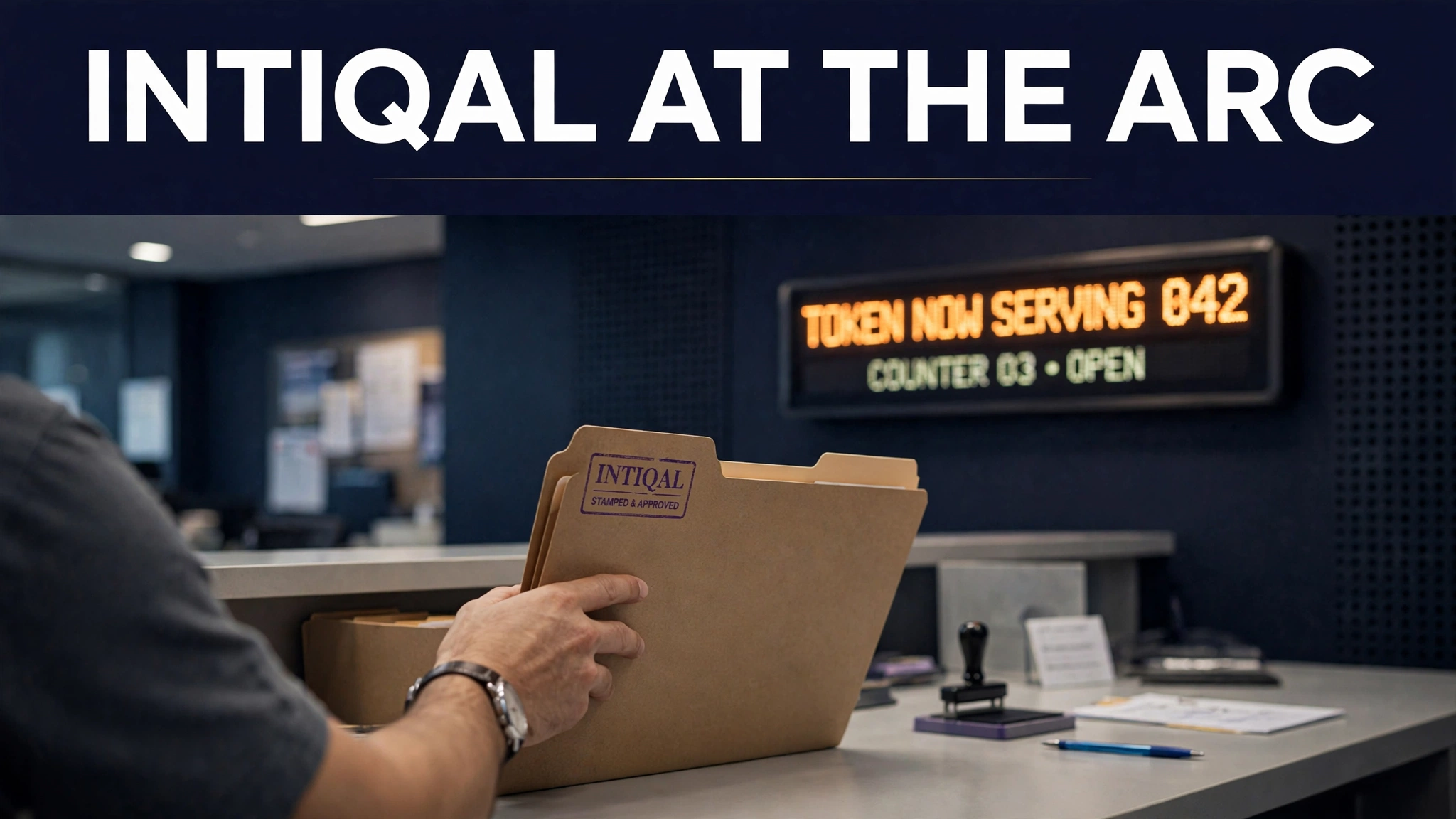
- Token and documents. At the Arazi Record Centre, you register at reception (CNIC, photo, fingerprints) and receive a token. When called, a service-centre official enters the mutation.
- Field verification. Revenue field staff verify the facts — for inheritance, this means checking the shajra nasab (family tree in the revenue record) against the FRC. This is usually the longest stage.
- Attestation. After the field report, the Revenue Officer attests the mutation. The mutation itself can be entered at any ARC in Punjab, though statements are recorded before the Revenue Officer of the area where the land lies.
- Record update. Once attested, the change enters the Jamabandi, and you collect an attested copy — each carrying a QR code you can scan to verify it.
If you want the full sequence from the buyer’s side, read our guide on what intiqal does after you buy a property in Punjab.
What Controls How Long Your Intiqal Takes
- The type of intiqal. A straightforward sale backed by a registered deed is the fastest category. Inheritance mutations take longer because every heir must be identified and verified. Gift, exchange, and partition-linked mutations sit in the middle — and any mutation facing an objection is the slowest of all.
- Document completeness. Incomplete or mismatched documents — a name spelled differently from the CNIC, a missing death certificate, an FRC that leaves out a married daughter — bounce the file back to you before attestation.
- Whether the record is computerized. In fully computerized areas, entries move faster. Where the record still runs through the old manual system and field verification goes through revenue staff on the ground, the same process takes longer. Published explainers describe the spread as days in the best case to weeks or months where verification is manual — treat that as a range, not a promise.
- Field staff workload. Verification depends on the revenue staff of that circle, and harvest season, elections, and general workload all slow it down.
- Objections and disputes. If anyone objects to the mutation — a rival claimant, a co-owner, a stay order — the clock effectively stops until the objection is decided. Check the record for court cases before you file.
- Which ARC you file at. The law lets you enter a mutation at any ARC, but statements go before the Revenue Officer of the area where the land lies. Filing far from the land adds coordination time.
Realistic Expectations by Type of Intiqal
- Sale intiqal (registry-backed): the fastest category. With complete documents and no objections, straightforward cases are commonly attested within days in computerized areas. Keep a week or two of buffer.
- Inheritance intiqal (virasat): slower by nature — the FRC and shajra nasab must be checked heir by heir, and the Revenue Officer may call heirs during the inquiry. Weeks is a reasonable expectation; months is not unusual where the family tree is disputed.
- Gift and exchange: usually closer to a sale intiqal, as long as the deed is registered and the documents match the record.
- Contested intiqal: no realistic timeline exists. Resolve the objection first; the mutation waits behind it.
Remember: skipping intiqal because the registry is done is one of the most expensive mistakes a buyer can make — the government record still shows the seller as the owner until the mutation is attested.
Why Intiqal Gets Delayed
- Documents that don’t match the existing record (name, CNIC, khasra or khewat numbers).
- Heirs missing from the FRC, or disputes among heirs.
- Objections entered against the property, or a pending stay order.
- The file sitting with field staff for verification without a follow-up visit.
- Filing at an ARC far from the property’s area, adding coordination lag.
- Assuming the registry alone is enough and filing the intiqal months late — or never.
How to Track It and Keep It Moving
- Keep your token and receipts. The ARC token number and any challan are your proof of filing — and the reference for every follow-up.
- Check the record yourself. After filing, check the current ownership record online periodically to see when your name appears in the Jamabandi.
- Follow up in person. A polite visit to the ARC asking where your file sits in the chain moves files that would otherwise sit.
- Use the official channels. PLRA’s helpline (0800-PLRA) and the complaint system in the Punjab Zameen app exist for service problems — use them before paying anyone to “arrange” the mutation.
- Know the three-month line. If the Revenue Officer has made no order within three months of the report, the law requires him to report the delay to the Collector. Past that point, escalate: a wrong or stalled mutation can be taken to the Assistant Commissioner, while other kinds of mutation go to the District Collector.

The Punjab Land Records Authority (punjab-zameen.gov.pk) is the authority for record services — always confirm procedures against its published FAQs rather than agent claims.
Before You File: A Five-Point Checklist
- Verify the current record first — name, khasra/khewat numbers, and any encumbrances.
- Make sure every document matches the record exactly (spelling, CNIC, share).
- For inheritance: complete the FRC before you go, and confirm every child is listed.
- Keep the registry, token receipt, and challan in one file.
- Collect the attested copy with the QR code — and check every name, CNIC, and share on it before anyone signs anything.
The Bottom Line
Intiqal in Punjab has no published fixed timeline — but it is not a black box either. A clean sale mutation with complete documents is typically a matter of days; inheritance and disputed cases run into weeks or months; and the law draws its accountability line at three months. File promptly, keep your documents consistent, follow up at the ARC, and escalate through the official channels if the file stalls.
This article is for general information only and is not legal advice. Land revenue procedures change over time; confirm the current requirements with the PLRA or a qualified lawyer before acting.