

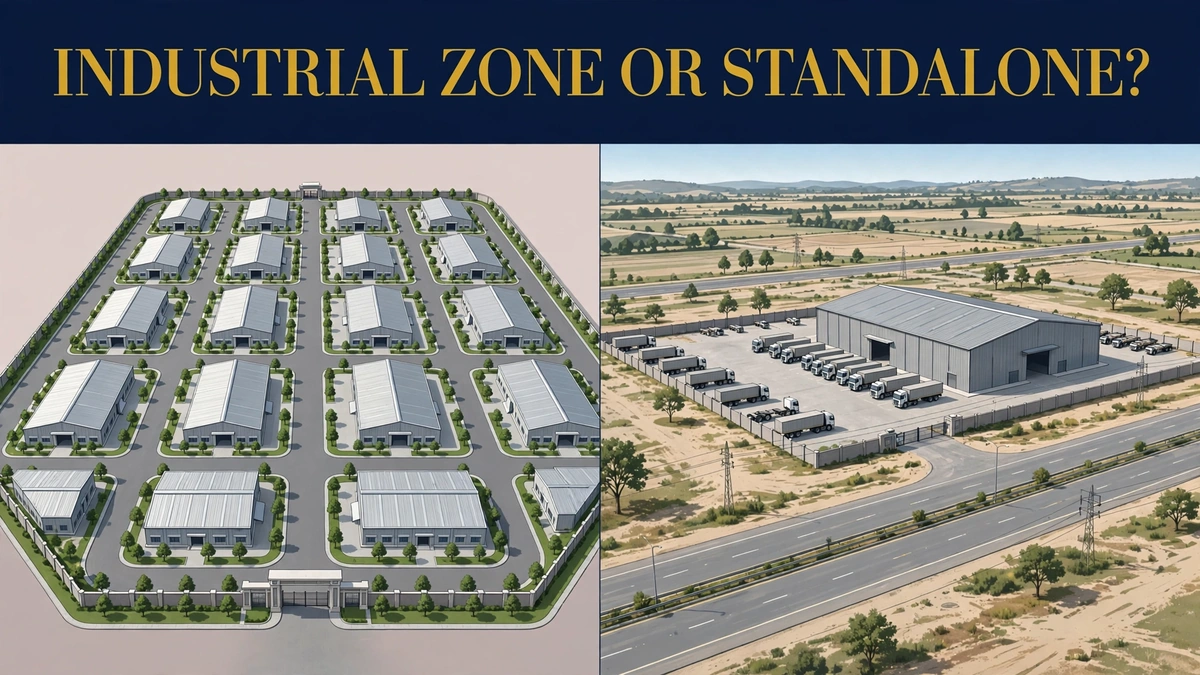
Factory in an Industrial Zone or a Standalone Plot in Sheikhupura: Which Is Right for Your Business?
If you are setting up a factory around Sheikhupura, the first real fork in the road is not the size of the plot or the cost of construction — it is where the factory sits: inside a planned industrial zone, or on a standalone plot along one of the city’s roads. The two options behave like different products: they carry different approval paths, different utility realities, and different risks when you later sell or expand.
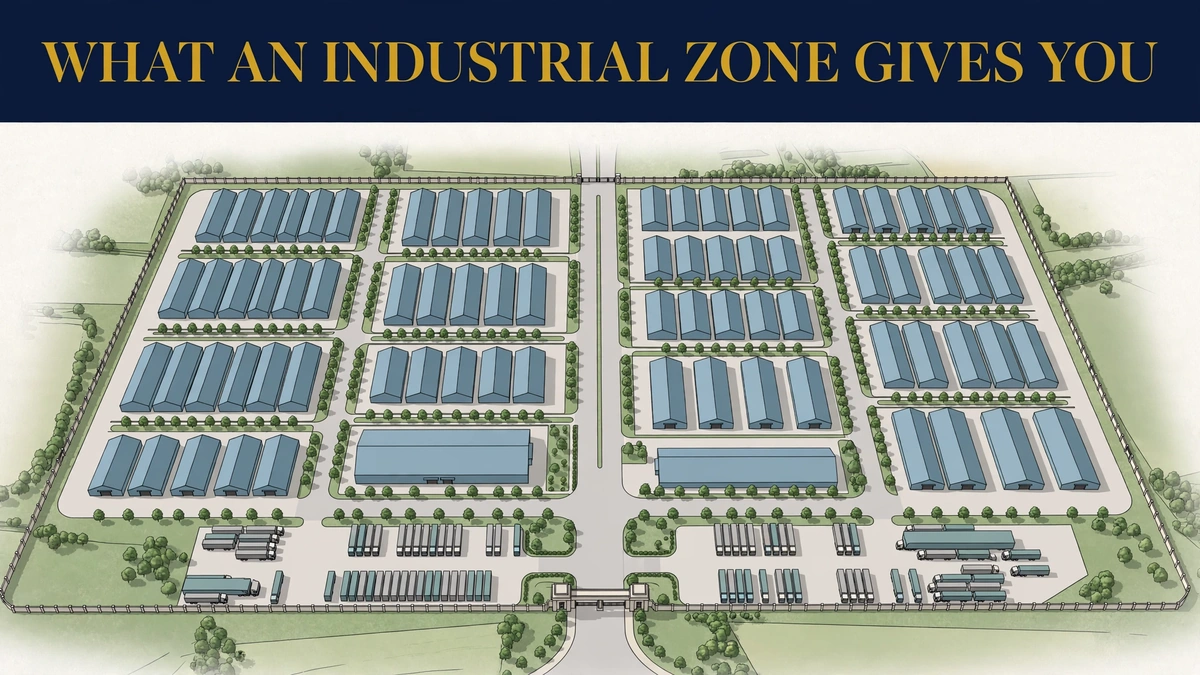
What “Industrial Zone” Means Around Sheikhupura
A planned industrial zone is a developed estate where plots are laid out for industry: internal roads, drainage, utility corridors, and a management body or development authority that enforces building bylaws. Quaid-e-Azam Business Park (QABP, also known as the China Scheme) near Sheikhupura is the best-known example in the pipeline — a large planned park on the M-2 corridor — and there are older established industrial pockets and estates serving the city as well. Buying into a zone means you accept the zone’s rules in exchange for its infrastructure.
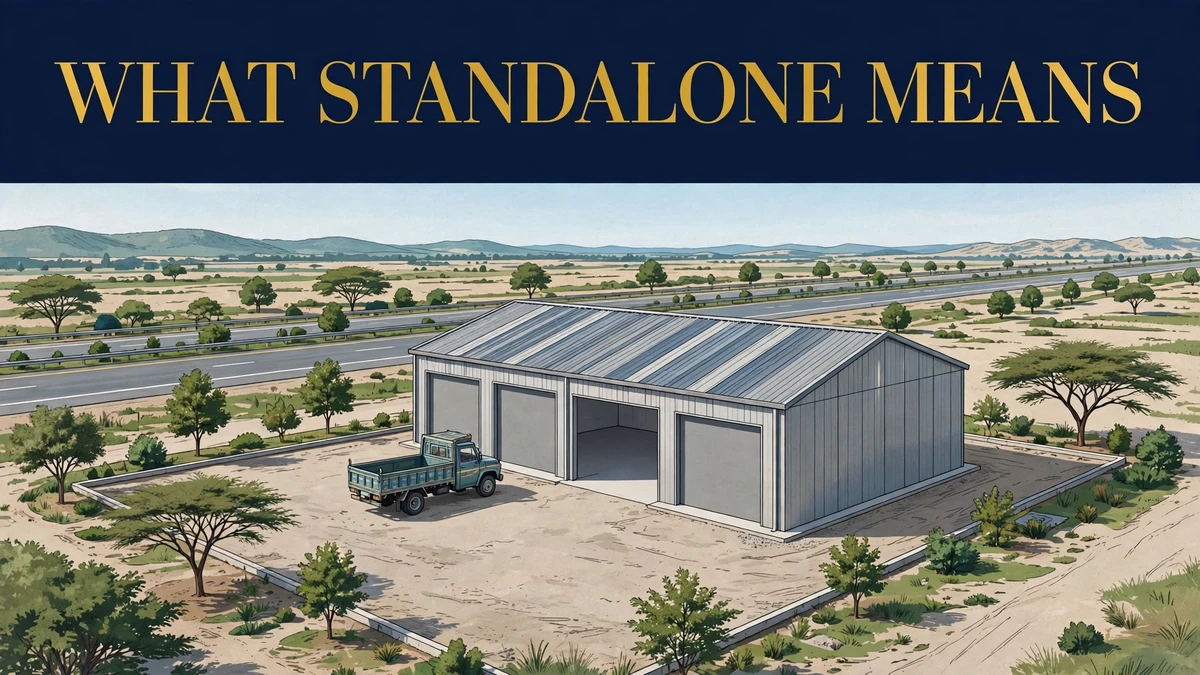
What “Standalone” Means
A standalone factory plot sits on its own title outside any planned estate — typically fronting the GT Road (N-5), Lahore Road, Sargodha Road, or Faisalabad Road, or in the informal industrial pockets that have grown along them. You own the land directly, answer to the municipal and provincial authorities rather than an estate management, and arrange your own utilities and access. Freedom is the attraction; everything is your responsibility is the trade-off.
Side-by-Side Comparison
| Factor | Industrial Zone | Standalone Plot |
|---|---|---|
| Approvals and NOCs | Estate-level permissions and a defined building-plan process; fewer surprise objections, but the zone’s bylaws constrain design. | You handle each approval yourself (building plan, EPA where applicable, commercial-use status); more control, more paperwork, more variance in outcomes. |
| Utilities | Planned power, gas, water, and drainage corridors; connections are orderly but sanctioned loads and timelines follow the estate schedule. | You arrange LESCO/SNGPL connections and water independently; timelines and costs depend on your location and load. |
| Road access | Wide internal roads designed for trailers and heavy vehicles; gate management is standardized. | Direct highway or road frontage can mean superb visibility and dispatch access — or a plot with no legal access and NHA right-of-way problems. Verify access on paper, not by sight. |
| Neighbouring uses | Industry-only surroundings; no surprise residential complaints about noise, smoke, or truck movement. | Roadside plots can sit next to housing, shops, or agriculture; complaints and future land-use conflicts are real risks. |
| Expansion | Adjacent plots may be available but sizes and shapes are fixed by the layout; phased expansion needs planning. | You can buy the exact shape and size you want, and add adjoining land — if the seller’s title is clean. |
| Transfer and resale | Estate transfer procedures are documented; the buyer pool is industry-specific and informed. | Registry-based transfer is standard property law, but buyers will price in your utility, access, and approval work. |
| Regulatory attention | Zone management + EPA + labour inspections are routine and predictable; non-compliance is noticed quickly. | Inspections are less routine but each authority is a separate negotiation; paperwork gaps surface at the worst moments (bank financing, government contracts). |
| Setup speed | Typically faster from allotment to production-ready because infrastructure exists. | Often slower: you build roads, drains, boundary, and utility arrangements yourself. |
Six Questions That Decide It
Answer these honestly and the right option usually picks itself:
- What do you make? High-noise, effluent, or heavy-truck operations (rice shellers, foundries, chemical-adjacent) fit zones better; low-impact assembly or storage units can work standalone.
- How fast must you start production? If your machinery order has a date, a zone’s ready infrastructure removes the longest delays.
- How much power and gas do you need? Heavy sanctioned loads are simpler to secure inside a planned estate than on a lone roadside plot.
- Is highway visibility or customer walk-in part of the plan? Showrooms, retail-facing units, and godown-plus-counter businesses gain from standalone road frontage.
- Do you plan to expand in five years? Standalone gives you shape control; zones give you certainty of surroundings. Pick the certainty your business model needs.
- Who buys it if you exit? Zone plots sell to other industrialists on estate procedure; standalone plots sell to a wider market but each buyer re-does your due diligence.

Checks That Apply to Either Choice
Before money moves, run these six verifications regardless of which side you chose — the full sequence is covered in our legal checklist for buying a factory in Sheikhupura:
- Verify the complete title chain on the PLRA’s online land record portal — zone allotment letter or standalone registry, either way the ownership must read clean.
- Confirm the land’s permitted use in writing; a zone plot’s industrial status and a standalone plot’s commercial-use/NOC position are different documents — get whichever applies.
- Walk the access yourself: measure turning space for your longest vehicle, confirm the entry isn’t across someone else’s land, and check NHA right-of-way limits on highway plots.
- Get utility feasibility in writing before signing — sanctioned load, gas availability, water source — not a verbal promise from the seller.
- Check for mortgages, stays, and pending dues (estate dues, bank liens, EOBI/social-security arrears transfer to the buyer in practice).
- Match the building plan approval to what actually stands; unapproved construction is a demolition notice waiting for a bad day.
The Practical Verdict
For first-time industrialists and time-pressed manufacturers, the planned zone is usually the safer buy: predictable approvals, managed utilities, and neighbours who won’t complain about your trucks. For established operators who know exactly what their process needs — custom shed dimensions, highway-facing dispatch, room to grow sideways — a well-verified standalone plot offers control no estate can match. Either way, the paperwork decides the deal: talk to an industrial property dealer in Sheikhupura who works both zones and roadside plots, and compare candidates with the same checklist before you commit. Our guide to buying an industrial plot in Sheikhupura walks through the document and NOC layer in full.
This article is general information about property transactions in Punjab, not legal or tax advice. Verify title, approvals, and dues through the relevant authorities before any purchase. Contact Saeed Property Advisors for help with factories and industrial plots in Sheikhupura.