

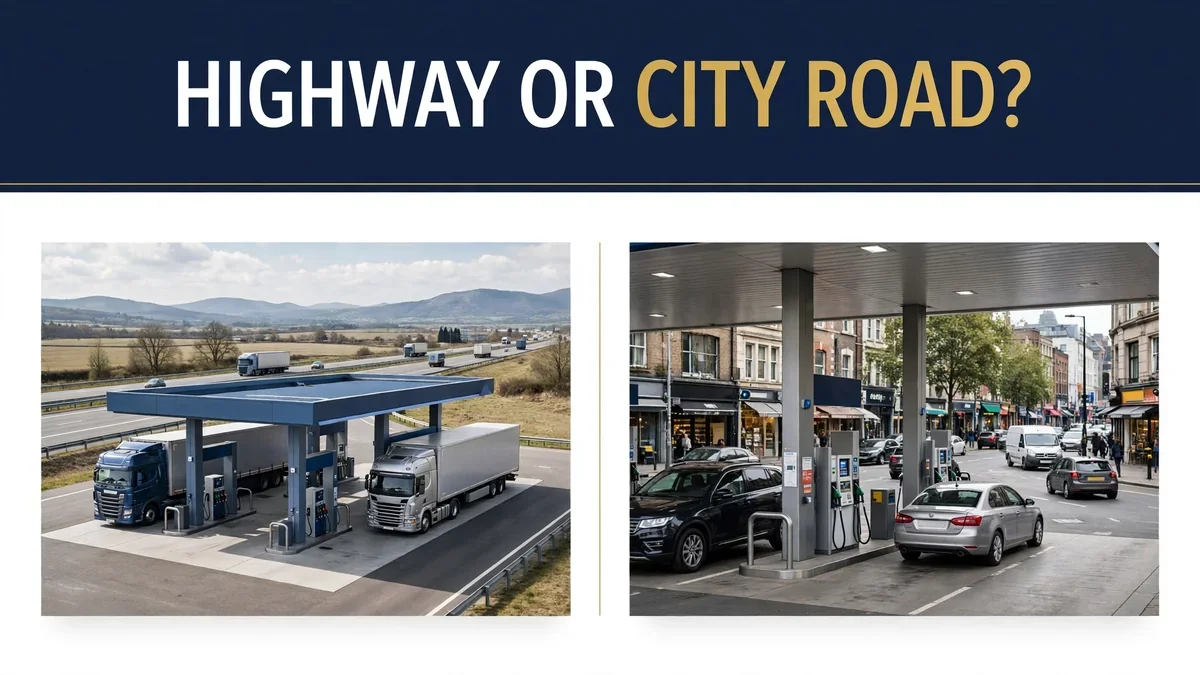
Petrol Pump on Highway vs City Road in Sheikhupura: Which Site Suits Your Business?
Choosing between a highway site and a city-road site is the first real decision in buying a petrol pump — and it shapes everything that follows, from the customers you serve to the approvals you need. If you are weighing a petrol pump on a highway or a city road in Sheikhupura, start with your business model, not with whichever site happens to be available first.
Sheikhupura gives buyers both options in a small radius: the GT Road (N-5) corridor and the Lahore, Faisalabad and Sargodha road approaches on the highway side, and the busy inner-city commercial roads on the city side. Neither is simply “better”. Each suits a different kind of operator.
What a Highway Site Really Means
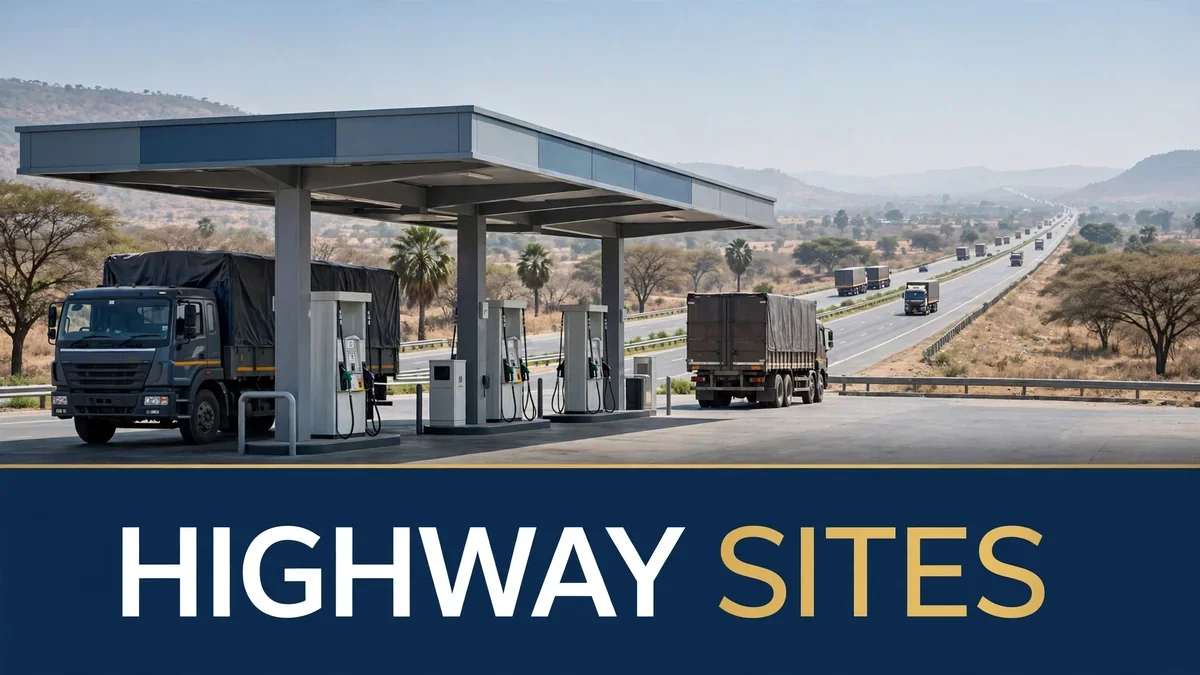
A highway site serves passing traffic: long-distance trucks and buses, intercity cars, and commercial vehicles moving between Lahore, Gujranwala, Faisalabad and beyond. Demand comes in waves tied to travel patterns rather than to one neighbourhood’s daily routine, and a site that works needs easy entry and exit for large vehicles, room to turn, and clear visibility from a distance.
Highway sites also tend to need larger plots with wider frontage, and the approval path runs through highway and district authorities as well as the oil marketing company (OMC) — a point covered in detail in our guide to buying a petrol pump site in Sheikhupura. Before committing, check who controls access to the road, whether service-road or slip-road arrangements apply, and whether heavy-vehicle movement is restricted at any hours.
What a City-Road Site Really Means
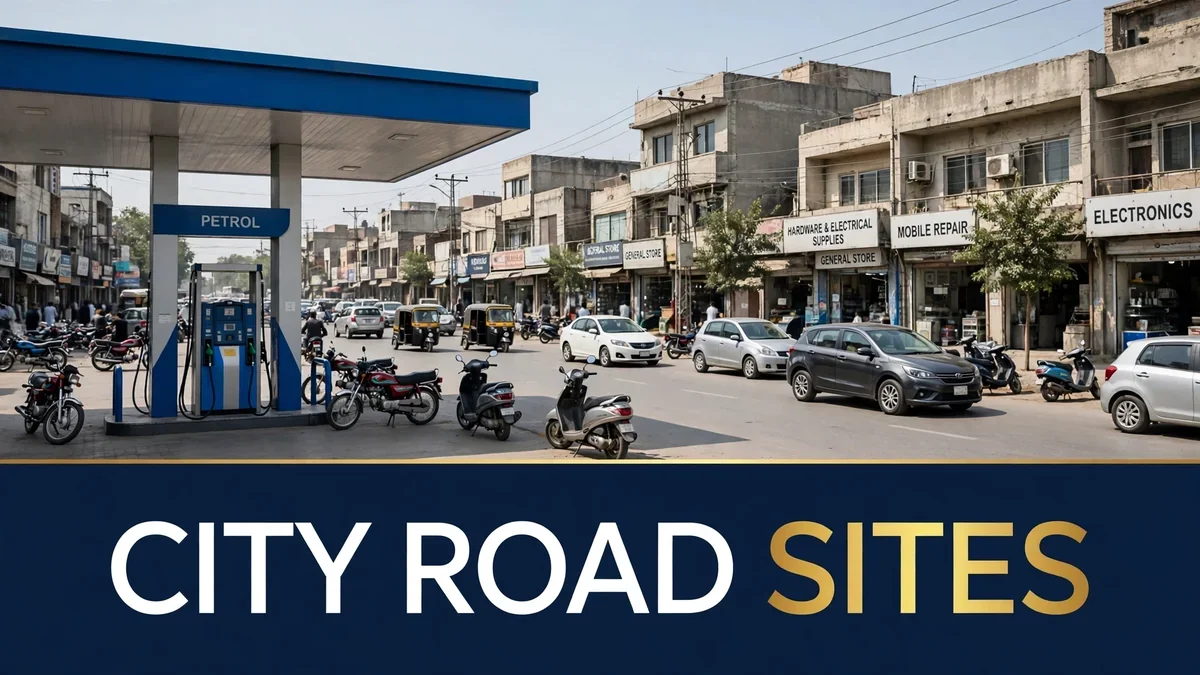
A city-road site serves the people who live and work nearby: local motorists, rickshaws and motorcycles, small commercial vehicles, and repeat customers who pass the same pump every day. Trade is steadier and more predictable, built on familiarity, trust and convenience rather than on passing volume.
City sites are usually smaller and tighter: frontage may be narrow, turning space limited, and neighbouring shops, homes and parking all compete for the same street. That makes the practical checks different — can a tanker enter and leave safely, is there room for customers to queue without blocking the road, and does the site sit comfortably with its neighbours? A petrol pump dealer in Sheikhupura who knows the inner-city roads can help you judge these points on the ground rather than on paper.
Highway vs City Road: The Comparison
| Factor | Highway site | City-road site |
|---|---|---|
| Main customers | Passing trucks, buses and intercity traffic | Local residents, commuters and nearby businesses |
| Demand pattern | Wave-based, tied to travel and freight movement | Steadier daily trade from a fixed catchment |
| Access needs | Wide entry/exit, turning room for large vehicles | Safe tanker access and queue space on a busy street |
| Plot shape | Usually larger, with wide frontage | Often smaller, sometimes irregular |
| Services that fit | Truck parking, washrooms, eatery, rest facilities | Quick fuel stops, oil change, tyre and small retail |
| Staffing and hours | Longer hours, larger team, night operation | Day-focused team, hours matched to local trade |
| Approvals | Highway authority plus district and OMC NOCs | Municipal and district NOCs, neighbour considerations |
| Flexibility later | Harder to repurpose if the route changes | Easier to adapt to another commercial use |
Choose a Highway Site If…
A highway site fits you if your model depends on volume from passing traffic, you can staff and run longer hours, and you want room for truck-oriented services. It also fits if you already operate in transport or logistics and understand fleet customers. Be honest about the trade-offs: highway trade can dip when a route is diverted or a nearby site opens, and the larger site usually means a larger ongoing operation to manage.
Choose a City-Road Site If…
A city-road site fits you if you want steady local trade, a smaller team, and a business built on repeat customers. It suits first-time operators who want to learn the trade close to home, and owners who value flexibility — a well-located city site usually adapts more easily to another commercial use later. The trade-off is dependence on one catchment: if the street’s trade shifts, your pump feels it directly.

Six Checks Before You Buy Either Type
Whichever side of the comparison you land on, run these checks before paying anything:
- Title chain: verify ownership through fard, registry and intiqal, and cross-check the record on the PLRA’s online land record portal.
- OMC and NOC path: confirm which NOCs the site needs — highway, district, environment and explosives, as applicable — and whether the OMC has already assessed the location.
- Access in practice: visit at peak hours and watch real vehicles enter, queue and leave. A site that looks fine on a map can fail at the gate.
- Neighbouring pumps: count the pumps serving the same stretch and the same catchment. Two pumps can split one market.
- Utilities and safety: confirm water, power and drainage, and check the safety layout — tank placement, canopy, fire equipment and emergency access.
- Exit options: ask what the site is worth to you if the pump model changes. A site with a second use is a safer buy.
The Bottom Line
A highway site buys passing volume and scale; a city-road site buys steady local trade and flexibility. Match the site to the business you actually want to run — fleet-facing and high-volume, or neighbourhood-facing and steady — and then verify the title, the NOC path and the real access before you commit. If you would like help comparing live options in Sheikhupura, talk to Saeed Property Advisors through our commercial property team in Sheikhupura.
Disclaimer: This article is general information only and is not legal or tax advice. Confirm title, NOC and approval requirements with the relevant authorities and your own legal adviser before buying.