

Buying an Industrial Unit in Sheikhupura: Documents and Approvals Guide
Buying an industrial unit in Sheikhupura — a ready or near-ready workshop, shed, or small manufacturing premises — sits between two other options: buying bare industrial land and buying a full working factory. Buying an industrial unit in Sheikhupura gets you a physical premises faster than a plot, but it also inherits someone else’s paperwork: their building plan, their approvals, their dues. This guide walks through the document set to collect, the approvals to verify, and the checks to run before you commit.
What Counts as an “Industrial Unit”?
An industrial unit usually means a constructed premises meant for light or medium industrial activity — a fabrication shed, a packaging workshop, a small processing plant, or a portion of a larger industrial building sold as one unit. It is not the same as an legal checklist for buying a factory in Sheikhupura, which covers whole manufacturing concerns with machinery, employees, and environmental approvals, and it is not the same as buying bare industrial plots in Sheikhupura, where you start from the land upward.
Units come in two common forms: units inside a managed industrial estate (with an estate office that controls transfers and construction), and standalone units on roadsides or in commercial-industrial pockets. The document set overlaps, but the approvals path differs — which is why the first question to answer is always: who governs this property?
The Document Set You Must Collect

Before anything else, collect the full paper chain and read it in sequence. No single document tells the whole story.
- Fard (ownership certificate): Get a fresh fard from the PLRA and match the seller’s name and the khasra/property number against the documents they show you. Names and numbers must match across every paper.
- Registry (sale deed): The seller should hold a registered sale deed in their own name. A registry in someone else’s name, with only an agreement to sell, is not ownership.
- Intiqal (mutation): Confirm the mutation of the seller’s purchase was entered in the revenue record. Skipping intiqal is one of the most common paperwork gaps in older industrial transfers.
- Building plan approval: Check that the constructed unit matches an approved building plan from the relevant authority. Unapproved construction can be sealed or demolished, regardless of how solid it looks.
- Completion certificate: For units in planned estates, confirm a completion certificate or equivalent estate clearance exists for the constructed covered area.
- Estate transfer documents: If the unit sits inside an industrial estate, get the estate’s transfer/NOC documents and the transfer rules — many estates require their own transfer permission before a sale is valid in their records.
- Utility records: Collect recent LESCO and SNGPL bills (or connection-surrender records if disconnected) to confirm the meter/connection position and that no dispute is attached to the premises.
- Tax and dues clearance: Ask for evidence that property-tax and any estate or municipal dues against the unit are clear. Unpaid dues tend to follow the premises, not the person.
Cross-check everything against PLRA’s online land record portal before you rely on photocopies alone. Paper is easy to print; the record is what the state believes.
The Approvals That Actually Matter

Documents prove ownership. Approvals decide whether you can actually operate from the premises.
- Estate transfer permission: Inside a managed estate, the estate office usually must approve the transfer. Without their record of you as the new occupant, you can own the registry and still be a stranger to the estate.
- Building plan and completion: Verify the approved covered area matches what exists on the ground. Extra sheds, mezzanines, or extensions built without approval are liabilities, not assets.
- Permitted use: Confirm the plot or unit’s declared use actually permits the activity you intend. Some premises are approved for warehousing but not manufacturing, and vice versa.
- Environmental clearance: If your intended work involves processing, chemicals, or significant emissions or effluent, check what environmental clearance applies to that activity and whether the premises holds it.
- Municipal and civic approvals: For standalone units, check the local municipal or tehsil-level approvals for the construction and its use.
- Fire safety: Larger units and units storing materials in bulk should have adequate fire safety arrangements; confirm what the premises provides versus what your insurer or lender will demand.
- Labour and social-security clearances: If you are buying a running unit with workers on site, confirm the seller’s EOBI and social-security registrations or undertakings, so dues and liabilities do not silently transfer with the premises.
Estate Units vs Standalone Units
The two forms of industrial unit need different due diligence:
- Inside an industrial estate: Planned roads, dedicated utilities, and an estate office that keeps its own records. Transfer and construction rules are written down — read them. Estates near the M-2 and the industrial zones around Sheikhupura tend to follow this model.
- Standalone units: More flexible on price and position, but the paperwork burden shifts entirely to you: municipal approvals, utility arrangements, road access, and neighbours’ usage all need independent verification.
Neither is automatically safer. Estate units trade flexibility for structure; standalone units trade structure for flexibility. Choose by what your business needs, then verify that form’s specific requirements.
Site Inspection Before You Commit
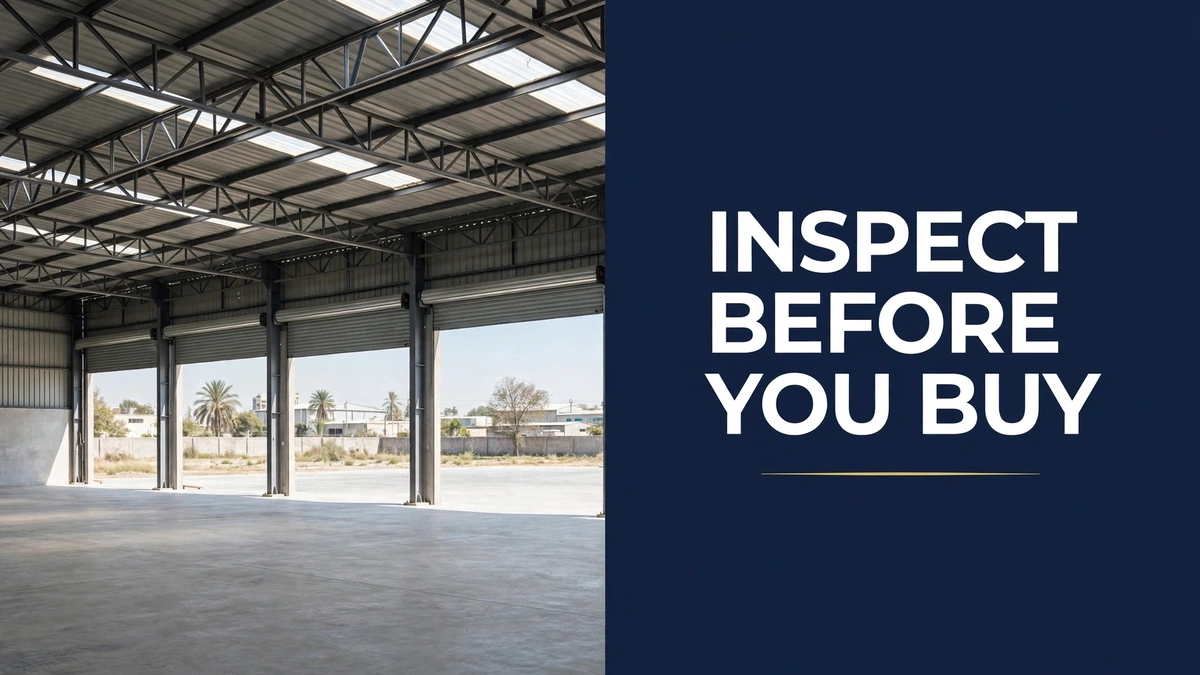
Paperwork tells you what should exist. The site tells you what does.
- Structure: Check the shed or building for sagging roofs, cracked columns, damaged shutters, and water seepage. Roof height, column spacing, and floor condition decide what machinery the unit can actually host.
- Power and load: Note the installed electrical capacity and whether it matches your planned load. Upgrading capacity later is its own project.
- Access: Can your loaded vehicles reach the unit, turn around, and unload? Narrow lanes and low bridges kill otherwise good premises.
- Drainage and water: Check where the unit’s wastewater goes and whether the water supply is adequate and lawful for your use.
- Boundaries: Walk the actual boundaries and match them to the plan. Encroachments on neighbouring land are common in older industrial pockets.
- Occupancy: If anyone is currently operating there, understand on what basis — tenant, caretaker, or the seller themselves — and make sure vacant possession terms are written, not promised.
Five-Step Final Verification
- Collect the full document set and read it in sequence — fard, registry, intiqal, building plan, completion, estate transfer, utilities, dues.
- Verify ownership independently on the PLRA record; never rely on photocopies alone.
- Confirm the approvals chain for YOUR intended activity, not the seller’s past activity.
- Walk the site with the plan in hand and list every mismatch.
- Get the transfer mechanism in writing — estate transfer permission, agreement terms, and a clear possession date — before any payment moves.
When to Walk Away
Walk away when the seller’s name does not match the record, when the estate refuses to confirm a transfer path, when the constructed area has no approved plan, when dues or litigation attach to the premises, or when the seller rushes you past verification. A good unit will still be verifiable tomorrow; a deal that cannot survive a week’s checks was never a deal.
Talk to Someone Who Knows the Local Ground
Industrial property in Sheikhupura — estates, standalone sheds, road corridors — has its own paperwork habits and its own pitfalls. Talk to Saeed Property Advisors before you commit to an industrial unit, and get the document and approval checks done properly the first time.
Disclaimer: This article is general information about property buying in Punjab, not legal or tax advice. For your specific transaction, consult a qualified legal professional.