

Office in a Plaza vs Standalone Building in Sheikhupura: Which Suits Your Business?
When you start comparing office space in a plaza vs a standalone building in Sheikhupura, the choice looks simple at first: a chamber above shops in a busy plaza, or a whole building of your own on a commercial road. In practice, the two formats behave very differently on cost, footfall, control, and risk. This guide compares them structurally — so you can decide by your business need, not by whatever a seller happens to be pushing that week.
What “Office in a Plaza” Means in Sheikhupura
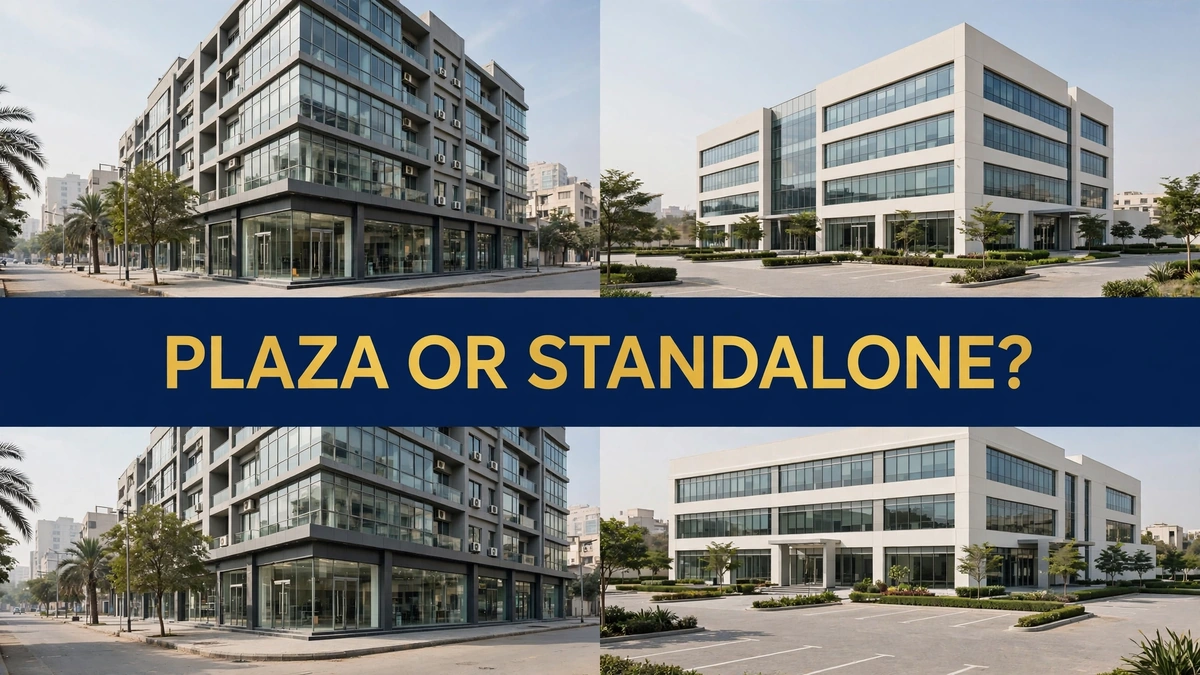
A plaza in Sheikhupura usually means a multi-storey commercial building along corridors like Lahore Road, Sargodha Road, Faisalabad Road, or the GT Road — shops on the ground floor, offices and chambers on the upper floors. You buy or occupy one unit; the stairs, lift (if any), corridors, and parking are shared with every other owner and tenant in the building. The real attraction of a plaza unit is footfall: customers already come there to shop, bank, and eat, so a service business gets visibility without generating all the traffic itself.

What a Standalone Building Means
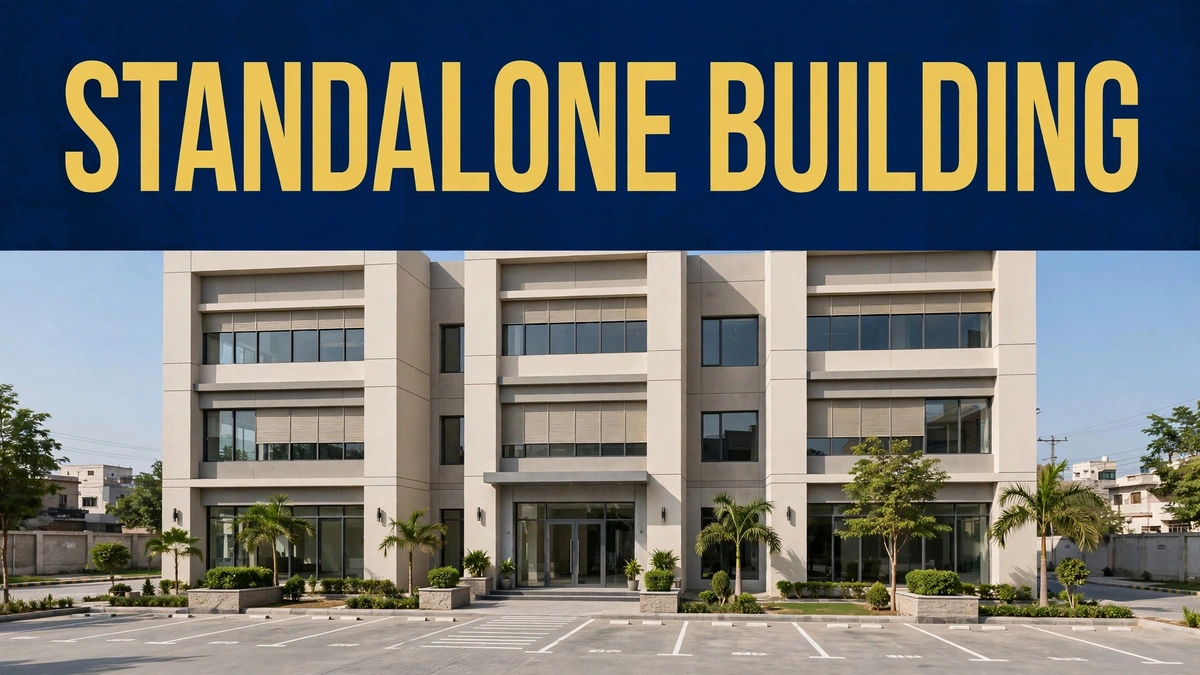
A standalone building is a complete structure — sometimes a converted residence, sometimes a purpose-built two- or three-storey block — that your business occupies alone. Your own entrance, your own parking arrangement, your own signage. Nothing is shared, and nothing about the building’s condition depends on other owners. These buildings tend to sit on side roads off the main corridors or in established commercial pockets, and they suit businesses that want identity and control rather than walk-in traffic.
Plaza Office vs Standalone Building — Side by Side
| Factor | Office in a Plaza | Standalone Building |
|---|---|---|
| Entry cost | Lower — you buy or rent a single unit, not a building. | Higher — the whole structure, and usually the land it stands on. |
| Walk-in customers | Built-in — plaza footfall brings passers-by. | Near zero — customers come only for you. |
| Branding and signage | Limited to your unit front; the building’s face belongs to everyone. | Full control — boards, paint, lighting, facade. |
| Customization | Only inside your unit; structural changes need co-owners’ agreement. | Whatever the approved plan allows — your call. |
| Parking | Shared, often crowded, sometimes contested. | Yours to arrange — but you must arrange it. |
| Maintenance costs | Split across owners — until owners disagree and it stalls. | Entirely yours, but the building gets maintained to your standard. |
| Security and access | Dependent on plaza management; shared gates and hours. | You set your own hours and your own security. |
| Paperwork complexity | Unit title plus plaza’s overall legal standing — two layers to verify. | Single property — but every document must be flawless, because there is no management layer above you. |

How to Decide — Six Questions to Ask Yourself
- Do you need walk-in customers, or do customers come to you? Tuition centres, clinics, travel agents, and consultants feed on plaza traffic. Established firms with their own client base don’t.
- Is your brand the product, or is the location the product? If your signboard and image close deals, a standalone building multiplies that. If the service itself closes deals, a plaza chamber is often enough.
- Can you manage a building, or do you want someone else to? A standalone building means you handle repairs, guards, and utilities. A plaza spreads that burden — but also the decisions.
- What will your parking need be on a busy weekday? Visit the plaza at peak hours before you sign. Shared parking that looks fine at noon can be unusable at 6 PM.
- Do you expect to expand within two years? Adding adjacent chambers in a plaza is uncertain — someone else may own them. A standalone building gives you the whole floor plate to plan.
- Do you operate outside standard hours? Businesses running evenings or night shifts need independent access, which shared buildings may restrict.
Who Should Choose What
A plaza office usually suits: service businesses that benefit from walk-in traffic, startups that want a professional address at a lower entry point, and buyers who want someone else handling building upkeep.
A standalone building usually suits: established firms with a strong brand identity, businesses with staff and visitor parking needs, companies that need custom layouts or controlled access, and operations running extended or unusual hours.
Neither is better in the abstract. The mistake is buying the format that fits your seller’s inventory rather than your business. Work through the six questions above honestly, then inspect shortlisted options against them.
Five Checks Before You Sign — Either Format
- Verify the document chain. Run the fard, registry, and intiqal against the seller’s name on the PLRA online record before paying any token. For a plaza unit, also confirm the plaza’s overall legal standing — a unit’s papers can be clean while the building sits on disputed ground.
- Confirm commercialization status. A building used as an office must be commercial in the municipal record. Check the approved building plan and commercialization status at the municipal office — sealing action for undeclared commercial use is a real enforcement step.
- For plaza units: get the maintenance arrangement in writing. Who collects service charges, what they cover, and how disputes are settled. Verbal promises from a seller evaporate the day after the registry.
- Visit at peak hours. A normal-day visit tells you nothing about parking, lift queues, noise from the market floor, or evening security. Inspect twice: once at a quiet hour, once at the busiest.
- Map the real monthly cost. Rent or instalments are only one line. Add service charges, backup power arrangements, security contributions, and expected maintenance — the cheaper-looking option is not always cheaper.
Talk to a Local Dealer Before You Decide
A shortlist means nothing until each option is checked on the ground — title chain, building plan, actual parking, and real occupancy costs. If you’re comparing office space in Sheikhupura, our team can walk you through both plaza units and standalone buildings and verify the paperwork before you commit. We also help buyers of plaza property in Sheikhupura check the building-level legal standing most buyers miss, and our full office buying checklist covers the format-specific verifications in more detail. Contact Saeed Property Advisors to discuss what you’re looking for.
Disclaimer: This article is general information, not legal or tax advice. Verify all documents and approvals through the relevant government offices or your own legal counsel before any property transaction.